
Kanji quizzes for the joy of reading
How do you read 一期一会 in Japanese?
Treasure this particular encounter.
Make the words you meet in books your own, one quiz at a time. Discover Japanese kanji readings, meanings and usage with DuraRing.
Unfamiliar kanji? Scan and look it up.Explore the OCR & AI dictionaryHow do you read this in Japanese?
Think of your answer before you look.
HINTShow hint
A phrase about valuing an encounter as something that happens only once in a lifetime. It begins with ichigo.
More on radicals and this quiz’s stroke counts
Describe the shapes you see
You do not need to know the radical’s name. Try these searches for this quiz’s characters.
kanji with 其 next to 月
kanji looking like 人 above 云
four-character Japanese phrase starting 一 for a unique encounter
These searches describe visual similarities, not formal radicals or character components.
一: 1 strokes; radical 一 (one). 期: 12 strokes; radical 月 (moon). 一: 1 strokes; radical 一 (one). 会: 6 strokes; radical 人 (person). Distinguish informal descriptions of the shape from the dictionary radical.
一1 strokes / radical: 一 (one)
期12 strokes / radical: 月 (moon)
一1 strokes / radical: 一 (one)
会6 strokes / radical: 人 (person)
Stroke counts and radicals follow the Japanese dictionary Kanjipedia; other dictionaries may differ.
Kanjipedia「一」 / Kanjipedia「期」 / Kanjipedia「一」 / Kanjipedia「会」
ANSWERShow answerHide answer
The answer is
いちごいちえ
ichigoichie
一期一会
Understand the meaning
English translationA once-in-a-lifetime encounter
An encounter or occasion that comes only once in a lifetime. In the tea ceremony, it expresses the spirit of treating each gathering as unique, with both host and guest giving it their full care.

See it in a sentence
旅先の小さな喫茶店で交わした会話を、一期一会の思い出として日記に残した。I recorded the conversation at a small cafe on my travels as the memory of a once-in-a-lifetime encounter.
A way to remember
Here, 期 is read go and 会 is read e. Learn the whole expression as ichigoichie, rather than combining the more familiar readings of each character.
Sources:Kanjipedia: 一期一会
The explanation draws on the sources below. Examples were written for this page.
Explore the word further
Give a meeting your full attention
Use it in phrases such as 一期一会を大切にする or 一期一会の気持ちで迎える. In a travel account or a description of hospitality, explain how you attended to the other person, so the phrase has concrete meaning.
例:朗読会では一期一会の気持ちで参加者を迎え、一人ずつ感想を聞いた。
At the reading event, I welcomed each participant with a sense of treasuring this unique meeting and listened to everyone’s impressions.
It need not mean you will never meet again
Even when you see someone again, that day’s conversation and circumstances are unique. The phrase can express care for the present occasion without predicting whether another meeting will happen.
References for this explanation:Kanjipedia: 一期一会
Explanation checked on 2026-10-25. Additional examples were written by DuraRing for this page.
The answer and explanation stay hidden until you open them.
Read and learn with  .
Photograph unfamiliar kanji, look them up and save them in the app, linked to your book.A reading app that helps you revisit words in the context of your books.
Capture and look up kanji
Photograph a printed page.Check kanji readings and meanings.
Save words. Connect them to books.
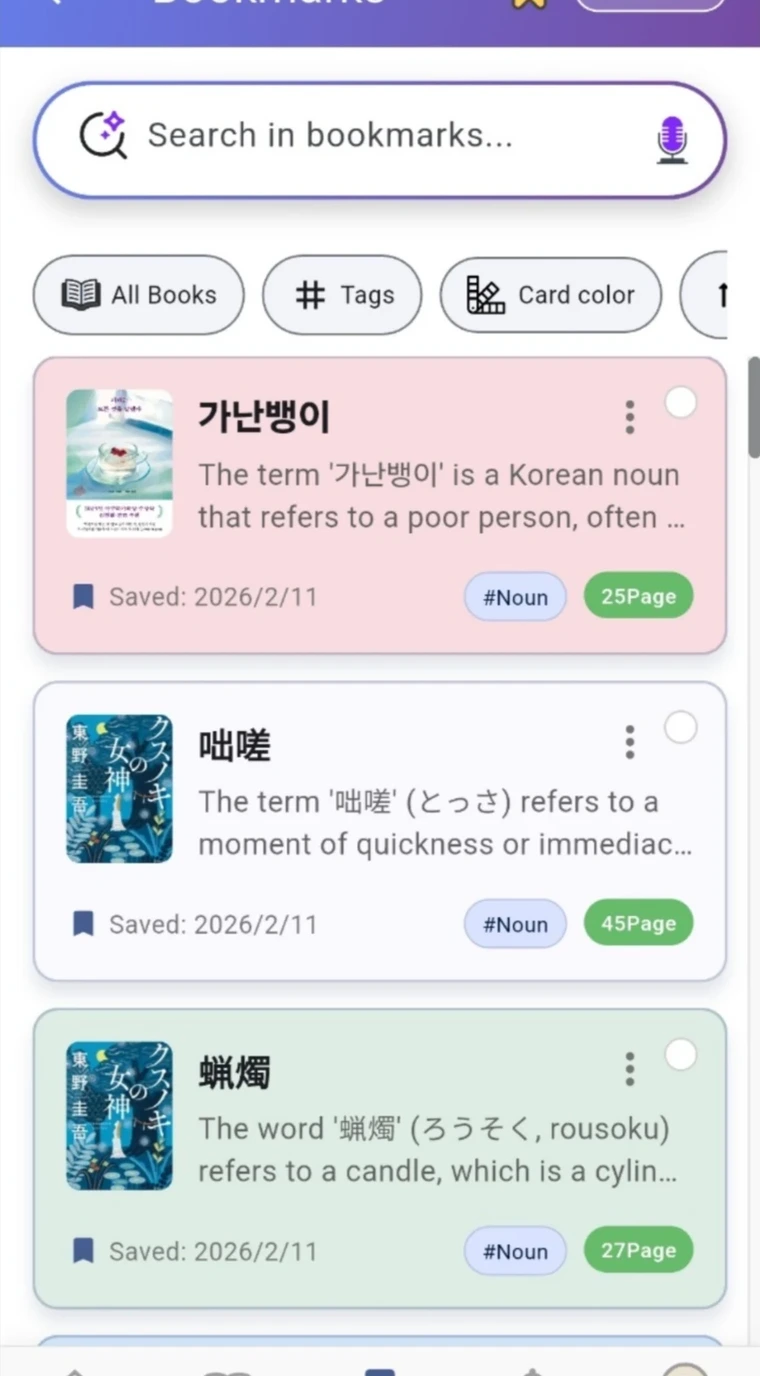
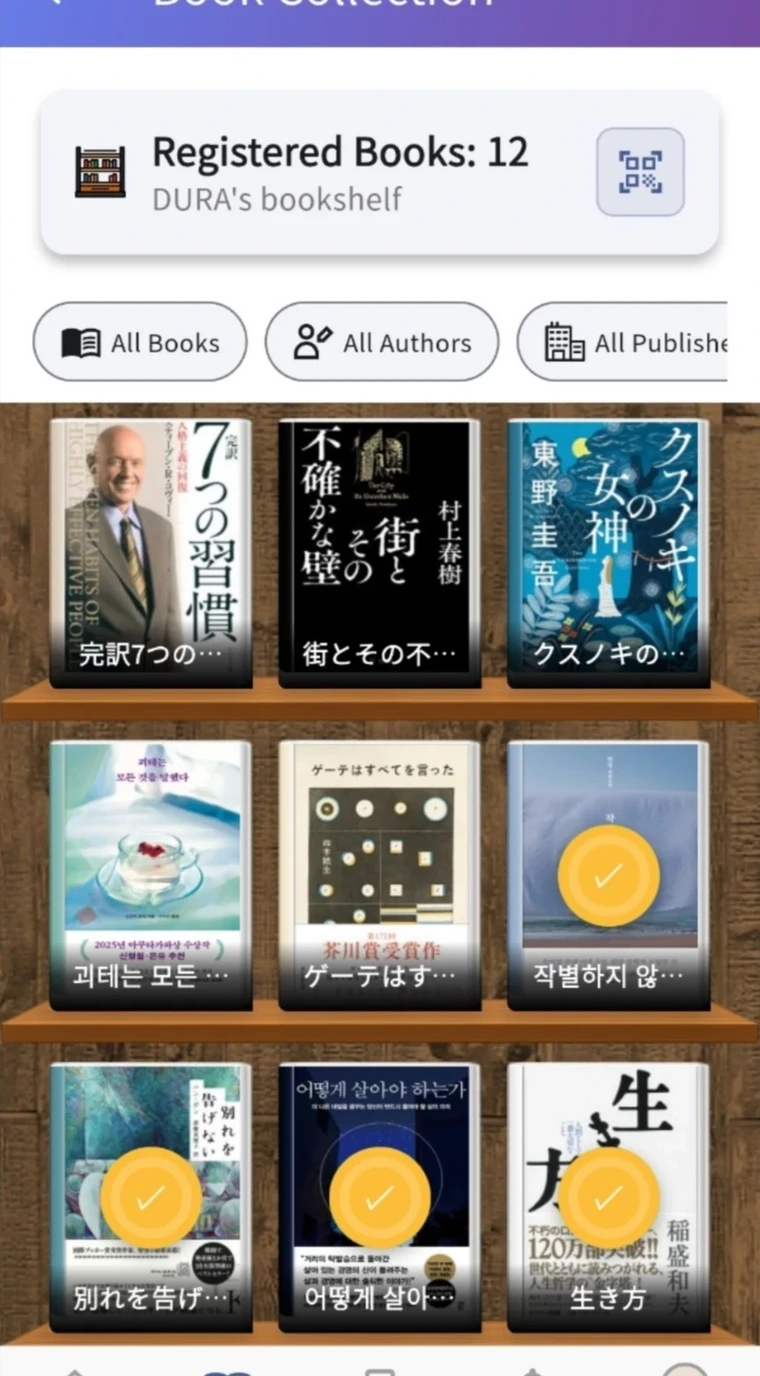
Save readings and meanings with the book and page.Revisit your reading through notes linked to your bookshelf.
① illustrates the capture feature. ② shows actual app screens.