
Kanji quizzes for the joy of reading
How do you read 凡例 in Japanese?
Familiar characters can surprise you.
Make the words you meet in books your own, one quiz at a time. Discover Japanese kanji readings, meanings and usage with DuraRing.
Unfamiliar kanji? Scan and look it up.Explore the OCR & AI dictionaryHow do you read this in Japanese?
Think of your answer before you look.
HINTShow hint
You read this explanation to understand how to use a book or interpret map symbols. 凡 is not read the same way here as in 平凡.
More on radicals and this quiz’s stroke counts
Describe the shapes you see
You do not need to know the radical’s name. Try these searches for this quiz’s characters.
kanji shaped like the right side of 机 with a dot inside
kanji with person radical next to 列
Japanese reading of the kanji for a map key
These searches describe visual similarities, not formal radicals or character components.
凡 is classified under 几 and 例 under 人. The person radical often appears in words related to people, but a radical does not determine a word’s meaning or reading.
凡3 strokes / radical: 几 (table radical)
例8 strokes / radical: 人 (person radical)
Stroke counts and radicals follow the Japanese dictionary Kanjipedia; other dictionaries may differ.
ANSWERShow answerHide answer
The answer is
はんれい
hanrei
凡例
Understand the meaning
English translationLegend / guide to symbols and conventions
A guide to the conventions used in a book or map. It may explain abbreviations and notation in a book, or the meanings of symbols and colors on a map.

See it in a sentence
地図の凡例を見て、色や記号が表すものを確かめた。I checked the map legend to see what its colors and symbols represented.
A way to remember
凡例 is read hanrei. Do not simply carry over the bon reading from 平凡 (heibon); learn the reading of the whole word.
Sources:Kanjipedia: 凡例
The explanation draws on the sources below. Examples were written for this page.
Explore the word further
Start with the 凡例 in a book or map
凡例 (はんれい) explains the conventions used in a book or map. When you encounter an unfamiliar symbol, its legend or introductory guide can help.
- Books and dictionaries: abbreviations, the order of entries and how readings are shown.
- Maps and charts: what symbols, colors and different types of line represent.
例:資料の凡例に「数字はページ番号を示す」とあり、目的の箇所をすぐに見つけられた。
The guide explained that the numbers represented page numbers, so I quickly found the passage I needed.
Check the conventions of the document in front of you
A color or symbol can mean different things in different documents. Check the current document’s legend rather than assuming it follows a familiar convention.
The reading is はんれい. Learn the whole word instead of carrying over ぼん from 平凡 (へいぼん).
References for this explanation:Kanjipedia: 凡例
Explanation checked on 2026-10-23. Additional examples were written by DuraRing for this page.
The answer and explanation stay hidden until you open them.
Read and learn with  .
Photograph unfamiliar kanji, look them up and save them in the app, linked to your book.A reading app that helps you revisit words in the context of your books.
Capture and look up kanji
Photograph a printed page.Check kanji readings and meanings.
Save words. Connect them to books.
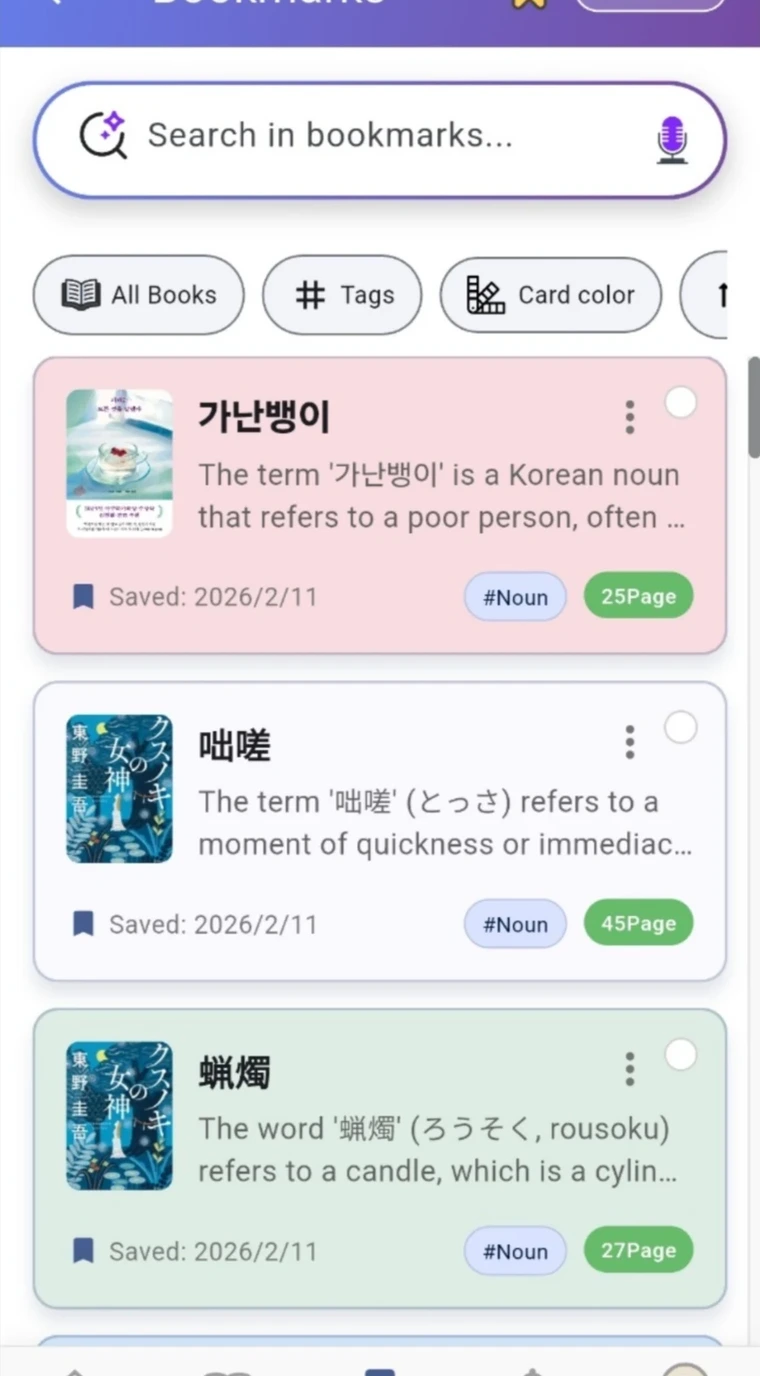
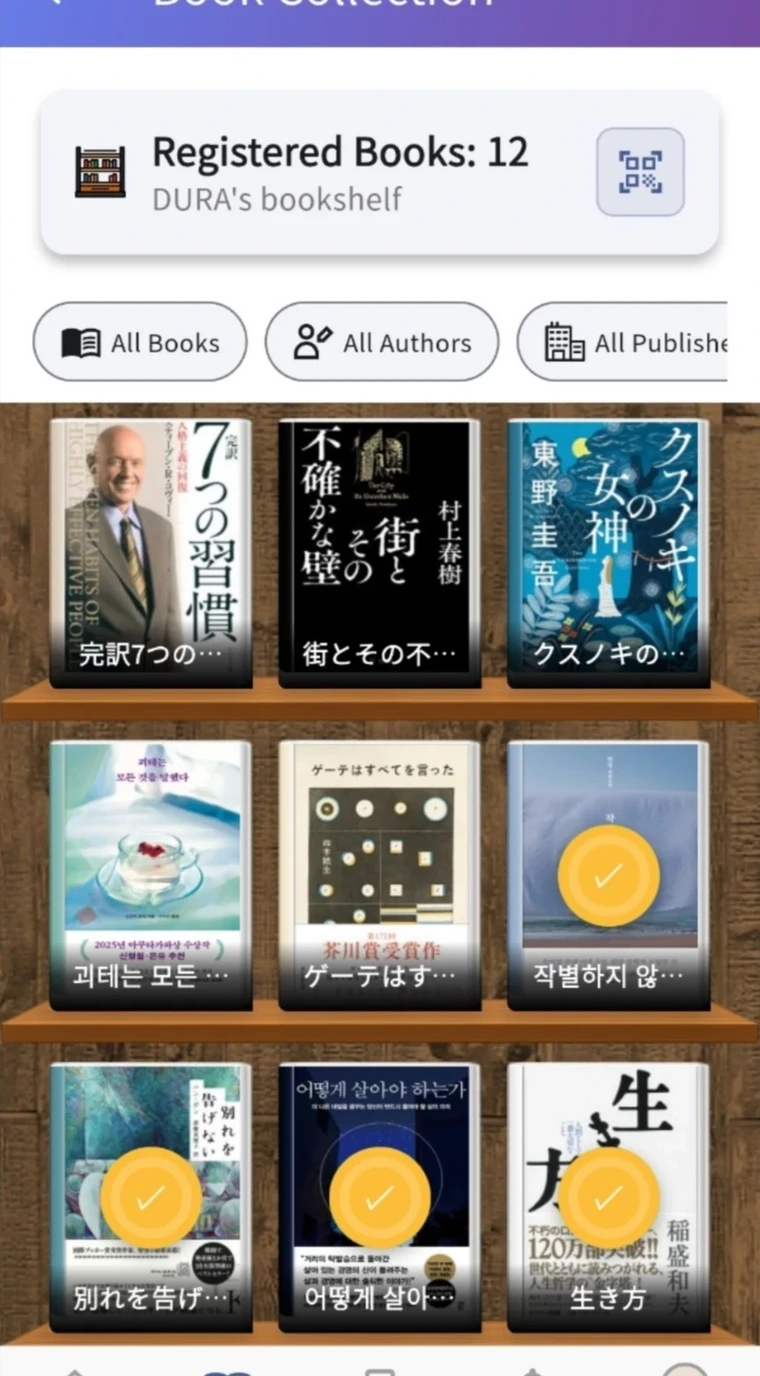
Save readings and meanings with the book and page.Revisit your reading through notes linked to your bookshelf.
① illustrates the capture feature. ② shows actual app screens.