
Kanji quizzes for the joy of reading
How do you read 趣 in Japanese?
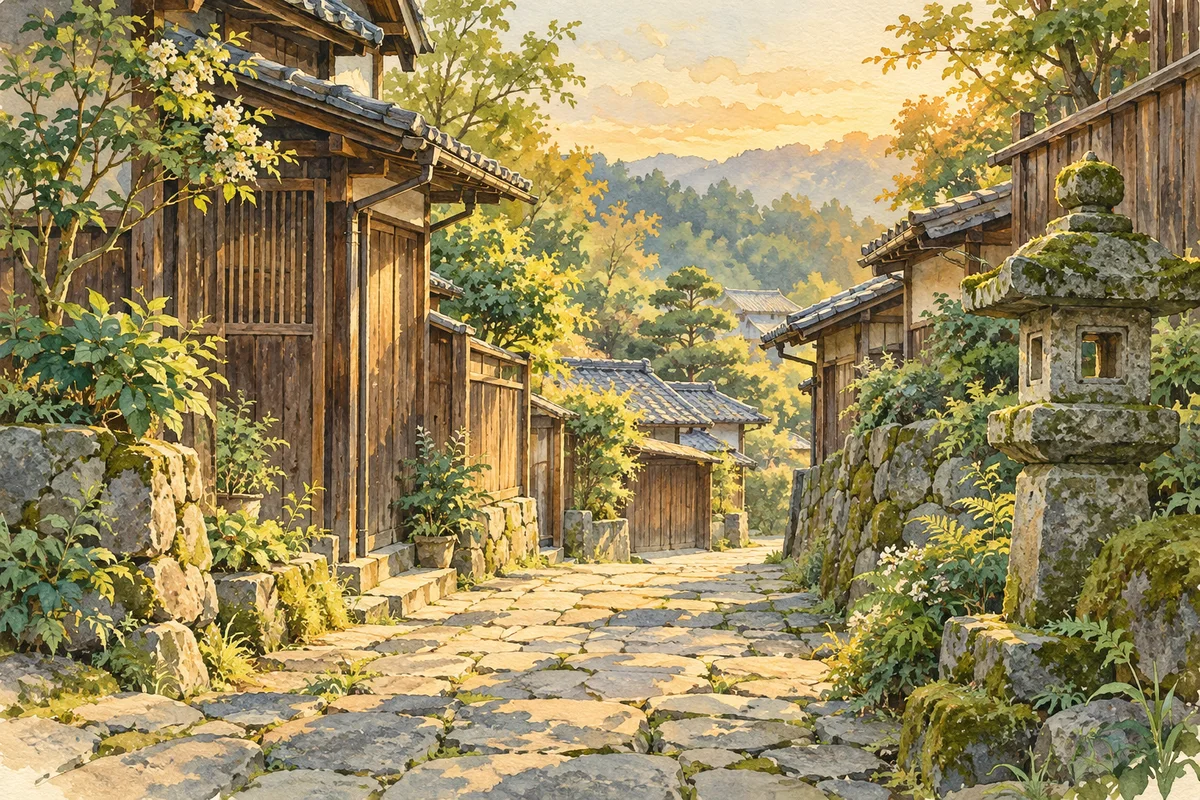
The character and charm of an old street.
Make the words you meet in books your own, one quiz at a time. Discover Japanese kanji readings, meanings and usage with DuraRing.
Unfamiliar kanji? Scan and look it up.Explore the OCR & AI dictionaryHow do you read this in Japanese?
Read 趣 in 古い町並みには趣がある, describing the charm of an old town.
HINTShow hint
It describes the character or atmosphere you sense in a scene. Here it has a four-hiragana reading, rather than shu as in 趣味.
More on radicals and this quiz’s stroke counts
Describe the shapes you see
You do not need to know the radical’s name. Try these searches for this quiz’s characters.
kanji written with 走 and 取
走 with 取 at the upper right
kanji with 走 耳 and 又
These searches describe visual similarities, not formal radicals or character components.
趣 has 15 strokes and belongs to 走, called sōnyō in Japanese. The 耳 and 又 within 取 can also help you describe its shape when searching.
趣15 strokes / radical: 走 (run)
Stroke counts and radicals follow the Japanese dictionary Kanjipedia; other dictionaries may differ.
ANSWERShow answerHide answer
The answer is
おもむき
omomuki
趣
Understand the meaning
English translationCharm / distinctive atmosphere
The distinctive character or feeling of something. 趣がある means it has an appealing atmosphere or charm.
See it in a sentence
石畳と木造の家が続く通りには、落ち着いた趣があった。The street of stone paving and wooden houses had a quiet charm.
A way to remember
Read it omomuki in 趣がある, but shu in 趣味. Context determines the reading. The noun omomuki is written with this single kanji, without trailing kana.
Sources:Kanjipedia: 趣
The explanation draws on the sources below. Examples were written for this page.
Explore the word further
Using 趣
趣のある庭 focuses on character or charm; 趣が異なる focuses on a difference in character. Read the surrounding sentence to choose the sense.
例:同じ通りでも、雨の日は晴れた日とは趣が異なる。
Even the same street has a different character on a rainy day than on a clear one.
Reading and meaning in context
Seeing 趣 does not always mean the sentence concerns a hobby. Distinguish the standalone おもむき from readings and meanings in compounds.
References for this explanation:Kanjipedia: 趣
Explanation checked on 2026-10-23. Additional examples were written by DuraRing for this page.
The answer and explanation stay hidden until you open them.
Read and learn with  .
Photograph unfamiliar kanji, look them up and save them in the app, linked to your book.A reading app that helps you revisit words in the context of your books.
Capture and look up kanji
Photograph a printed page.Check kanji readings and meanings.
Save words. Connect them to books.
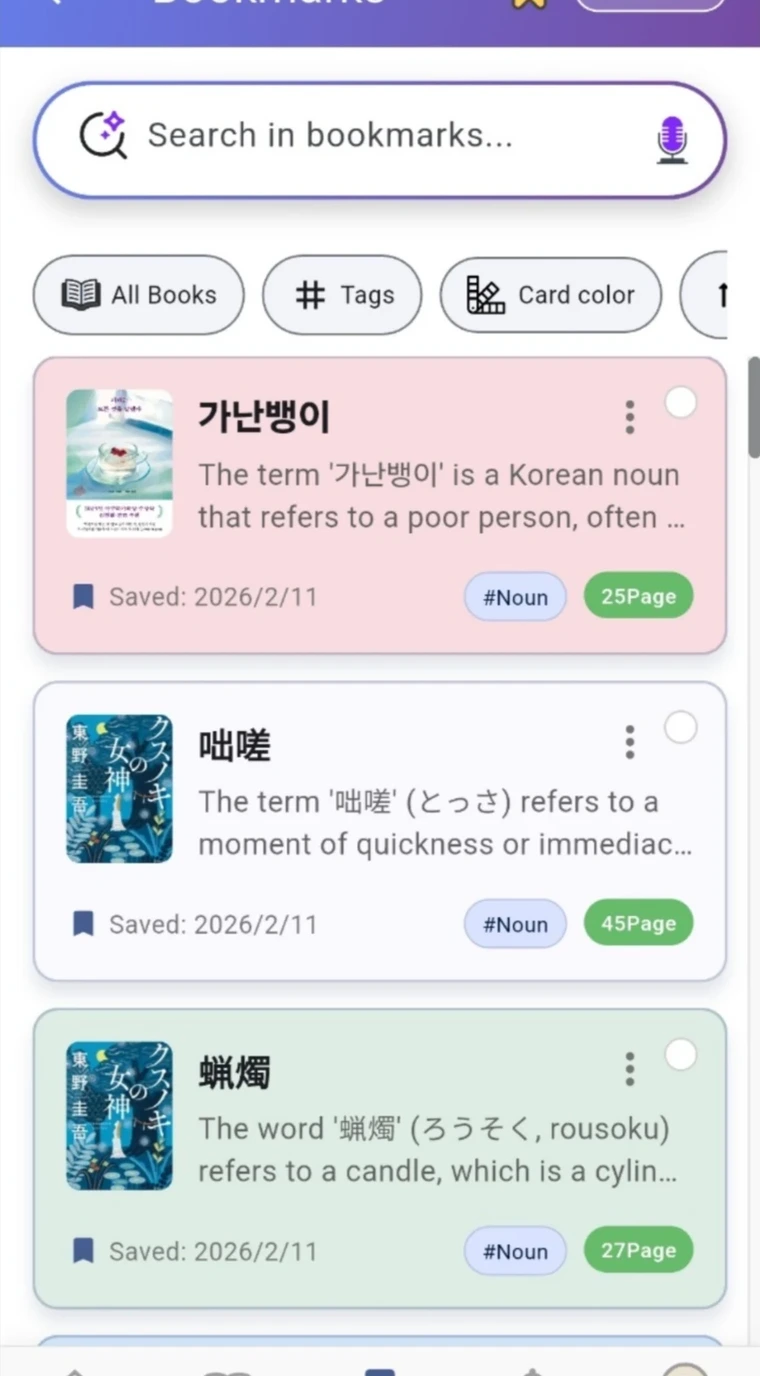
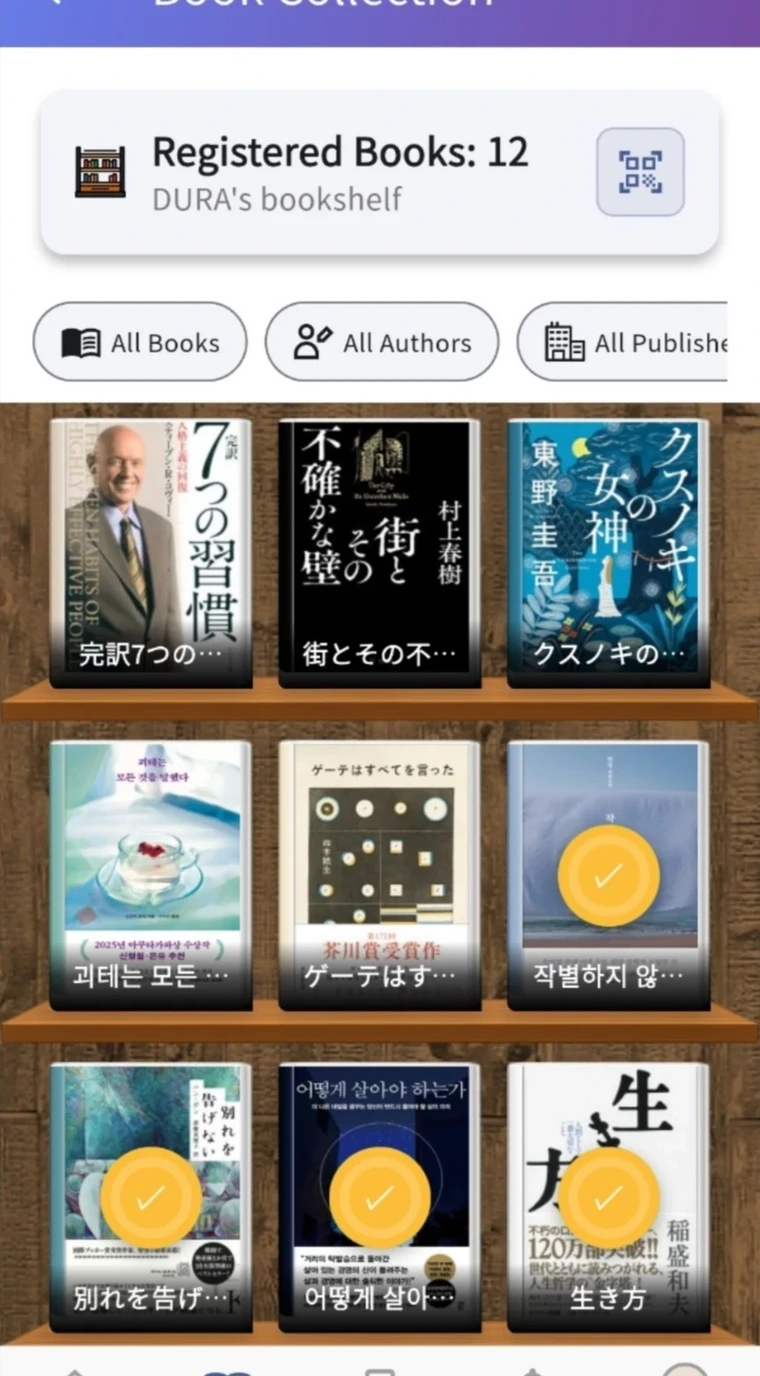
Save readings and meanings with the book and page.Revisit your reading through notes linked to your bookshelf.
① illustrates the capture feature. ② shows actual app screens.