
Kanji quizzes for the joy of reading
How do you read 紫陽花 in Japanese?
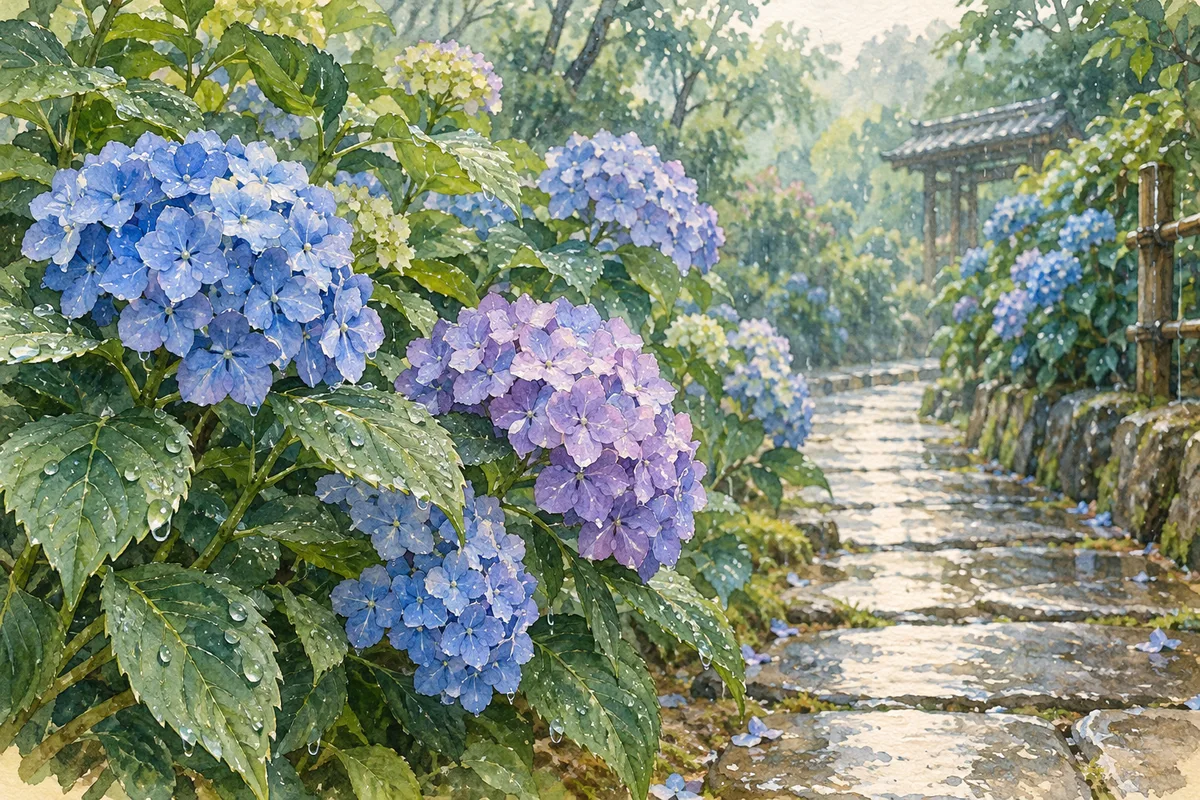
A familiar name along a rainy path.
Make the words you meet in books your own, one quiz at a time. Discover Japanese kanji readings, meanings and usage with DuraRing.
Unfamiliar kanji? Scan and look it up.Explore the OCR & AI dictionaryHow do you read this in Japanese?
Think of your answer before you look.
HINTShow hint
A flower often seen in Japan’s rainy season, with rounded clusters in blue, purple or pink. The reading has four hiragana characters.
More on radicals and this quiz’s stroke counts
Describe the shapes you see
You do not need to know the radical’s name. Try these searches for this quiz’s characters.
kanji with 此 above 糸
mound radical next to 日 with diagonal strokes below
flower name written 紫 陽 花 Japanese reading
These searches describe visual similarities, not formal radicals or character components.
紫 belongs to 糸, 陽 to 阜, and 花 to 艸. The left side of 陽 is the mound radical. The grass radical in 花 is a useful clue for a plant-related character.
紫12 strokes / radical: 糸 (thread)
陽12 strokes / radical: 阜 (mound)
花7 strokes / radical: 艸 (grass)
Stroke counts and radicals follow the Japanese dictionary Kanjipedia; other dictionaries may differ.
ANSWERShow answerHide answer
The answer is
あじさい
ajisai
紫陽花
Understand the meaning
English translationHydrangea
Hydrangea, a shrub that flowers in early summer. Its clusters of blue, purple and other colored blooms are familiar in gardens and parks. 紫陽花 is read ajisai.
See it in a sentence
雨上がりの小道で、紫陽花の葉に残るしずくが光っていた。On the path after the rain, droplets glistened on the hydrangea leaves.
A way to remember
Remember all three characters as ajisai rather than adding their individual readings. Picture the flowers beside a rain-soaked path.
Sources:Kanjipedia: 紫陽花
The explanation draws on the sources below. Examples were written for this page.
Explore the word further
Using 紫陽花
Use 紫陽花 in phrases such as 紫陽花が咲く and 紫陽花の葉. Add a color or a detail after rain to build a short description.
例:図書館へ続く坂道に、青い紫陽花が並んで咲いていた。
Blue hydrangeas were blooming along the slope leading to the library.
Reading and meaning in context
Although 紫 means purple, the name is not restricted to purple flowers. Read it as a plant name rather than deriving its appearance from each character.
References for this explanation:Kanjipedia: 紫陽花
Explanation checked on 2026-10-23. Additional examples were written by DuraRing for this page.
The answer and explanation stay hidden until you open them.
Read and learn with  .
Photograph unfamiliar kanji, look them up and save them in the app, linked to your book.A reading app that helps you revisit words in the context of your books.
Capture and look up kanji
Photograph a printed page.Check kanji readings and meanings.
Save words. Connect them to books.
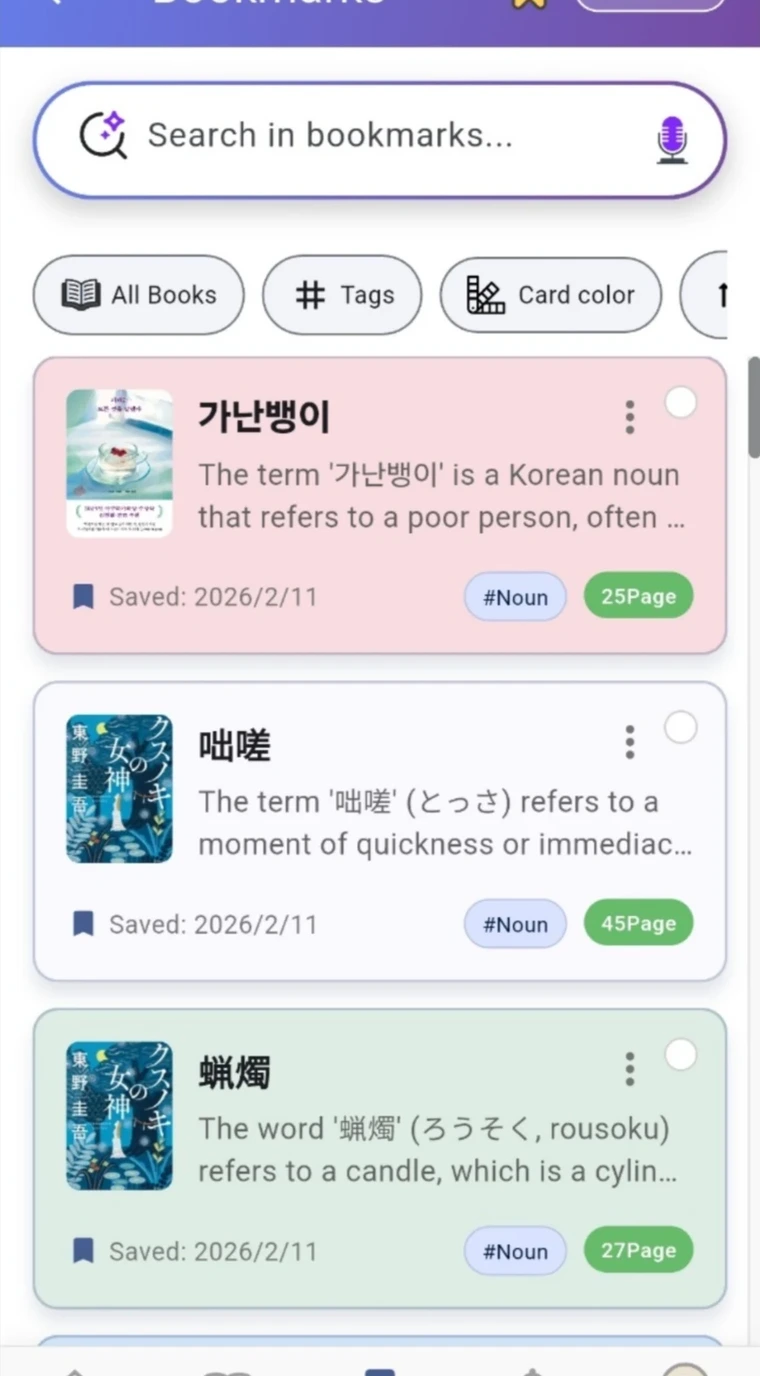
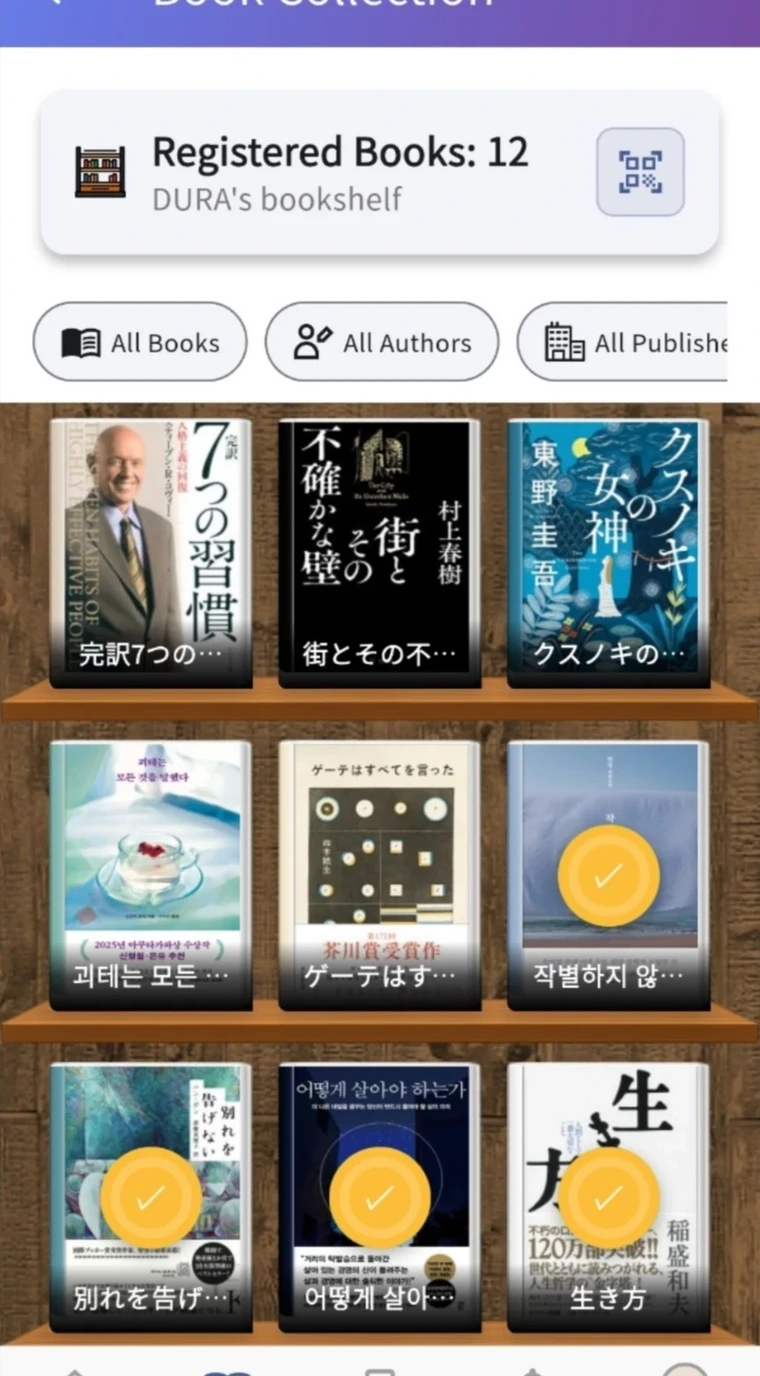
Save readings and meanings with the book and page.Revisit your reading through notes linked to your bookshelf.
① illustrates the capture feature. ② shows actual app screens.