
Kanji quizzes for the joy of reading
How do you read 雰囲気 in Japanese?
How do you read the feeling of a place?
Make the words you meet in books your own, one quiz at a time. Discover Japanese kanji readings, meanings and usage with DuraRing.
Unfamiliar kanji? Scan and look it up.Explore the OCR & AI dictionaryHow do you read this in Japanese?
Think of your answer before you look.
HINTShow hint
The mood or feeling of a place or person. Consider where the readings of the three characters divide.
More on radicals and this quiz’s stroke counts
Describe the shapes you see
You do not need to know the radical’s name. Try these searches for this quiz’s characters.
kanji with 雨 above 分
rain and 分 followed by 囲 気 reading
enclosure around 井 in 雰囲気
These searches describe visual similarities, not formal radicals or character components.
雰 has 12 strokes and the radical 雨 (rain). 囲 has 7 strokes and the radical 囗 (enclosure). 気 has 6 strokes and the radical 气 (vapor). Radicals are dictionary classifications. The shape-based search phrases below provide other lookup clues.
雰12 strokes / radical: 雨 (rain)
囲7 strokes / radical: 囗 (enclosure)
気6 strokes / radical: 气 (vapor)
Stroke counts and radicals follow the Japanese dictionary Kanjipedia; other dictionaries may differ.
ANSWERShow answerHide answer
The answer is
ふんいき
fun’iki
雰囲気
Understand the meaning
English translationAtmosphere / mood
The overall mood, atmosphere or impression created by a place or person, such as warmth or quietness.

See it in a sentence
木の机と柔らかな照明が、落ち着いた雰囲気をつくっていた。Wooden desks and soft lighting created a calm atmosphere.
A way to remember
The standard reading is fun’iki. Divide it as fun–i–ki to match 雰–囲–気.
Sources:Kanjipedia: 雰囲気
The explanation draws on the sources below. Examples were written for this page.
Explore the word further
Using 雰囲気
穏やかな雰囲気 and 雰囲気が変わる describe an overall impression. Details of voices, expressions or lighting help convey it.
例:店員の柔らかな声で、小さな店の雰囲気が和らいだ。
The assistant’s gentle voice softened the atmosphere in the small shop.
Reading and meaning in context
The sequence is ふ・ん・い・き. Notice where い, corresponding to 囲, belongs and practice writing the reading.
References for this explanation:Kanjipedia: 雰囲気
Explanation checked on 2026-10-23. Additional examples were written by DuraRing for this page.
The answer and explanation stay hidden until you open them.
Read and learn with  .
Photograph unfamiliar kanji, look them up and save them in the app, linked to your book.A reading app that helps you revisit words in the context of your books.
Capture and look up kanji
Photograph a printed page.Check kanji readings and meanings.
Save words. Connect them to books.
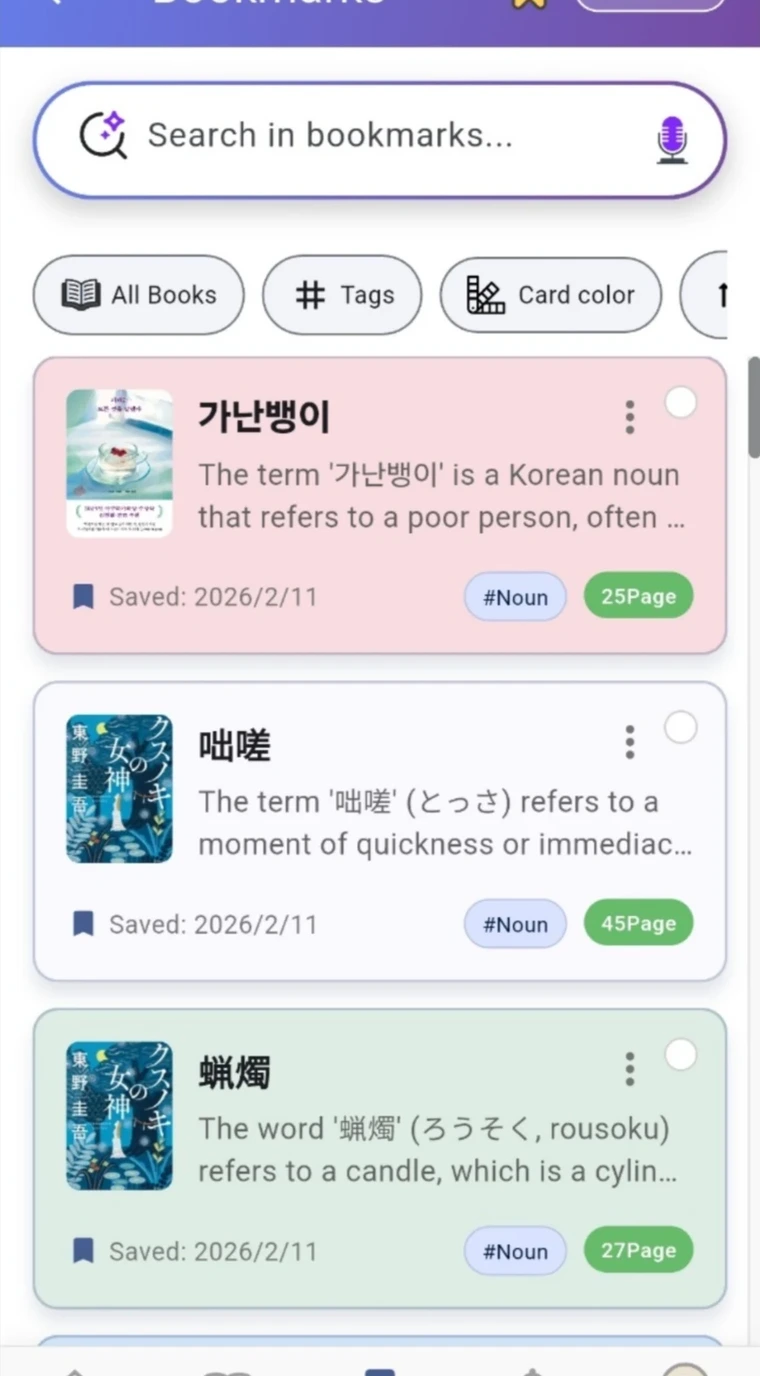
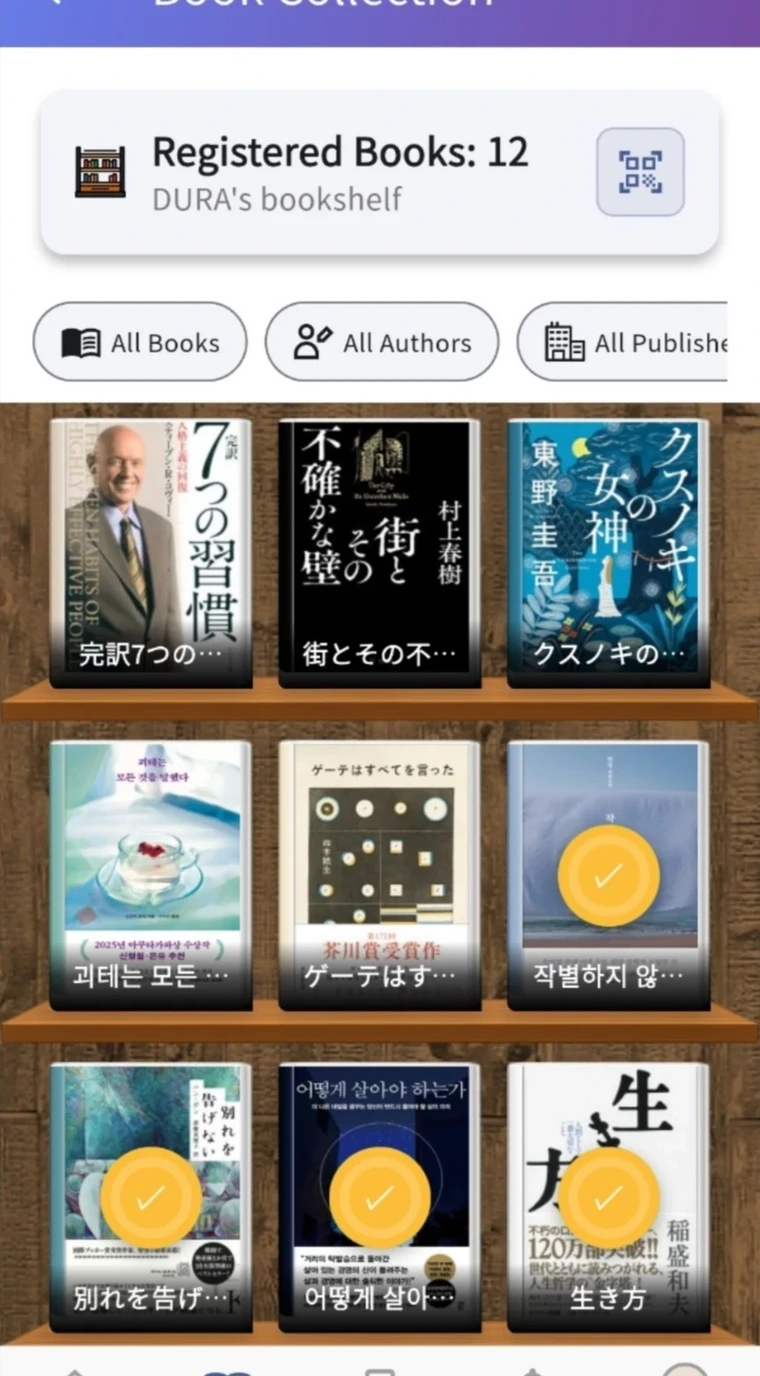
Save readings and meanings with the book and page.Revisit your reading through notes linked to your bookshelf.
① illustrates the capture feature. ② shows actual app screens.