
Kanji quizzes for the joy of reading
How do you read 胡桃 in Japanese?
Even a familiar snack has a kanji name.
Make the words you meet in books your own, one quiz at a time. Discover Japanese kanji readings, meanings and usage with DuraRing.
Unfamiliar kanji? Scan and look it up.Explore the OCR & AI dictionaryHow do you read this in Japanese?
Think of your answer before you look.
HINTShow hint
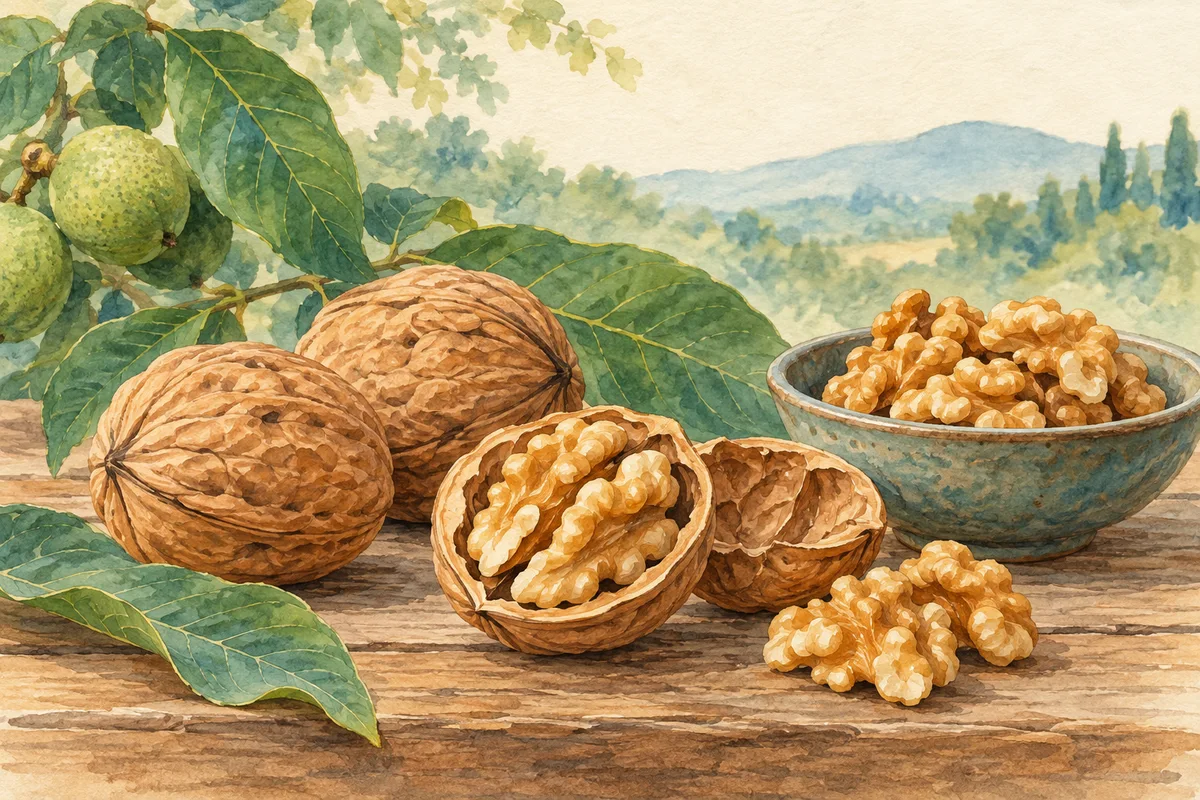
A nut with a hard shell and a wrinkled edible kernel, often used in bread and baked treats. Think of a three-hiragana reading.
More on radicals and this quiz’s stroke counts
Describe the shapes you see
You do not need to know the radical’s name. Try these searches for this quiz’s characters.
kanji with 古 beside 月
tree radical next to 兆
nut name with 古 月 and 桃
These searches describe visual similarities, not formal radicals or character components.
胡 belongs to 肉 and 桃 to 木. The right side of 胡 looks like 月, but is classified as the flesh radical: appearance and radical classification can differ.
胡9 strokes / radical: 肉 (flesh)
桃10 strokes / radical: 木 (tree)
Stroke counts and radicals follow the Japanese dictionary Kanjipedia; other dictionaries may differ.
ANSWERShow answerHide answer
The answer is
くるみ
kurumi
胡桃
Understand the meaning
English translationWalnut
A walnut tree or its nut. The edible kernel is enclosed in a hard shell. This quiz uses the everyday name of the nut found in bread and pastries.
See it in a sentence
刻んだ胡桃を生地に混ぜて、香ばしいパンを焼いた。I mixed chopped walnuts into the dough and baked a fragrant loaf.
A way to remember
For the everyday food name, remember kurumi. Despite 桃, this is not a peach. Dictionaries also record the on-reading kotō.
Sources:Kanjipedia: 胡桃
The explanation draws on the sources below. Examples were written for this page.
Explore the word further
Using 胡桃
胡桃を割る and 胡桃を刻む describe different actions. In a recipe, check whether the writer is handling the shell or the edible kernel.
例:祖母は胡桃を細かく刻み、焼き上がった菓子に散らした。
Grandmother chopped the walnuts finely and sprinkled them over the baked sweets.
Reading and meaning in context
胡桃 can name the tree or its fruit. 胡桃を植える and 胡桃を食べる use the same spelling while focusing on different things.
References for this explanation:Kanjipedia: 胡桃
Explanation checked on 2026-10-23. Additional examples were written by DuraRing for this page.
The answer and explanation stay hidden until you open them.
Read and learn with  .
Photograph unfamiliar kanji, look them up and save them in the app, linked to your book.A reading app that helps you revisit words in the context of your books.
Capture and look up kanji
Photograph a printed page.Check kanji readings and meanings.
Save words. Connect them to books.
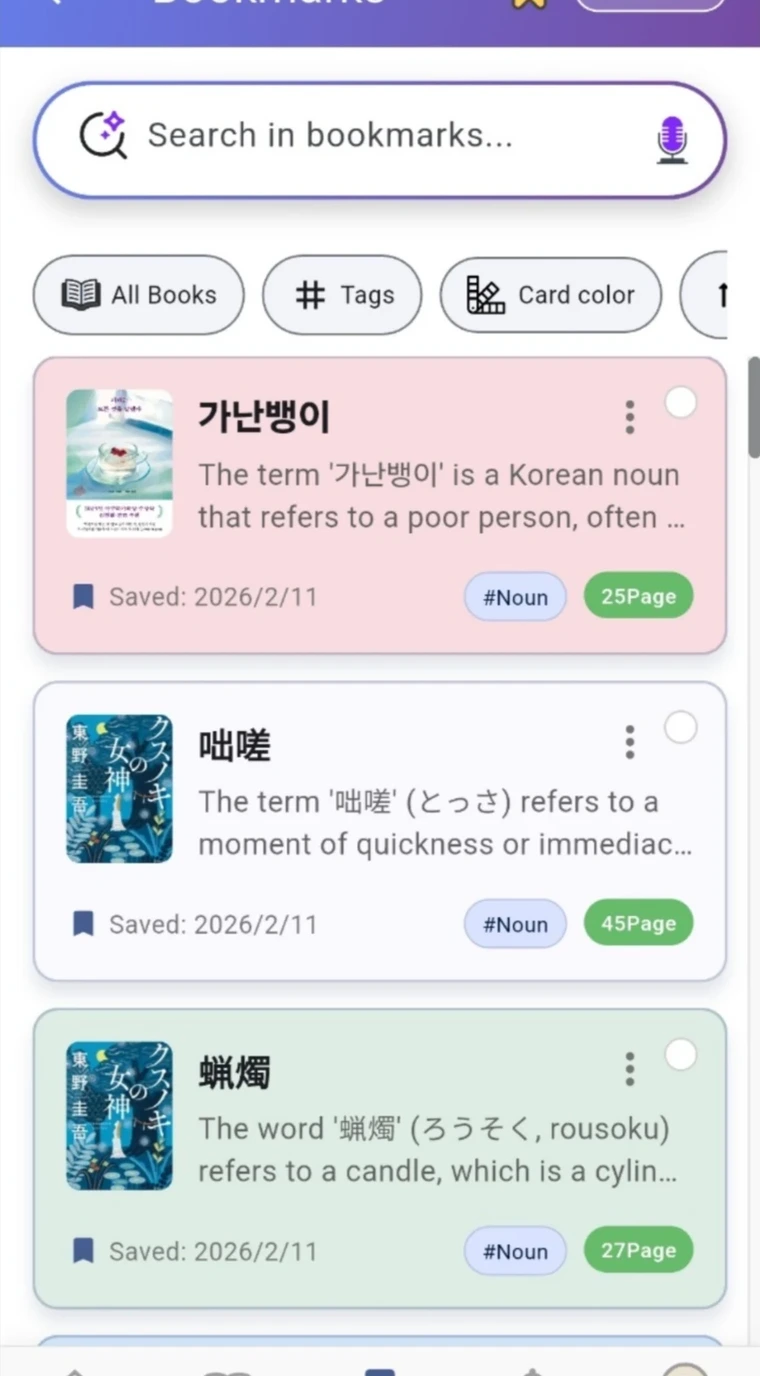
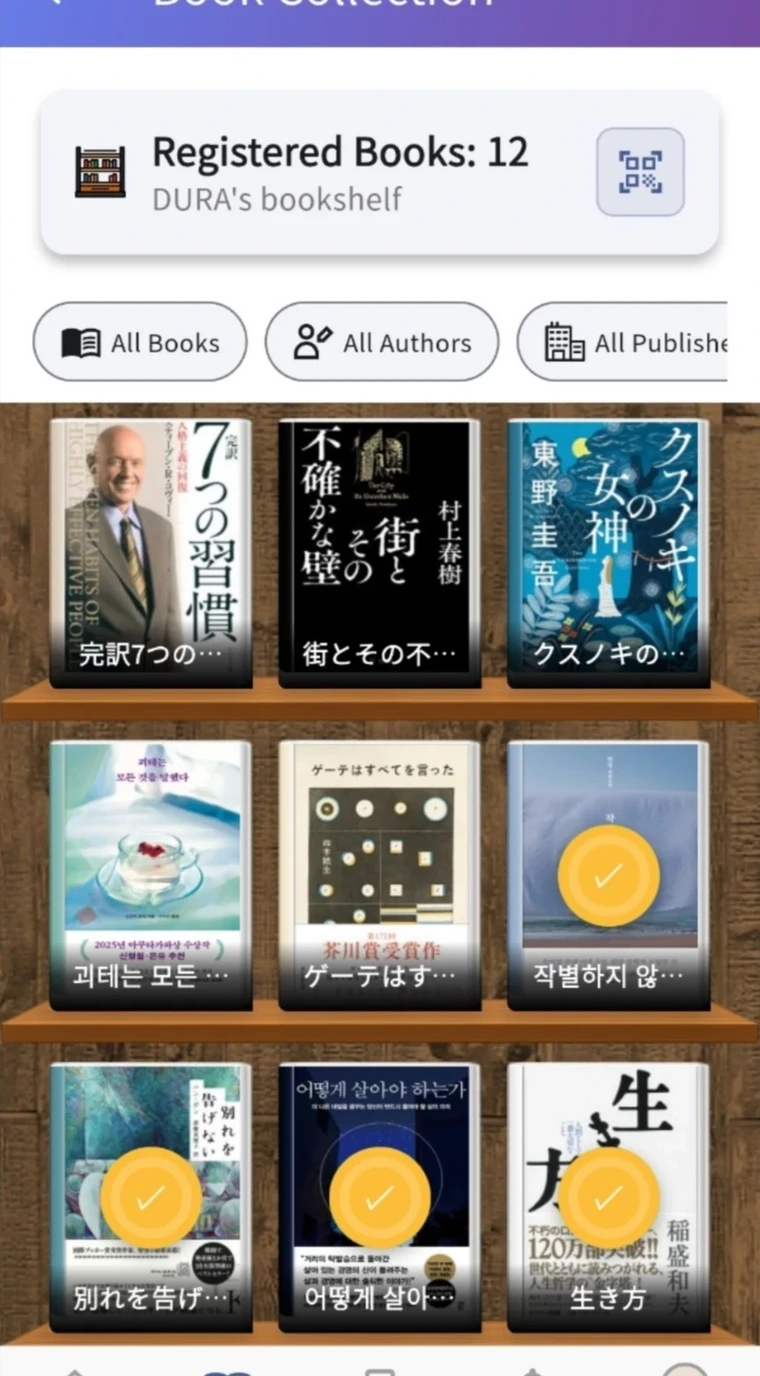
Save readings and meanings with the book and page.Revisit your reading through notes linked to your bookshelf.
① illustrates the capture feature. ② shows actual app screens.