
Kanji quizzes for the joy of reading
How do you read 所感 in Japanese?
What you personally took from an experience.
Make the words you meet in books your own, one quiz at a time. Discover Japanese kanji readings, meanings and usage with DuraRing.
Unfamiliar kanji? Scan and look it up.Explore the OCR & AI dictionaryHow do you read this in Japanese?
Think of your answer before you look.
HINTShow hint
What you personally felt about an experience or event, sometimes shared after a workshop or meeting.
More on radicals and this quiz’s stroke counts
Describe the shapes you see
You do not need to know the radical’s name. Try these searches for this quiz’s characters.
kanji with 戸 beside 斤
kanji with 咸 above 心
workplace impressions word starting with 所
These searches describe visual similarities, not formal radicals or character components.
所: 8 strokes; radical 戸 (door). 感: 13 strokes; radical 心 (heart). Distinguish informal descriptions of the shape from the dictionary radical.
所8 strokes / radical: 戸 (door)
感13 strokes / radical: 心 (heart)
Stroke counts and radicals follow the Japanese dictionary Kanjipedia; other dictionaries may differ.
ANSWERShow answerHide answer
The answer is
しょかん
shokan
所感
Understand the meaning
English translationPersonal impressions
A person’s impressions or feelings. At work, it can introduce reflections after training or a visit. It concerns how someone experienced an event rather than just what happened.

See it in a sentence
研修を終え、参加者はそれぞれの所感を短く述べた。After the training, each participant briefly shared their impressions.
A way to remember
所 can be read tokoro elsewhere, but here it is sho. 感 is kan and has 心 at the bottom.
Sources:Kanjipedia: 所感
The explanation draws on the sources below. Examples were written for this page.
Explore the word further
Add a reason for your impression
Use 所感を述べる or 研修の所感. Instead of simply saying something was good, identify a memorable moment and explain why it mattered to you.
例:見学後の所感として、作業の前に確認の時間を取る大切さを感じたと伝えた。
In my impressions after the visit, I said I had come to appreciate taking time to check things before starting work.
Separate facts from personal impressions
In a report, separating what you observed from how you felt makes the account clearer. 所感 refers to the latter. Avoid assuming that everyone had the same reaction.
References for this explanation:Kanjipedia: 所感
Explanation checked on 2026-10-25. Additional examples were written by DuraRing for this page.
The answer and explanation stay hidden until you open them.
Read and learn with  .
Photograph unfamiliar kanji, look them up and save them in the app, linked to your book.A reading app that helps you revisit words in the context of your books.
Capture and look up kanji
Photograph a printed page.Check kanji readings and meanings.
Save words. Connect them to books.
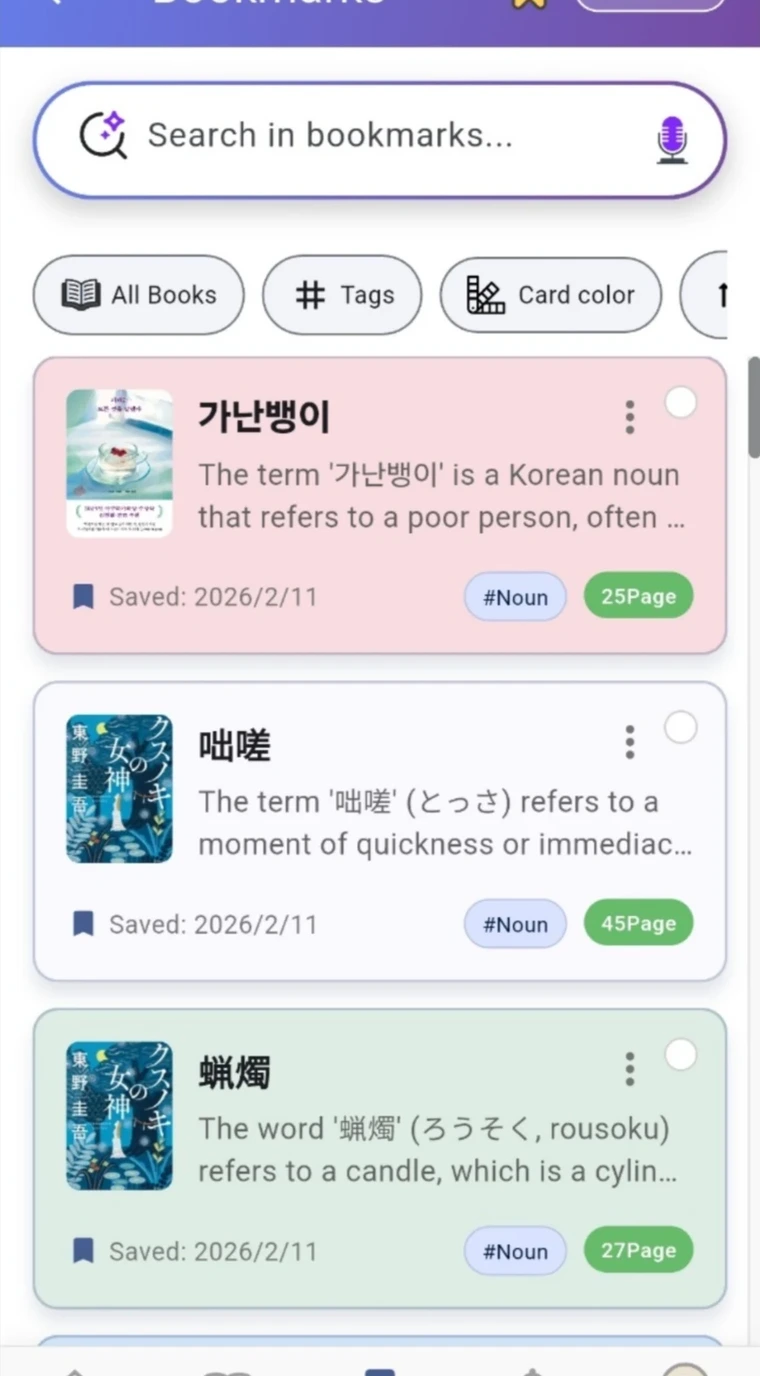
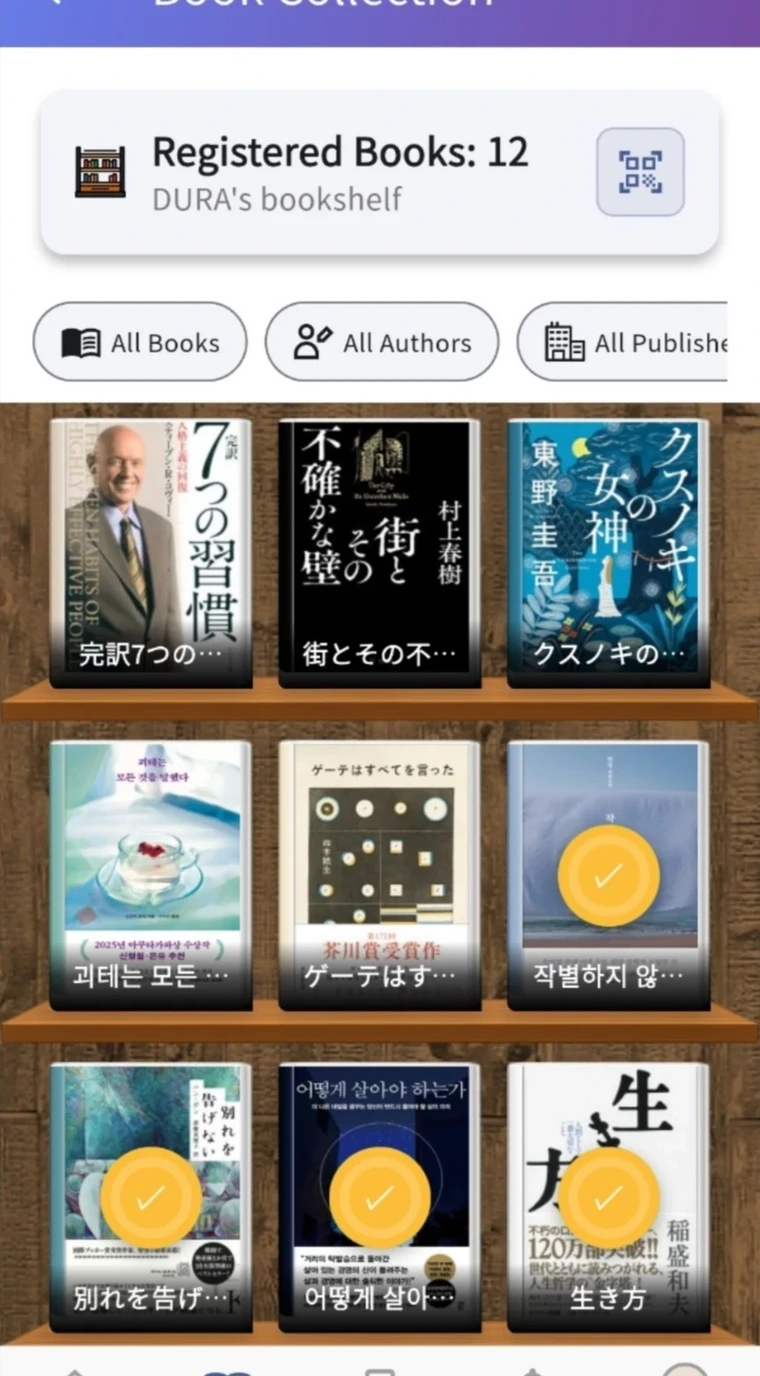
Save readings and meanings with the book and page.Revisit your reading through notes linked to your bookshelf.
① illustrates the capture feature. ② shows actual app screens.