
Kanji quizzes for the joy of reading
How do you read 相殺 in Japanese?
A familiar character, an unexpected reading.
Make the words you meet in books your own, one quiz at a time. Discover Japanese kanji readings, meanings and usage with DuraRing.
Unfamiliar kanji? Scan and look it up.Explore the OCR & AI dictionaryHow do you read this in Japanese?
Think of your answer before you look.
HINTShow hint
A word used when a gain and a loss cancel each other out. In this meaning, the second character is not read satsu.
More on radicals and this quiz’s stroke counts
Describe the shapes you see
You do not need to know the radical’s name. Try these searches for this quiz’s characters.
kanji with 木 beside 目
name of the right-hand radical in 殺
Japanese reading of 相 followed by 殺
These searches describe visual similarities, not formal radicals or character components.
相 is classified under 目, not 木; 殺 is under 殳. A prominent component on the left is not necessarily the dictionary radical.
相9 strokes / radical: 目 (eye)
殺10 strokes / radical: 殳 (weapon)
Stroke counts and radicals follow the Japanese dictionary Kanjipedia; other dictionaries may differ.
ANSWERShow answerHide answer
The answer is
そうさい
sōsai
相殺
Understand the meaning
English translationOffsetting / cancellation
To offset opposing amounts or effects. For example, savings equal to an increase in expenses can cancel out that increase.

See it in a sentence
増えた交通費は、昼食代を節約した分で相殺できた。The extra travel cost was offset by what I saved on lunch.
A way to remember
Here 殺 is read sai and carries the sense of reducing. Remember sōsai alongside the image of equal amounts offsetting one another.
Sources:Kanjipedia: 相殺
The explanation draws on the sources below. Examples were written for this page.
Explore the word further
Using 相殺
増加分を相殺する and 効果が相殺される describe offsetting effects. Identify the two amounts or effects being set against each other.
例:材料費の増加分は、包装を簡単にして浮いた費用で相殺された。
The extra material cost was offset by savings from simpler packaging.
Reading and meaning in context
The focus is on offsetting, rather than merely reducing something. In this sense the reading is そうさい; do not substitute the familiar さつ reading of 殺.
References for this explanation:Kanjipedia: 相殺
Explanation checked on 2026-10-23. Additional examples were written by DuraRing for this page.
The answer and explanation stay hidden until you open them.
Read and learn with  .
Photograph unfamiliar kanji, look them up and save them in the app, linked to your book.A reading app that helps you revisit words in the context of your books.
Capture and look up kanji
Photograph a printed page.Check kanji readings and meanings.
Save words. Connect them to books.
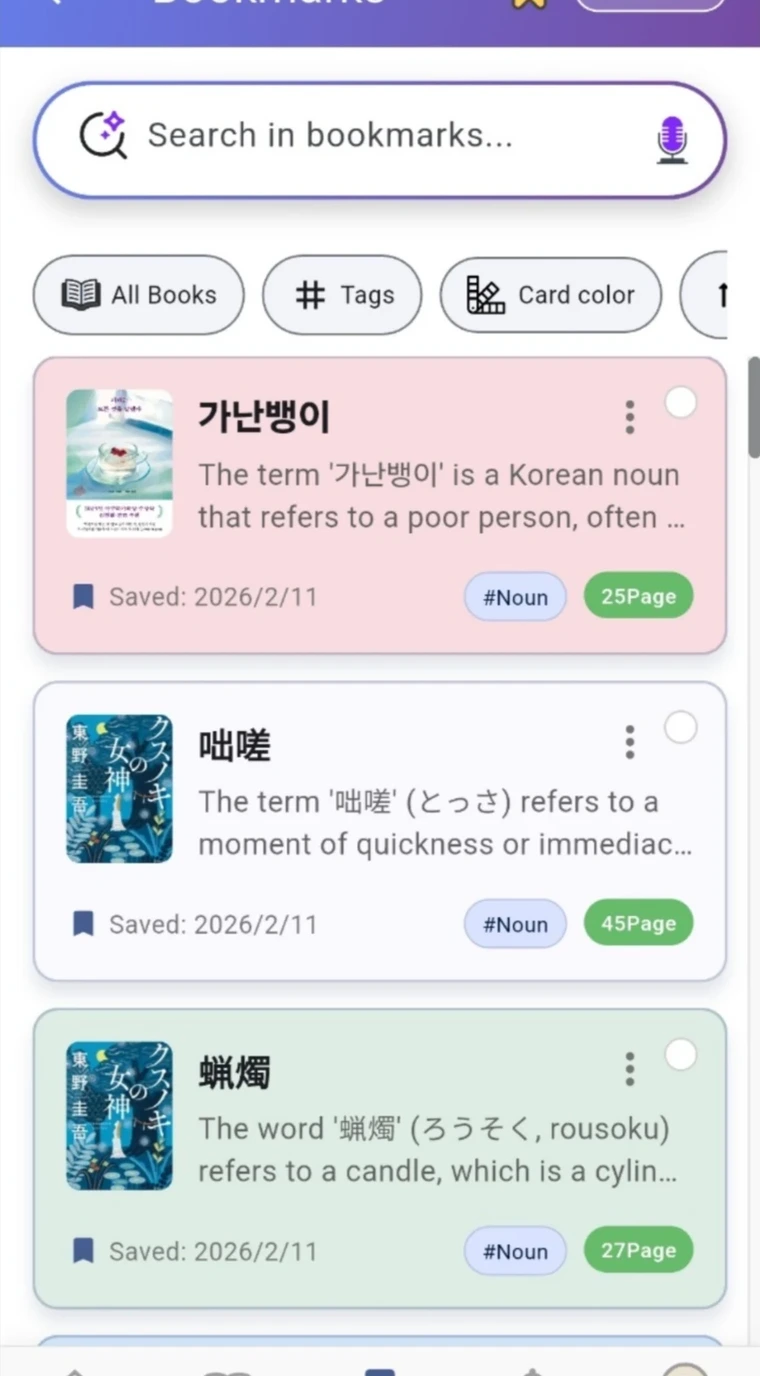
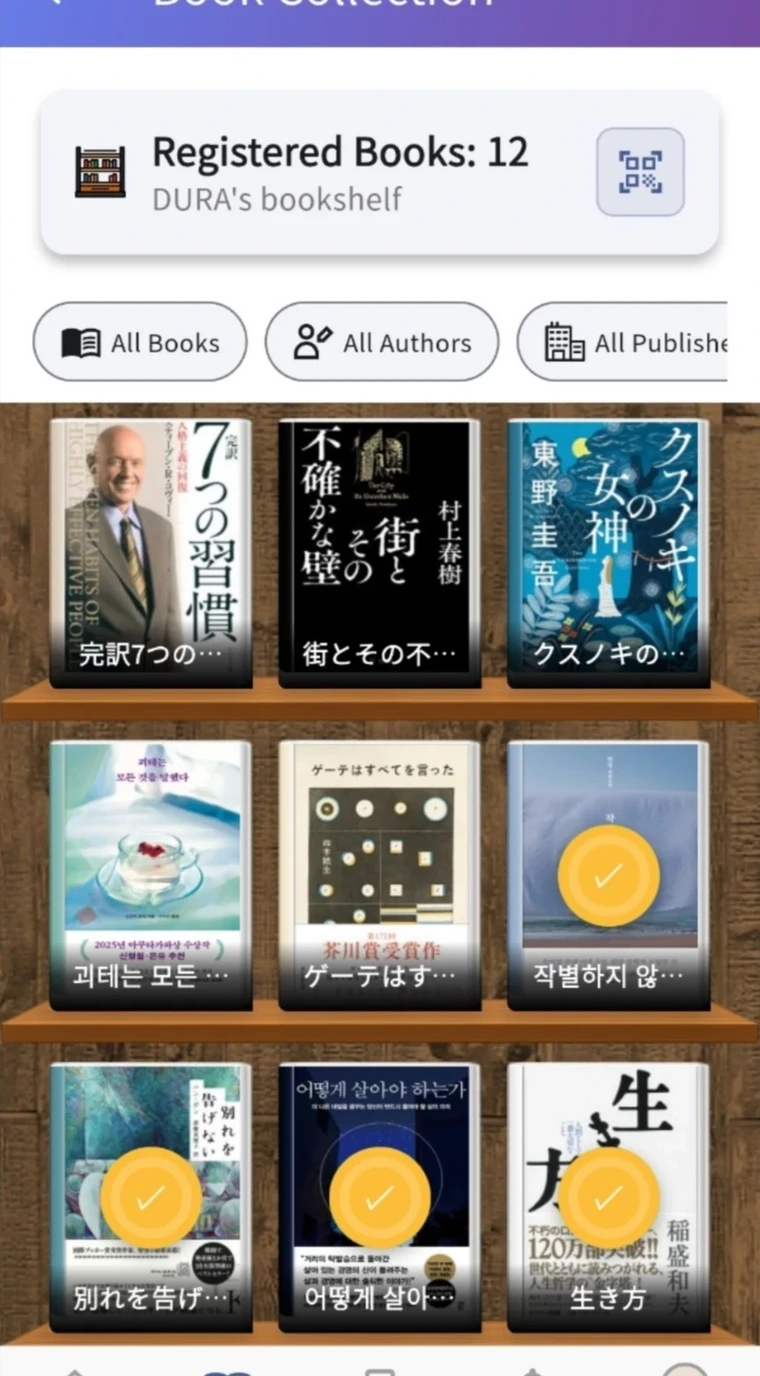
Save readings and meanings with the book and page.Revisit your reading through notes linked to your bookshelf.
① illustrates the capture feature. ② shows actual app screens.