
Kanji quizzes for the joy of reading
How do you read 蕾 in Japanese?
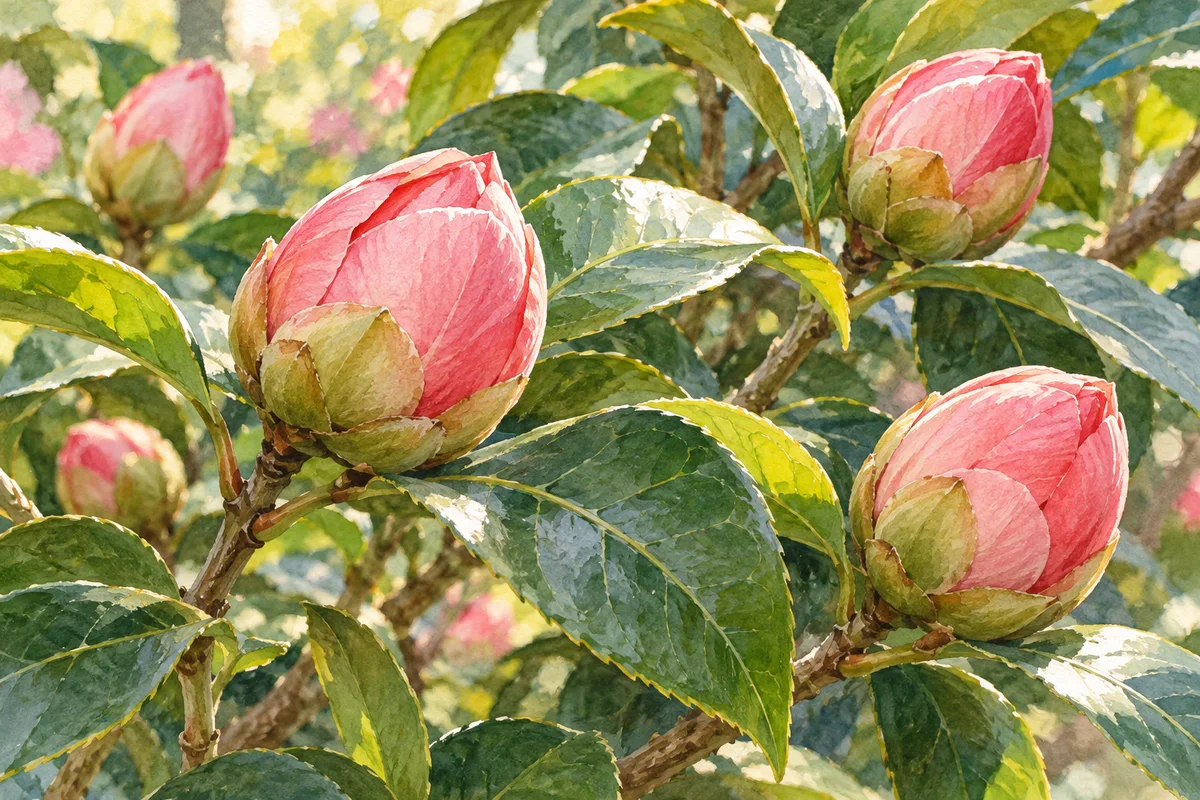
Before a flower opens.
Make the words you meet in books your own, one quiz at a time. Discover Japanese kanji readings, meanings and usage with DuraRing.
Unfamiliar kanji? Scan and look it up.Explore the OCR & AI dictionaryHow do you read this in Japanese?
Read it as the name for a flower that has not yet opened.
HINTShow hint
The closed form of a flower before its petals open.
More on radicals and this quiz’s stroke counts
Describe the shapes you see
You do not need to know the radical’s name. Try these searches for this quiz’s characters.
grass radical above 雷
grass radical above 雨 and 田
16 stroke kanji for an unopened flower
These searches describe visual similarities, not formal radicals or character components.
蕾 has 16 strokes and the radical 艸 (grass). Radicals are dictionary classifications. The shape-based search phrases below provide other lookup clues.
蕾16 strokes / radical: 艸 (grass)
Stroke counts and radicals follow the Japanese dictionary Kanjipedia; other dictionaries may differ.
ANSWERShow answerHide answer
The answer is
つぼみ
tsubomi
蕾
Understand the meaning
English translationFlower bud
An unopened flower bud. It can also figuratively describe a young person with potential.
See it in a sentence
庭の蕾がふくらみ、花の季節が近づいていた。The garden buds swelled as the flowering season approached.
A way to remember
Read it tsubomi. The shape below the grass radical is 雷; connect the shape with a closed flower bud.
Sources:Kanjipedia: 蕾
The explanation draws on the sources below. Examples were written for this page.
Explore the word further
Using 蕾
蕾がふくらむ and まだ蕾のまま describe a flower before opening. Contrasting buds with open flowers can show change over time.
例:昨日まで小さかった蕾が、今朝は大きくふくらんでいた。
The bud that was small yesterday had swollen noticeably by this morning.
Reading and meaning in context
The dictionary also records a figurative use for a promising young person. Check whether the passage concerns a plant or compares human development to a flower.
References for this explanation:Kanjipedia: 蕾
Explanation checked on 2026-10-23. Additional examples were written by DuraRing for this page.
The answer and explanation stay hidden until you open them.
Read and learn with  .
Photograph unfamiliar kanji, look them up and save them in the app, linked to your book.A reading app that helps you revisit words in the context of your books.
Capture and look up kanji
Photograph a printed page.Check kanji readings and meanings.
Save words. Connect them to books.
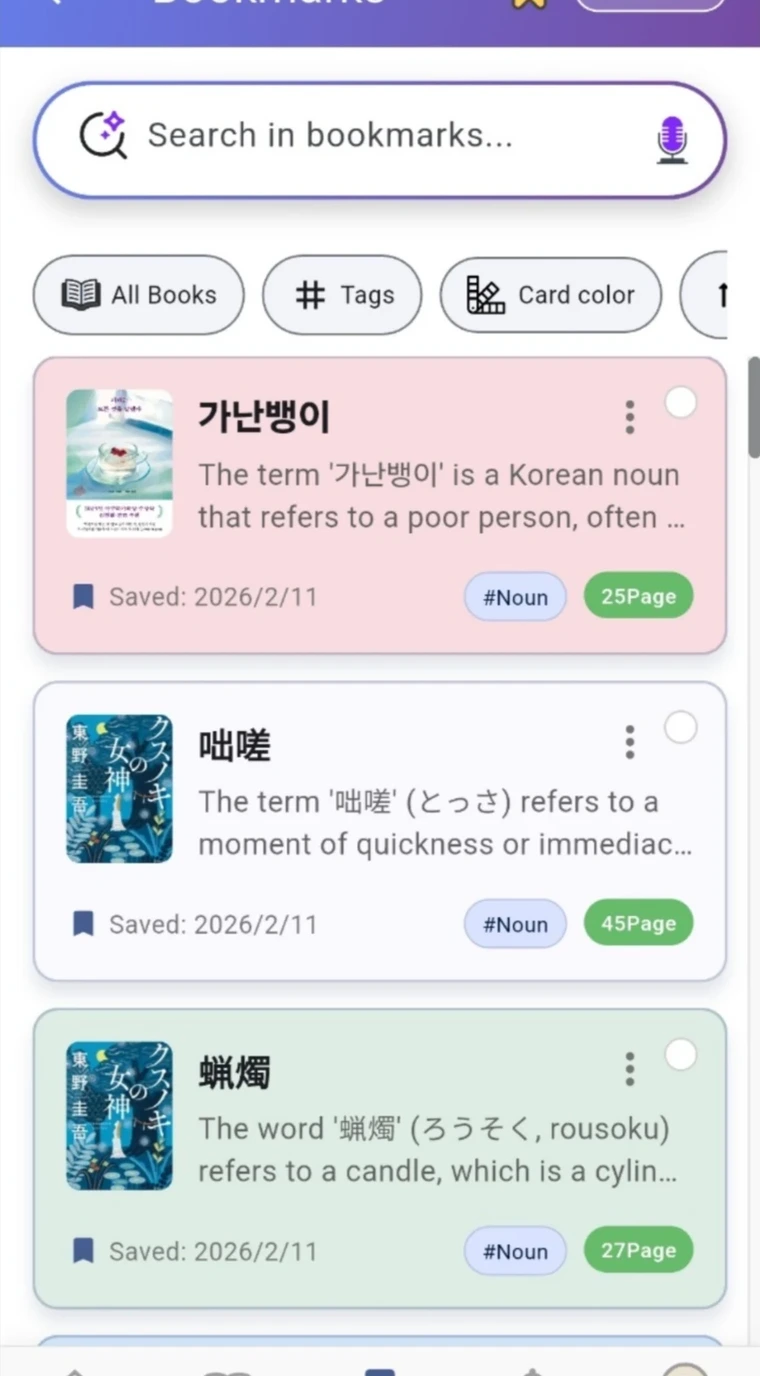
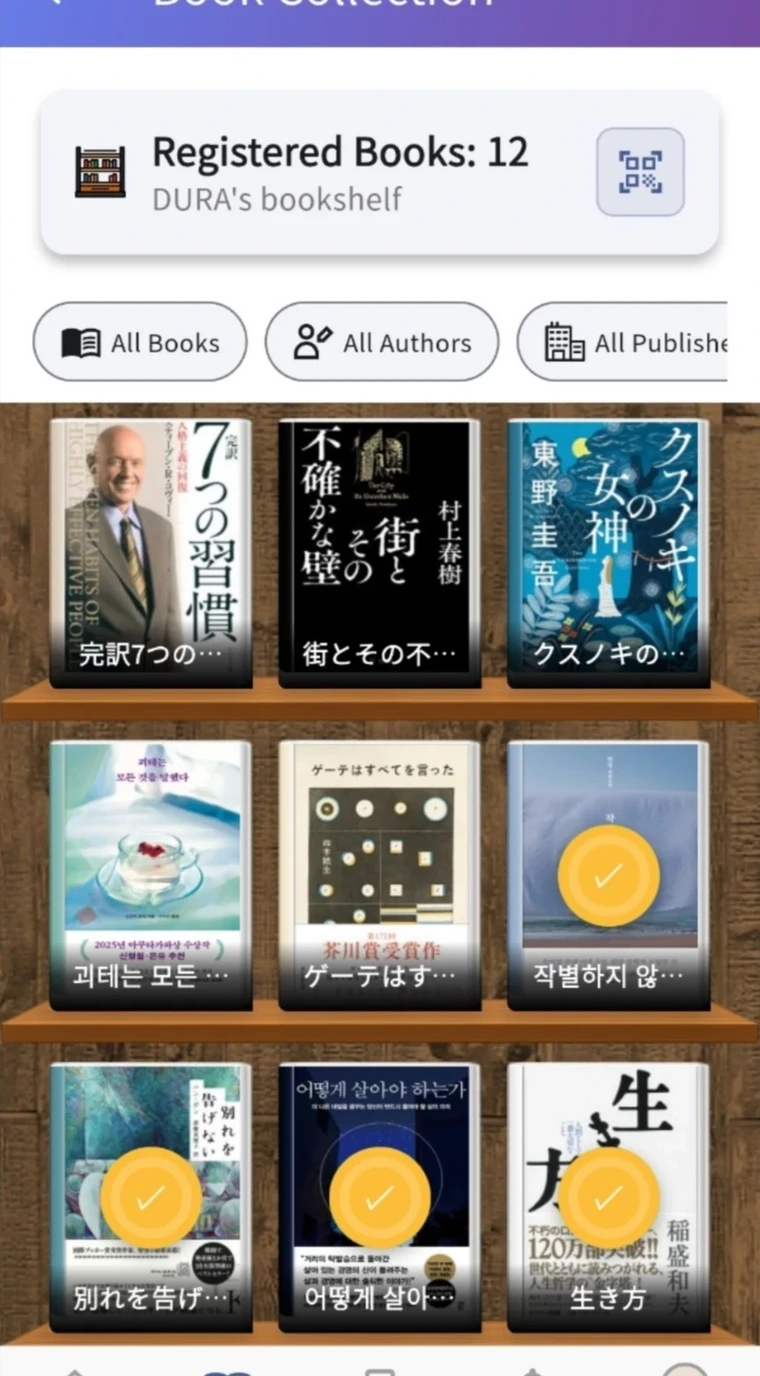
Save readings and meanings with the book and page.Revisit your reading through notes linked to your bookshelf.
① illustrates the capture feature. ② shows actual app screens.