
Kanji quizzes for the joy of reading
How do you read 靄 in Japanese?
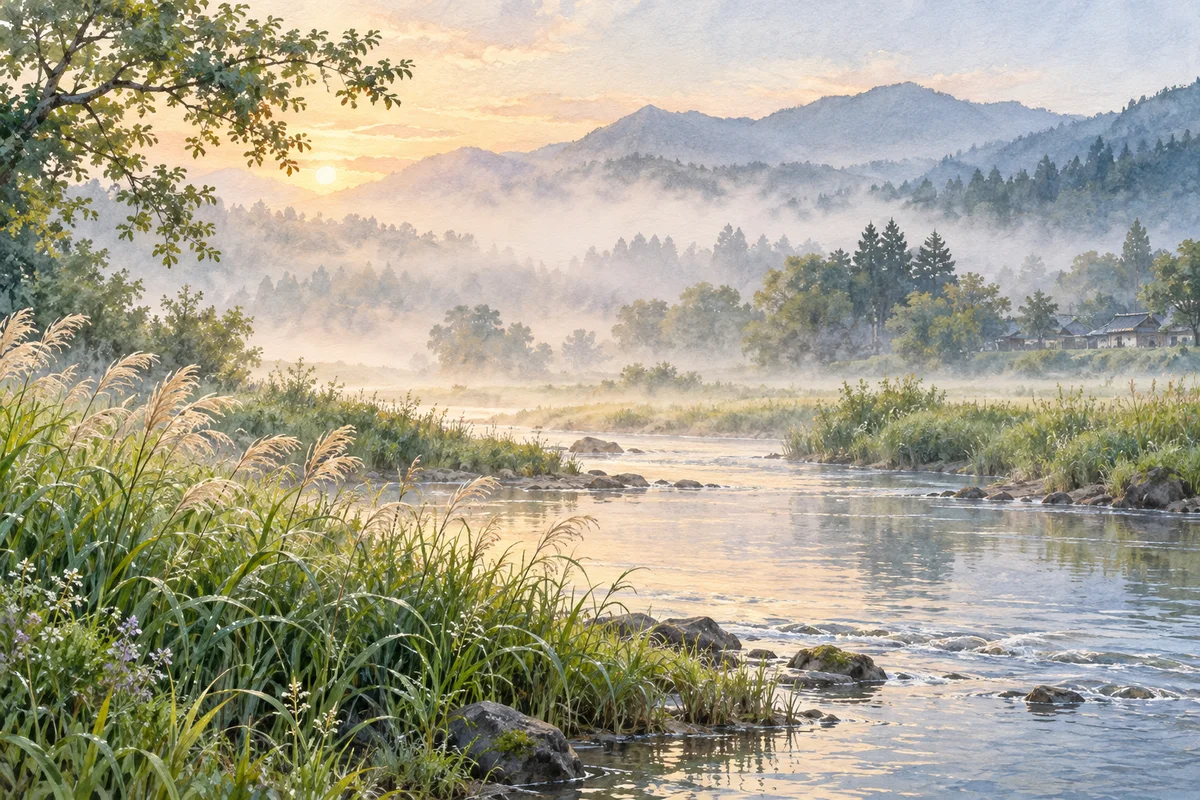
A thin veil over the morning landscape.
Make the words you meet in books your own, one quiz at a time. Discover Japanese kanji readings, meanings and usage with DuraRing.
Unfamiliar kanji? Scan and look it up.Explore the OCR & AI dictionaryHow do you read this in Japanese?
Read 靄 in 川に靄がかかる, describing mist over a river.
HINTShow hint
Fine droplets can make distant scenery look whitish. Two hiragana beginning with mo.
More on radicals and this quiz’s stroke counts
Describe the shapes you see
You do not need to know the radical’s name. Try these searches for this quiz’s characters.
kanji with 雨 over 言 and 曷
rain radical 24 strokes misty scenery
kanji like fog with a complicated shape under 雨
These searches describe visual similarities, not formal radicals or character components.
靄 has 24 strokes and the radical 雨 (rain). Radicals are dictionary classifications. The shape-based search phrases below provide other lookup clues.
靄24 strokes / radical: 雨 (rain)
Stroke counts and radicals follow the Japanese dictionary Kanjipedia; other dictionaries may differ.
ANSWERShow answerHide answer
The answer is
もや
moya
靄
Understand the meaning
English translationMist
Mist that lightly obscures the landscape as fine droplets or particles hang in the air. It appears in descriptions of morning rivers and hills.
See it in a sentence
朝の川に薄い靄がかかり、対岸の木々がかすんでいた。Light morning mist lay over the river, softening the trees on the opposite bank.
A way to remember
This single character has 24 strokes. Look under 雨. Dictionaries distinguish this lighter mist from the denser fog described by 霧.
Sources:Kanjipedia: 靄
The explanation draws on the sources below. Examples were written for this page.
Explore the word further
Using 靄
靄が立ちこめる and 靄が晴れる describe changes in distant visibility. They can show a scene gradually coming into view.
例:朝の靄が薄れ、対岸の家並みが見えてきた。
As the morning mist thinned, the houses on the opposite bank came into view.
Reading and meaning in context
The reference describes 靄 as allowing better visibility than 霧. Learn the reading もや without treating a photograph alone as a precise weather measurement.
References for this explanation:Kanjipedia: 靄
Explanation checked on 2026-10-23. Additional examples were written by DuraRing for this page.
The answer and explanation stay hidden until you open them.
Read and learn with  .
Photograph unfamiliar kanji, look them up and save them in the app, linked to your book.A reading app that helps you revisit words in the context of your books.
Capture and look up kanji
Photograph a printed page.Check kanji readings and meanings.
Save words. Connect them to books.
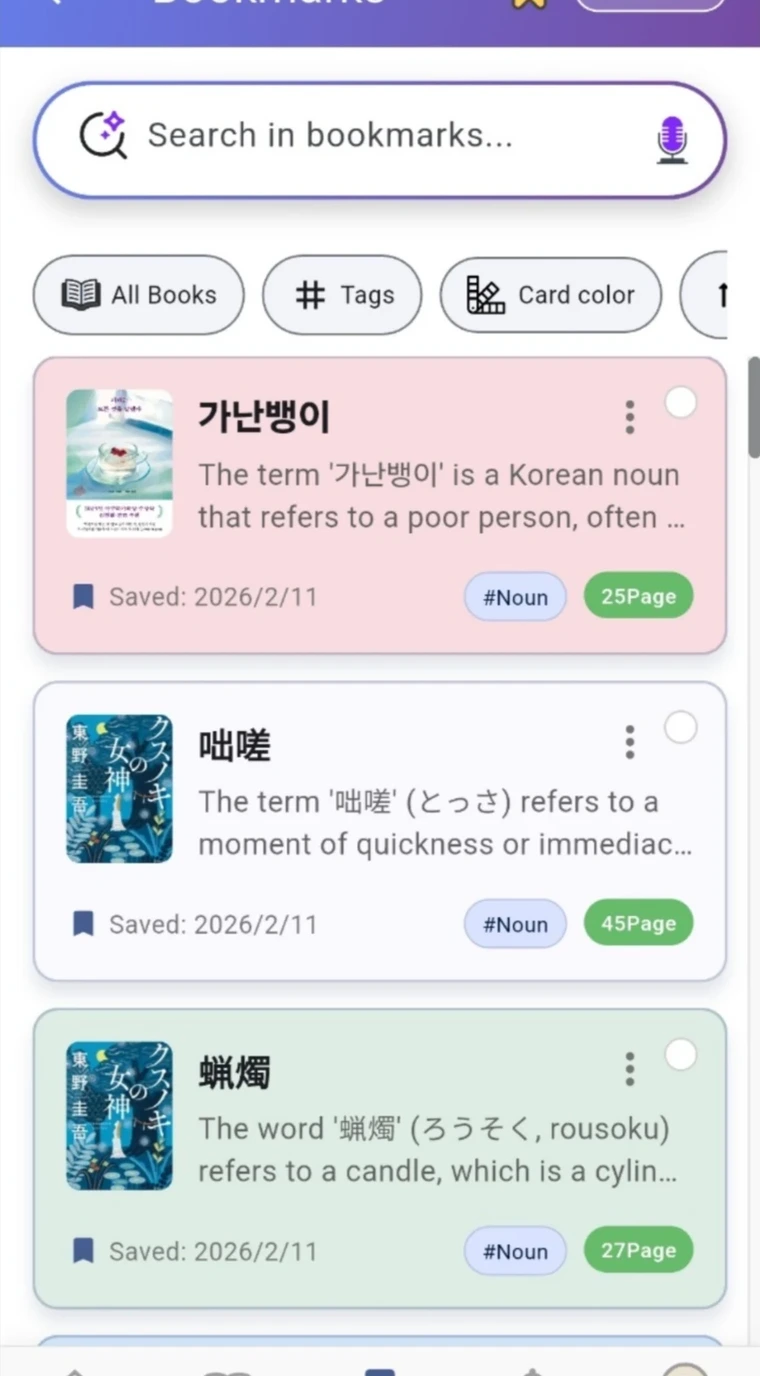
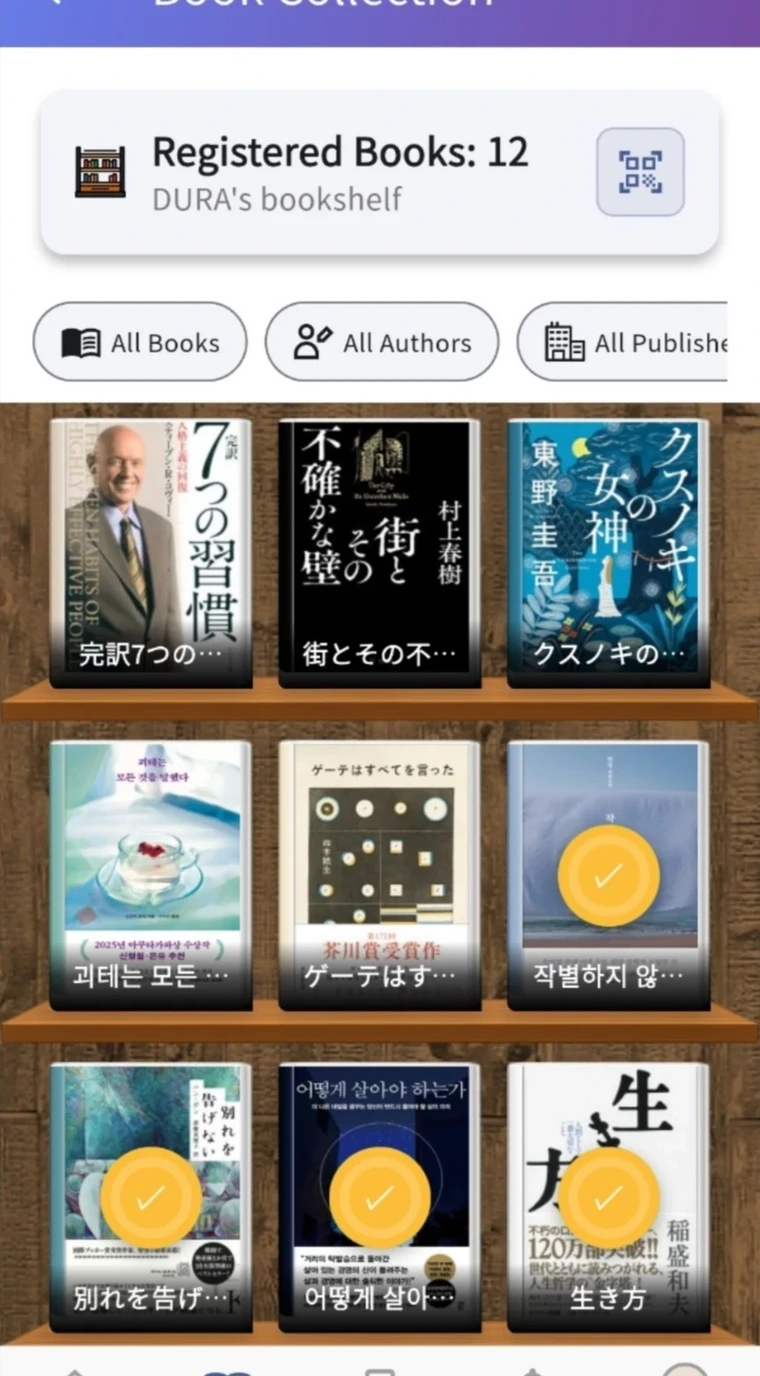
Save readings and meanings with the book and page.Revisit your reading through notes linked to your bookshelf.
① illustrates the capture feature. ② shows actual app screens.