
Kanji quizzes for the joy of reading
How do you read 静謐 in Japanese?
A word for a world grown quiet.
Make the words you meet in books your own, one quiz at a time. Discover Japanese kanji readings, meanings and usage with DuraRing.
Unfamiliar kanji? Scan and look it up.Explore the OCR & AI dictionaryHow do you read this in Japanese?
Think of your answer before you look.
HINTShow hint
It describes peaceful stillness. In a novel, it might describe the atmosphere of a garden or room.
More on radicals and this quiz’s stroke counts
Describe the shapes you see
You do not need to know the radical’s name. Try these searches for this quiz’s characters.
kanji with 青 beside 争
speech radical with 必 above 皿
言 next to 必 with 皿 underneath
These searches describe visual similarities, not formal radicals or character components.
静 belongs to 青 and 謐 to 言. The speech radical often occurs in language-related characters, but does not by itself reveal this word’s reading or meaning.
静14 strokes / radical: 青 (blue/green)
謐17 strokes / radical: 言 (speech)
Stroke counts and radicals follow the Japanese dictionary Kanjipedia; other dictionaries may differ.
ANSWERShow answerHide answer
The answer is
せいひつ
seihitsu
静謐
Understand the meaning
English translationTranquility / stillness
A state of quiet calm. It can describe the still, peaceful atmosphere of a place, rather than simply a low level of sound.

See it in a sentence
朝の庭は静謐で、水面には木々の影だけが映っていた。The morning garden was tranquil, with only the trees reflected on the water.
A way to remember
静 is sei and 謐 is hitsu. 謐 also conveys quiet and peace. Pair the word with the image of a tranquil garden.
Sources:Kanjipedia: 静謐
The explanation draws on the sources below. Examples were written for this page.
Explore the word further
Using 静謐
静謐な空間 and 静謐を取り戻す describe a calm quietness. When reading a scene, consider the sense of peace as well as the sound level.
例:来館者が帰った展示室に、静謐な時間が流れていた。
A quiet calm settled over the exhibition room after the visitors left.
Reading and meaning in context
The dictionary also includes peace and stability in society. Do not replace every use with “soundless”; check whether it describes a place or a wider state of affairs.
References for this explanation:Kanjipedia: 静謐
Explanation checked on 2026-10-23. Additional examples were written by DuraRing for this page.
The answer and explanation stay hidden until you open them.
Read and learn with  .
Photograph unfamiliar kanji, look them up and save them in the app, linked to your book.A reading app that helps you revisit words in the context of your books.
Capture and look up kanji
Photograph a printed page.Check kanji readings and meanings.
Save words. Connect them to books.
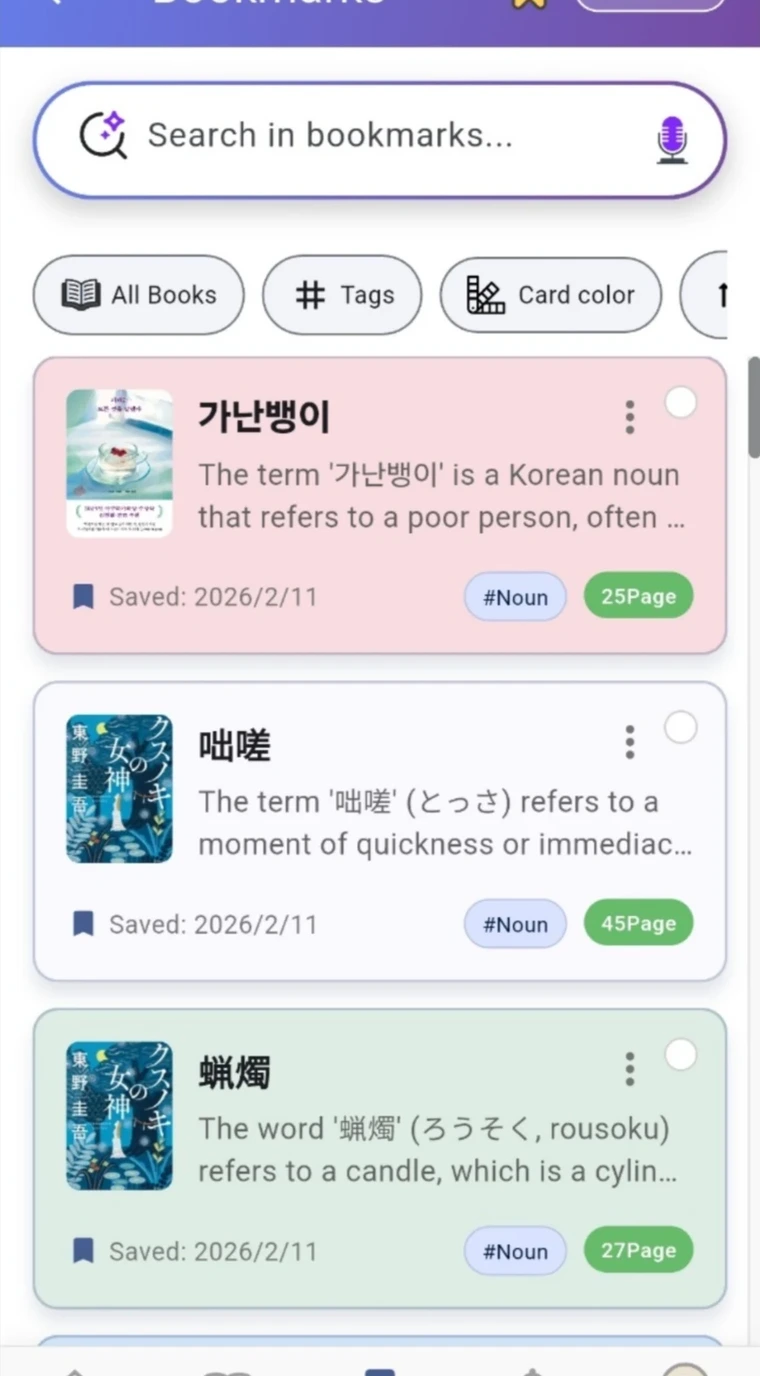
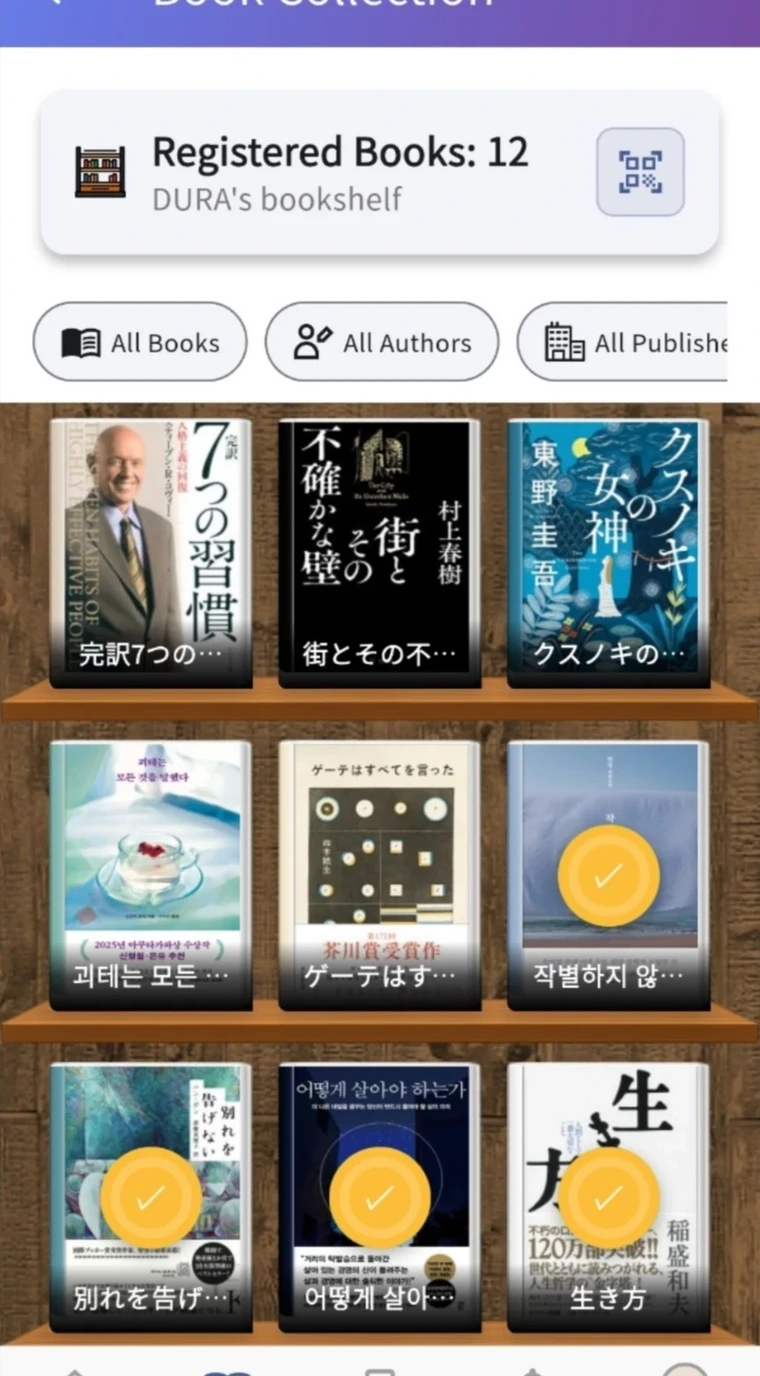
Save readings and meanings with the book and page.Revisit your reading through notes linked to your bookshelf.
① illustrates the capture feature. ② shows actual app screens.