
Kanji quizzes for the joy of reading
How do you read 寂寥 in Japanese?
The quiet after everyone has gone.
Make the words you meet in books your own, one quiz at a time. Discover Japanese kanji readings, meanings and usage with DuraRing.
Unfamiliar kanji? Scan and look it up.Explore the OCR & AI dictionaryHow do you read this in Japanese?
Think of your answer before you look.
HINTShow hint
A still, lonely feeling. The reading begins with seki.
More on radicals and this quiz’s stroke counts
Describe the shapes you see
You do not need to know the radical’s name. Try these searches for this quiz’s characters.
roof radical over 羽 人 and three slanting lines
after 寂 roof radical 14 strokes
two kanji beginning with 寂 meaning lonely
These searches describe visual similarities, not formal radicals or character components.
寂 has 11 strokes and the radical 宀 (roof). 寥 has 14 strokes and the radical 宀 (roof). Radicals are dictionary classifications. The shape-based search phrases below provide other lookup clues.
寂11 strokes / radical: 宀 (roof)
寥14 strokes / radical: 宀 (roof)
Stroke counts and radicals follow the Japanese dictionary Kanjipedia; other dictionaries may differ.
ANSWERShow answerHide answer
The answer is
せきりょう
sekiryō
寂寥
Understand the meaning
English translationLonely stillness / desolation
A sense of stillness and loneliness, used for deserted places or hushed landscapes.

See it in a sentence
列車が去ったホームには、寂寥とした空気が残った。A lonely stillness remained on the platform after the train departed.
A way to remember
寂 is seki in this word, not jaku. Look for 羽, 人 and three slanting lines in the lower part of 寥.
Sources:Kanjipedia: 寂寥
The explanation draws on the sources below. Examples were written for this page.
Explore the word further
Using 寂寥
寂寥を感じる and 寂寥とした景色 combine quietness with loneliness. Notice the emotional impression as well as the sound.
例:祭りの翌朝、飾りの外された広場に寂寥を感じた。
The morning after the festival, the square without its decorations felt lonely and deserted.
Reading and meaning in context
Quietness alone does not always imply 寂寥. In this example, the key is the loneliness left after the bustle has gone.
References for this explanation:Kanjipedia: 寂寥
Explanation checked on 2026-10-23. Additional examples were written by DuraRing for this page.
The answer and explanation stay hidden until you open them.
Read and learn with  .
Photograph unfamiliar kanji, look them up and save them in the app, linked to your book.A reading app that helps you revisit words in the context of your books.
Capture and look up kanji
Photograph a printed page.Check kanji readings and meanings.
Save words. Connect them to books.
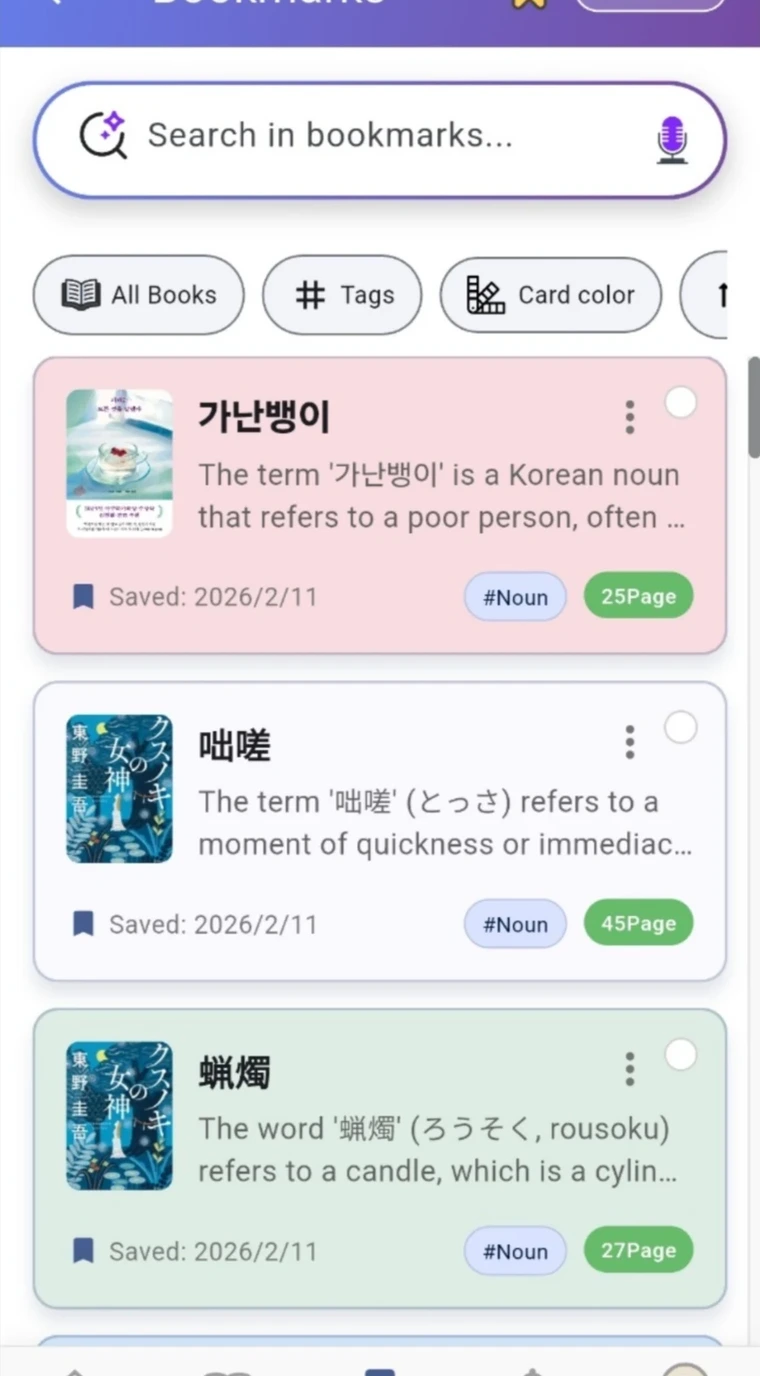
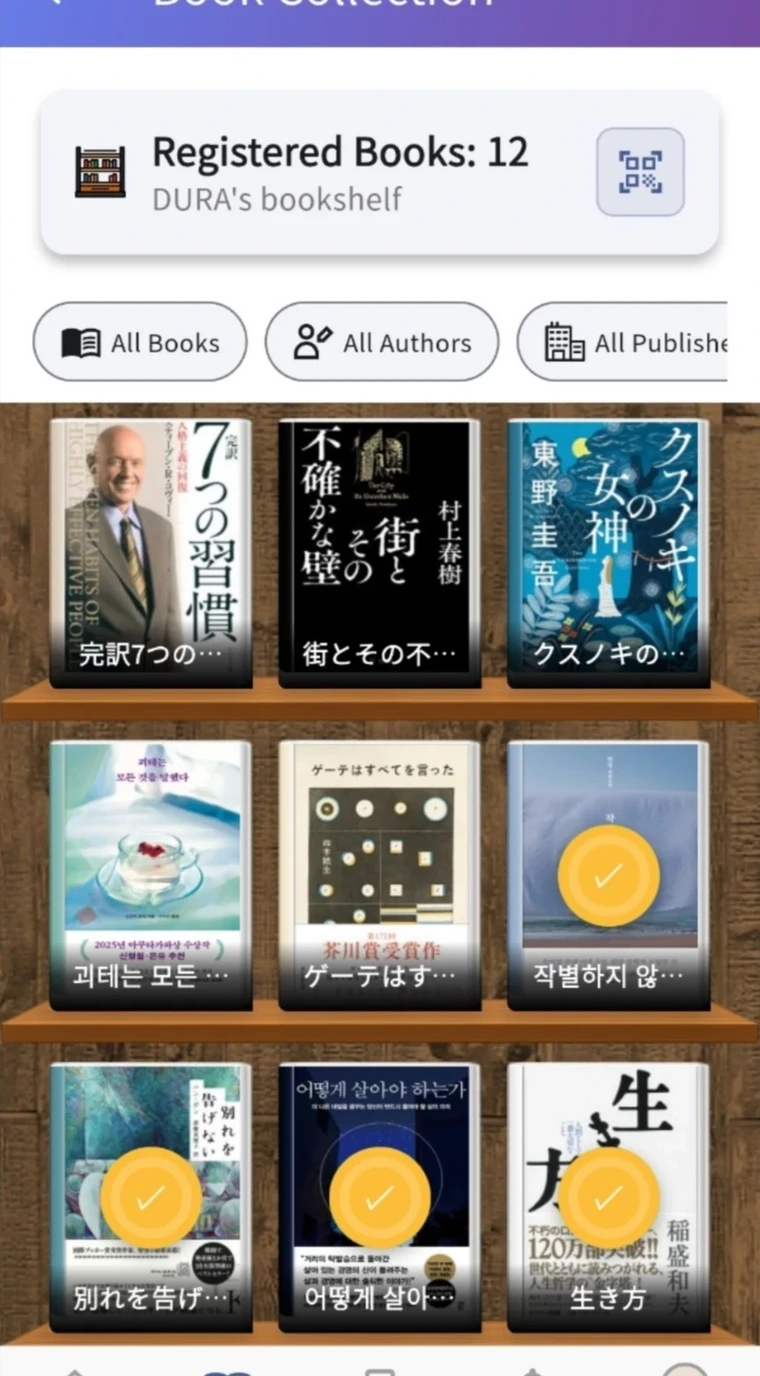
Save readings and meanings with the book and page.Revisit your reading through notes linked to your bookshelf.
① illustrates the capture feature. ② shows actual app screens.