
Kanji quizzes for the joy of reading
How do you read 泡沫 in Japanese?
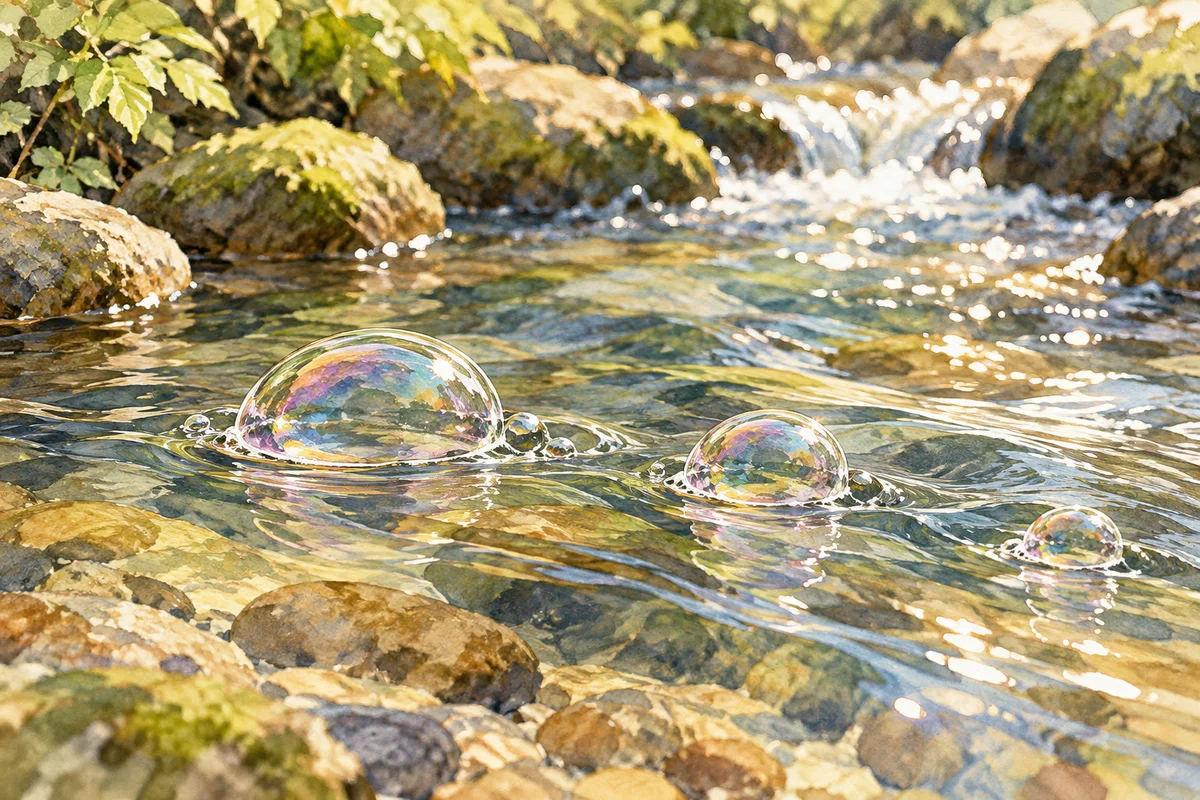
Small bubbles that quickly vanish.
Make the words you meet in books your own, one quiz at a time. Discover Japanese kanji readings, meanings and usage with DuraRing.
Unfamiliar kanji? Scan and look it up.Explore the OCR & AI dictionaryHow do you read this in Japanese?
Give the reading beginning with u for bubbles on water.
HINTShow hint
Bubbles on water, also an image of fleeting things. Four hiragana beginning with u.
More on radicals and this quiz’s stroke counts
Describe the shapes you see
You do not need to know the radical’s name. Try these searches for this quiz’s characters.
water radicals beside 包 and 末
泡 followed by water radical and 末 reading
fleeting bubbles four hiragana reading
These searches describe visual similarities, not formal radicals or character components.
泡 has 8 strokes and the radical 水 (water). 沫 has 8 strokes and the radical 水 (water). Radicals are dictionary classifications. The shape-based search phrases below provide other lookup clues.
泡8 strokes / radical: 水 (water)
沫8 strokes / radical: 水 (water)
Stroke counts and radicals follow the Japanese dictionary Kanjipedia; other dictionaries may differ.
ANSWERShow answerHide answer
The answer is
うたかた
utakata
泡沫
Understand the meaning
English translationBubbles / something fleeting
Bubbles on water, and by extension something fragile or short-lived, like a bubble that soon disappears.
See it in a sentence
流れに浮かぶ泡沫は、岸に着く前に消えてしまった。The bubbles drifting downstream disappeared before reaching the bank.
A way to remember
Hōmatsu is also correct. This question asks specifically for utakata, beginning with u.
Sources:Kanjipedia: 泡沫
The explanation draws on the sources below. Examples were written for this page.
Explore the word further
Using 泡沫
泡沫のように消える compares something fleeting to bubbles on water. It can describe a brief dream or experience in retrospect.
例:目覚めると、楽しかった夢は泡沫のように消えてしまった。
When I woke, the pleasant dream vanished like bubbles on water.
Reading and meaning in context
The word has literal and figurative senses. This quiz uses うたかた, but ほうまつ is also a reading; check the context when meeting it elsewhere.
References for this explanation:Kanjipedia: 泡沫
Explanation checked on 2026-10-23. Additional examples were written by DuraRing for this page.
The answer and explanation stay hidden until you open them.
Read and learn with  .
Photograph unfamiliar kanji, look them up and save them in the app, linked to your book.A reading app that helps you revisit words in the context of your books.
Capture and look up kanji
Photograph a printed page.Check kanji readings and meanings.
Save words. Connect them to books.
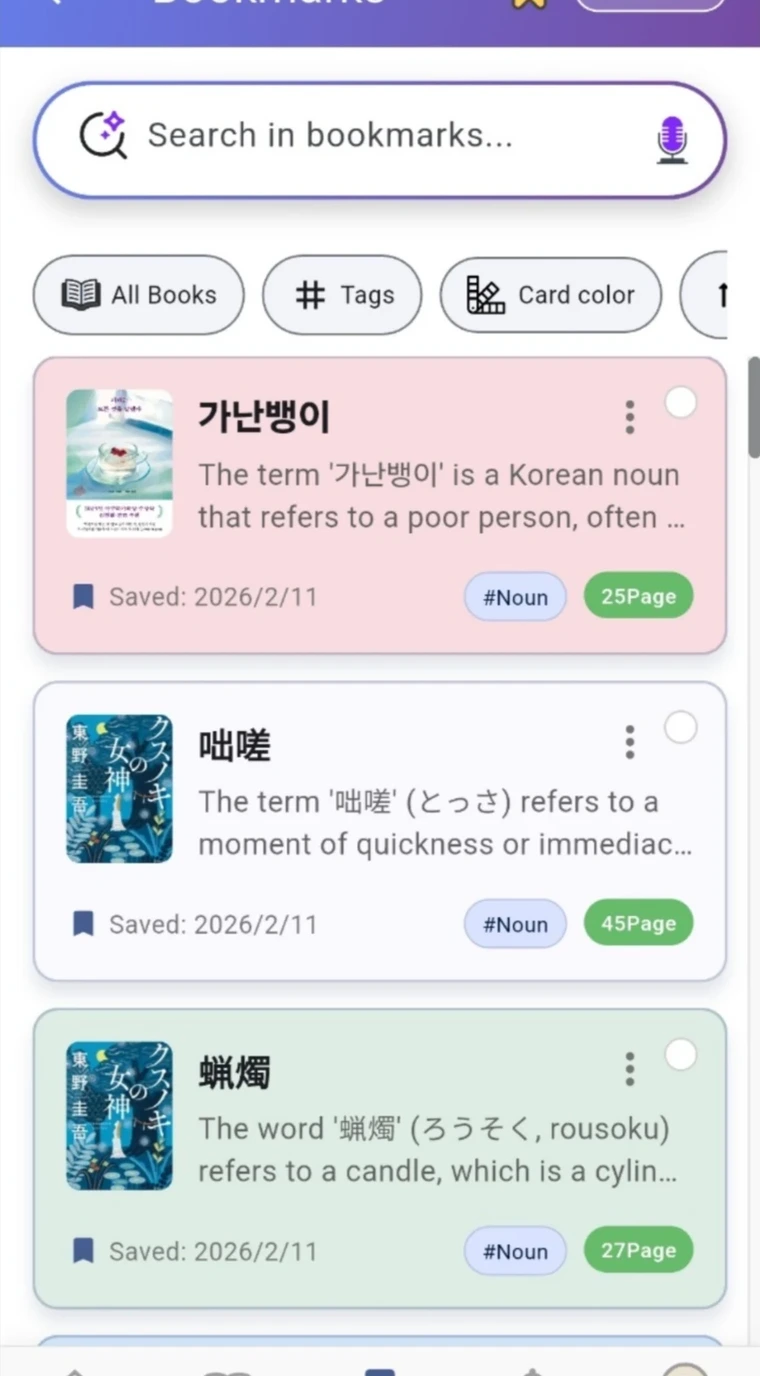
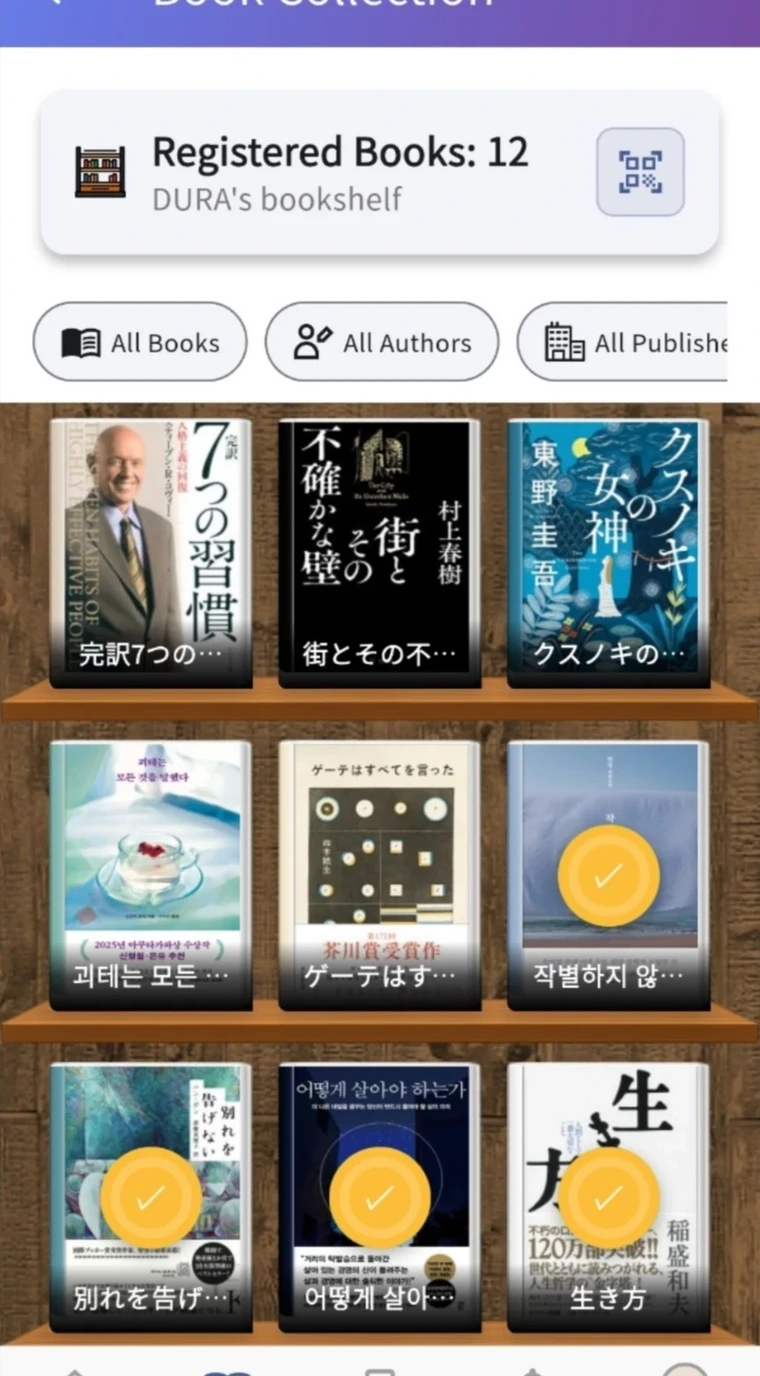
Save readings and meanings with the book and page.Revisit your reading through notes linked to your bookshelf.
① illustrates the capture feature. ② shows actual app screens.