
Kanji quizzes for the joy of reading
How do you read 山葵 in Japanese?
A green condiment with a sharp aroma.
Make the words you meet in books your own, one quiz at a time. Discover Japanese kanji readings, meanings and usage with DuraRing.
Unfamiliar kanji? Scan and look it up.Explore the OCR & AI dictionaryHow do you read this in Japanese?
Think of your answer before you look.
HINTShow hint
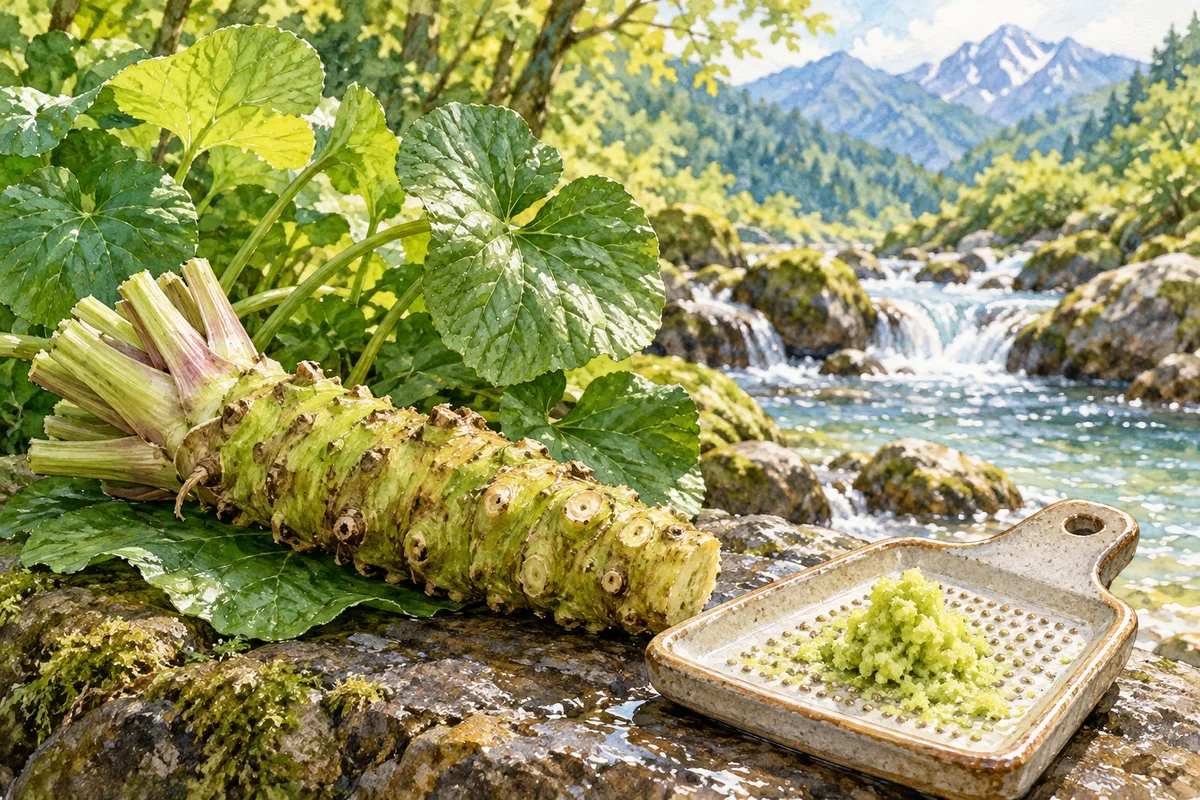
A pungent green condiment served with sushi and sashimi, from a plant associated with clear mountain streams.
More on radicals and this quiz’s stroke counts
Describe the shapes you see
You do not need to know the radical’s name. Try these searches for this quiz’s characters.
山 beside grass radical above 癸
山 and 葵 food reading
grass over a shape like 発 山 spicy food
These searches describe visual similarities, not formal radicals or character components.
山 has 3 strokes and the radical 山 (mountain). 葵 has 12 strokes and the radical 艸 (grass). Radicals are dictionary classifications. The shape-based search phrases below provide other lookup clues.
山3 strokes / radical: 山 (mountain)
葵12 strokes / radical: 艸 (grass)
Stroke counts and radicals follow the Japanese dictionary Kanjipedia; other dictionaries may differ.
ANSWERShow answerHide answer
The answer is
わさび
wasabi
山葵
Understand the meaning
English translationWasabi
Wasabi, a mustard-family plant whose grated rhizome is used as a condiment, with a distinctive aroma and sharp pungency.
See it in a sentence
刺し身に山葵を少し添えた。I added a little wasabi to the sashimi.
A way to remember
Learn 山葵 as the whole word wasabi; its reading cannot be assembled from the ordinary readings of the two characters.
Sources:Kanjipedia: 山葵
The explanation draws on the sources below. Examples were written for this page.
Explore the word further
Using 山葵
山葵をすりおろす describes grating wasabi; 山葵を添える describes serving it alongside food. The verbs distinguish preparation from presentation.
例:小皿に添えられた山葵が、食卓にさわやかな香りを運んだ。
The wasabi on the small dish brought a fresh aroma to the table.
Reading and meaning in context
The two characters together name the plant or condiment. Read the whole word as わさび, rather than reading 山 separately as やま.
References for this explanation:Kanjipedia: 山葵
Explanation checked on 2026-10-23. Additional examples were written by DuraRing for this page.
The answer and explanation stay hidden until you open them.
Read and learn with  .
Photograph unfamiliar kanji, look them up and save them in the app, linked to your book.A reading app that helps you revisit words in the context of your books.
Capture and look up kanji
Photograph a printed page.Check kanji readings and meanings.
Save words. Connect them to books.


Save readings and meanings with the book and page.Revisit your reading through notes linked to your bookshelf.
① illustrates the capture feature. ② shows actual app screens.