
Kanji quizzes for the joy of reading
How do you read 黎明 in Japanese?
Night gives way to a new beginning.
Make the words you meet in books your own, one quiz at a time. Discover Japanese kanji readings, meanings and usage with DuraRing.
Unfamiliar kanji? Scan and look it up.Explore the OCR & AI dictionaryHow do you read this in Japanese?
Think of your answer before you look.
HINTShow hint
Dawn. It can also figuratively describe the beginning of a new culture or era.
More on radicals and this quiz’s stroke counts
Describe the shapes you see
You do not need to know the radical’s name. Try these searches for this quiz’s characters.
15-stroke kanji like 黍 read rei
禾 with a knife-like shape beside it and water-like strokes below
two-kanji word ending 明 meaning dawn
These searches describe visual similarities, not formal radicals or character components.
黎: 15 strokes; radical 黍 (millet). 明: 8 strokes; radical 日 (sun). Visual search descriptions are distinct from dictionary radical classifications.
黎15 strokes / radical: 黍 (millet)
明8 strokes / radical: 日 (sun)
Stroke counts and radicals follow the Japanese dictionary Kanjipedia; other dictionaries may differ.
ANSWERShow answerHide answer
The answer is
れいめい
reimei
黎明
Understand the meaning
English translationDawn / the beginning of a new era
The time of day when night turns to morning. By comparison with dawn, it also refers to the beginnings of a new era or cultural movement.
See it in a sentence
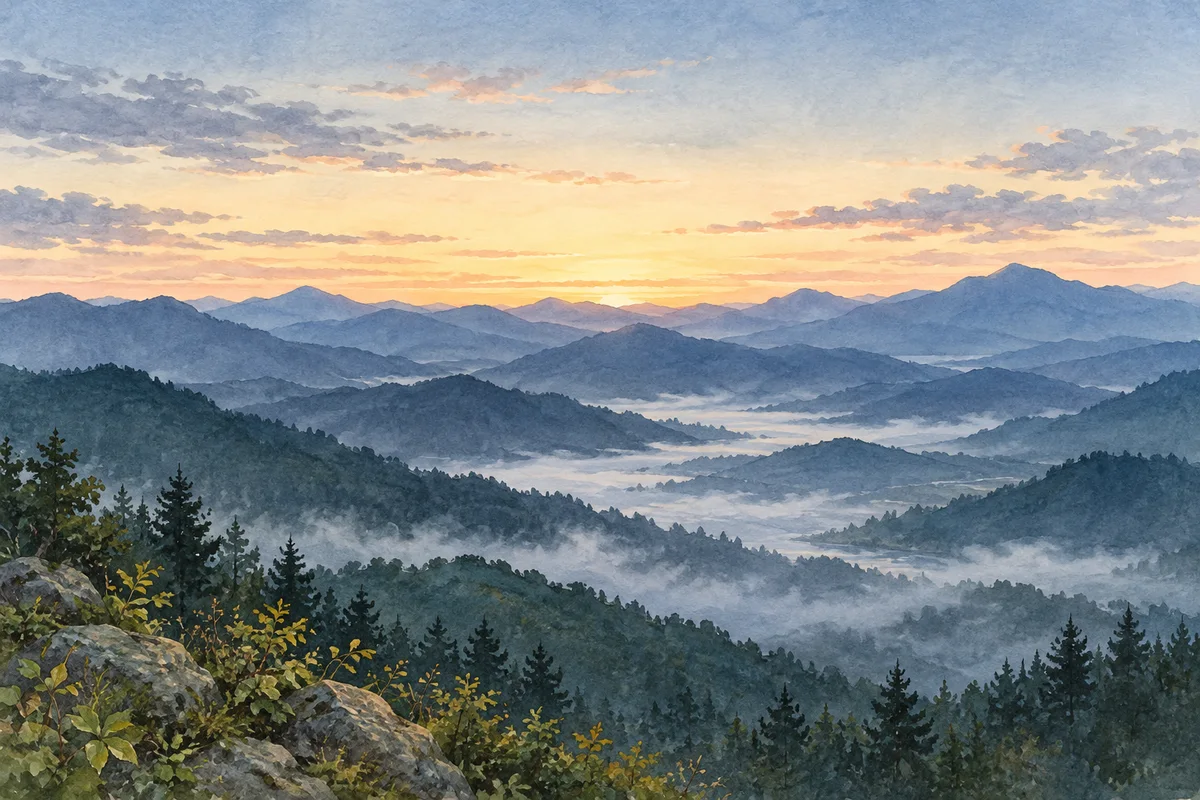
黎明の海には、出港する船の影が静かに浮かんでいた。At dawn, the silhouettes of departing boats rested quietly on the sea.
A way to remember
黎 is rei and 明 is mei here. 黎明期 is read reimeiki.
Sources:Kanjipedia: 黎明
The explanation draws on the sources below. Examples were written for this page.
Explore the word further
Use 黎明期 for an early stage
A phrase such as 映画の黎明期 describes the early period of an art or field. Naming particular works or experiments clarifies what was beginning.
例:展示室には、写真技術の黎明期に使われた道具の説明が並んでいた。
The gallery displayed explanations of tools used in the early days of photography.
Distinguish dawn from a figurative beginning
黎明の空 refers to the actual dawn sky, while 技術の黎明期 concerns an early stage of development. The latter does not mean that the events happened in the morning.
References for this explanation:Kanjipedia: 黎明
Explanation checked on 2026-10-26. Additional examples were written by DuraRing for this page.
The answer and explanation stay hidden until you open them.
Read and learn with  .
Photograph unfamiliar kanji, look them up and save them in the app, linked to your book.A reading app that helps you revisit words in the context of your books.
Capture and look up kanji
Photograph a printed page.Check kanji readings and meanings.
Save words. Connect them to books.
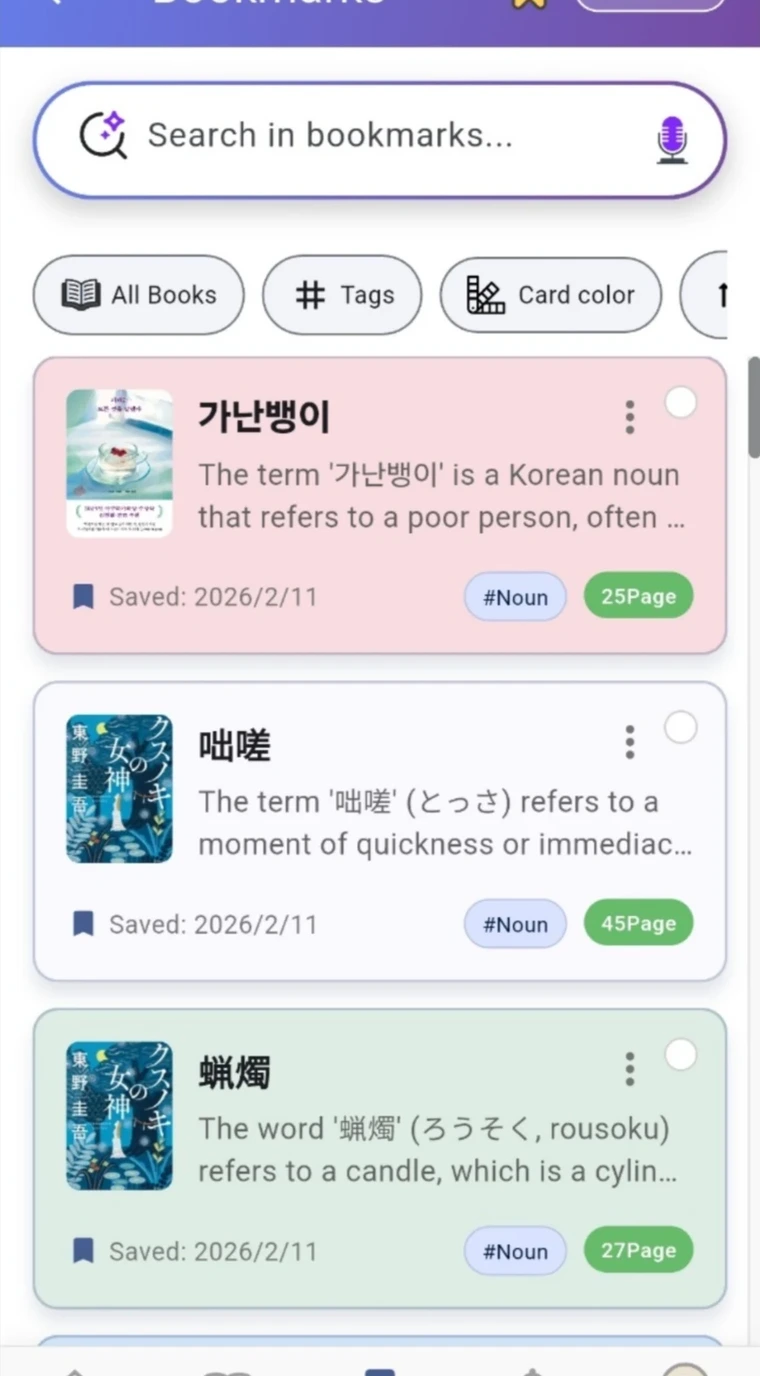
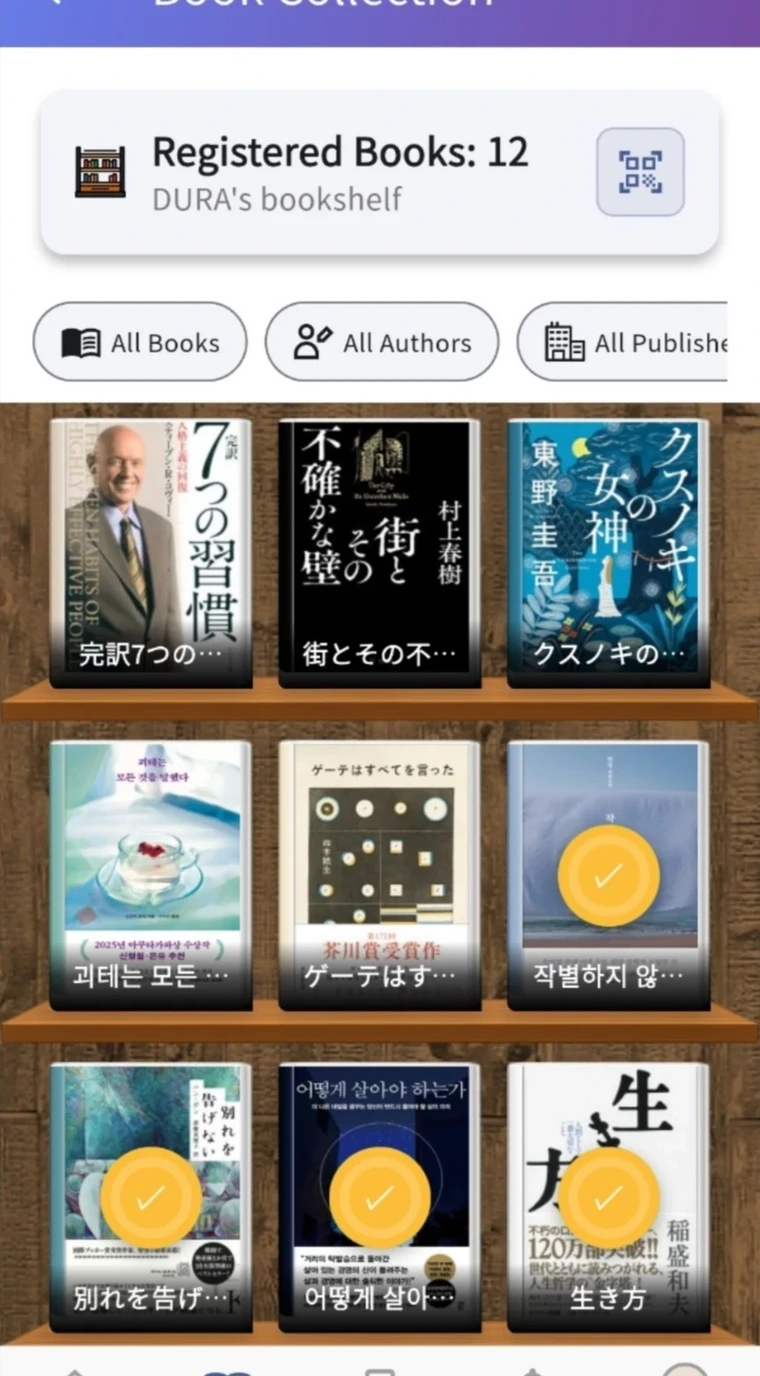
Save readings and meanings with the book and page.Revisit your reading through notes linked to your bookshelf.
① illustrates the capture feature. ② shows actual app screens.