
Kanji quizzes for the joy of reading
How do you read 叙情 in Japanese?
Give words to an inward feeling.
Make the words you meet in books your own, one quiz at a time. Discover Japanese kanji readings, meanings and usage with DuraRing.
Unfamiliar kanji? Scan and look it up.Explore the OCR & AI dictionaryHow do you read this in Japanese?
Think of your answer before you look.
HINTShow hint
Expressing personal feelings in words, often discussed in relation to poetry.
More on radicals and this quiz’s stroke counts
Describe the shapes you see
You do not need to know the radical’s name. Try these searches for this quiz’s characters.
kanji with 余 beside 又
9-stroke kanji with 又 radical read jo
reading of 叙 with heart radical beside 青
These searches describe visual similarities, not formal radicals or character components.
叙: 9 strokes; radical 又 (again). 情: 11 strokes; radical 忄 (heart). Visual search descriptions are distinct from dictionary radical classifications.
叙9 strokes / radical: 又 (again)
情11 strokes / radical: 忄 (heart)
Stroke counts and radicals follow the Japanese dictionary Kanjipedia; other dictionaries may differ.
ANSWERShow answerHide answer
The answer is
じょじょう
jojō
叙情
Understand the meaning
English translationExpression of personal feelings / lyricism
Expressing one’s feelings in writing or poetry, with attention to the emotional response to an event.

See it in a sentence
雨の日の短い詩に、作者の素直な叙情が感じられた。The short poem about a rainy day conveyed the writer’s sincere feelings.
A way to remember
叙 is short jo, while 情 is long jō: jojō, not jōjō.
Sources:Kanjipedia: 叙情
The explanation draws on the sources below. Examples were written for this page.
Explore the word further
Express the response to an experience
Use 叙情を込める or 叙情豊かな詩. Notice which words communicate longing or sadness even when the subject is simply rain.
例:窓を打つ雨音を描く詩に叙情を込め、彼は故郷への思いを表した。
He expressed his longing for home through the feelings woven into a poem about rain tapping on the window.
Feeling and expressing it
叙情 concerns expressing a feeling, not merely having it. Look at the words and techniques through which a work communicates emotion.
References for this explanation:Kanjipedia: 叙情
Explanation checked on 2026-11-02. Additional examples were written by DuraRing for this page.
The answer and explanation stay hidden until you open them.
Read and learn with  .
Photograph unfamiliar kanji, look them up and save them in the app, linked to your book.A reading app that helps you revisit words in the context of your books.
Capture and look up kanji
Photograph a printed page.Check kanji readings and meanings.
Save words. Connect them to books.
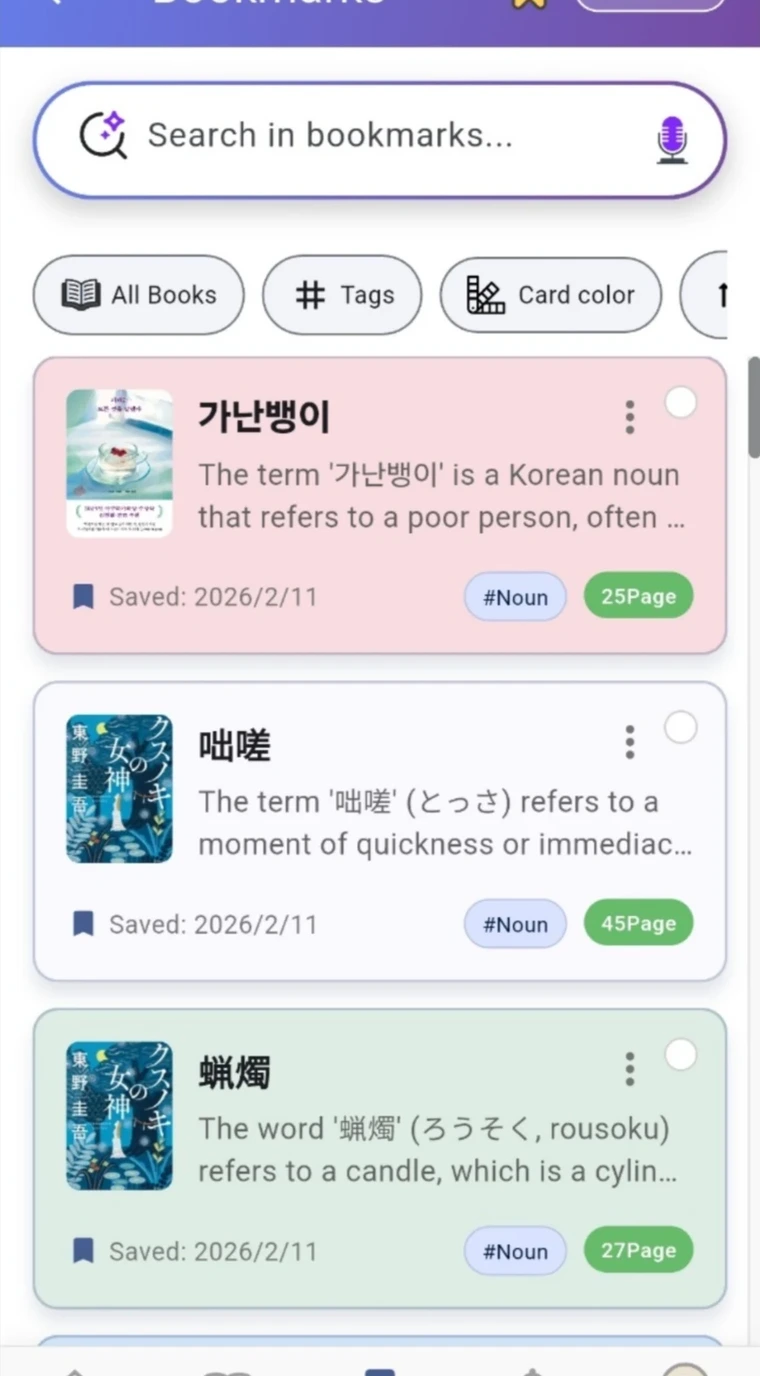
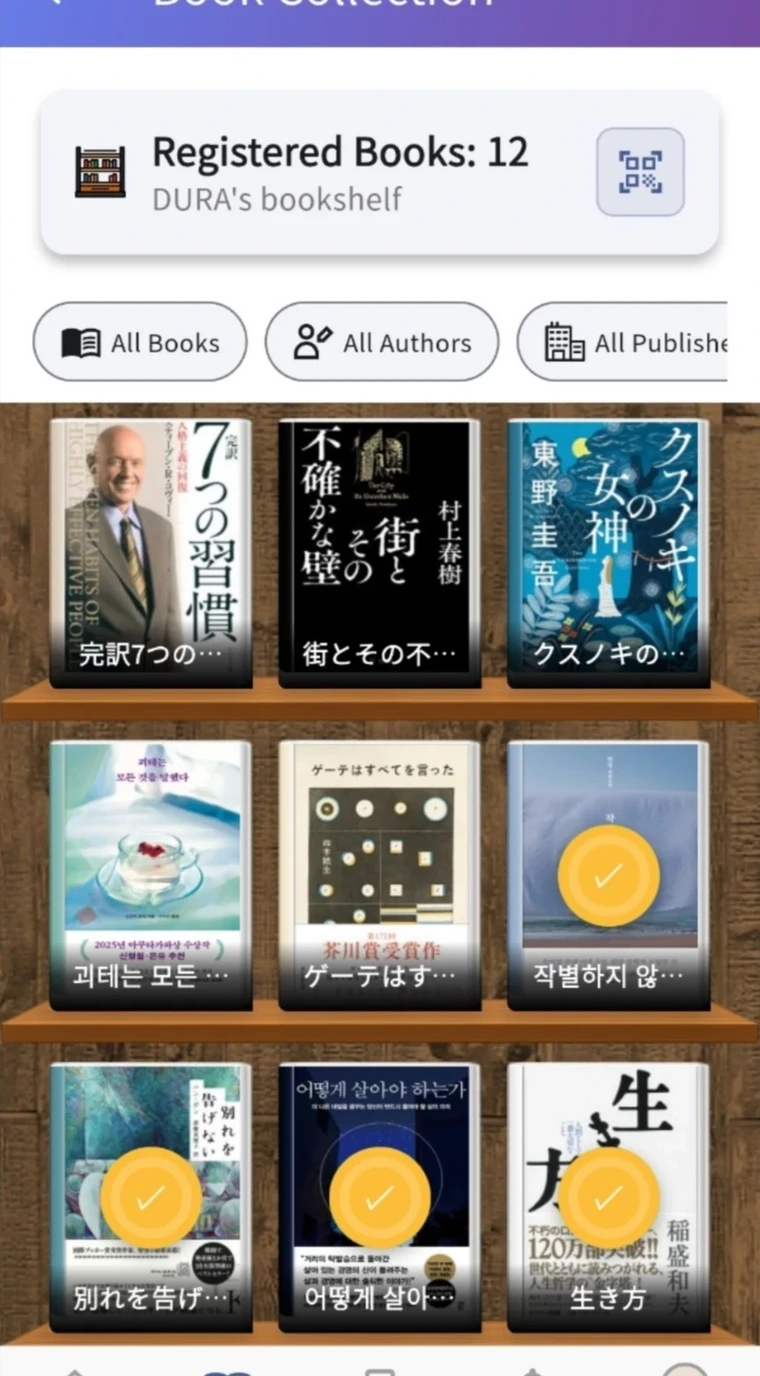
Save readings and meanings with the book and page.Revisit your reading through notes linked to your bookshelf.
① illustrates the capture feature. ② shows actual app screens.