
Kanji quizzes for the joy of reading
How do you read 情景 in Japanese?
A scene that stays in the mind.
Make the words you meet in books your own, one quiz at a time. Discover Japanese kanji readings, meanings and usage with DuraRing.
Unfamiliar kanji? Scan and look it up.Explore the OCR & AI dictionaryHow do you read this in Japanese?
Think of your answer before you look.
HINTShow hint
A scene that evokes feeling and may come to mind as you read a story.
More on radicals and this quiz’s stroke counts
Describe the shapes you see
You do not need to know the radical’s name. Try these searches for this quiz’s characters.
heart beside 青 then 日 above 京
12-stroke kanji with 日 above 京
two-kanji word starting 情 for a scene
These searches describe visual similarities, not formal radicals or character components.
情: 11 strokes; radical 忄 (heart). 景: 12 strokes; radical 日 (sun). Visual search descriptions are distinct from dictionary radical classifications.
情11 strokes / radical: 忄 (heart)
景12 strokes / radical: 日 (sun)
Stroke counts and radicals follow the Japanese dictionary Kanjipedia; other dictionaries may differ.
ANSWERShow answerHide answer
The answer is
じょうけい
jōkei
情景
Understand the meaning
English translationA scene with emotional atmosphere
A scene or view that evokes feeling, whether seen directly or imagined from a description.

See it in a sentence
小説の一行から、夕暮れの港の情景が浮かんだ。A line in the novel brought an evening harbor scene to mind.
A way to remember
情 is jō and 景 is kei. Keep the full vowel lengths in jōkei.
Sources:Kanjipedia: 情景
The explanation draws on the sources below. Examples were written for this page.
Explore the word further
Build a scene from words
Use 情景が浮かぶ or 情景を描く. Position, light, and sound help turn a passage into an imaginable scene.
例:鐘の音を一つ書き添えると、静かな村の情景がより鮮やかになった。
Adding a single bell sound made the quiet village scene more vivid.
It is more than an emotion alone
情景 directs attention to the scene that evokes feeling. Look beyond an emotion such as sadness to what was visible and how the scene appeared.
References for this explanation:Kanjipedia: 情景
Explanation checked on 2026-11-02. Additional examples were written by DuraRing for this page.
The answer and explanation stay hidden until you open them.
Read and learn with  .
Photograph unfamiliar kanji, look them up and save them in the app, linked to your book.A reading app that helps you revisit words in the context of your books.
Capture and look up kanji
Photograph a printed page.Check kanji readings and meanings.
Save words. Connect them to books.
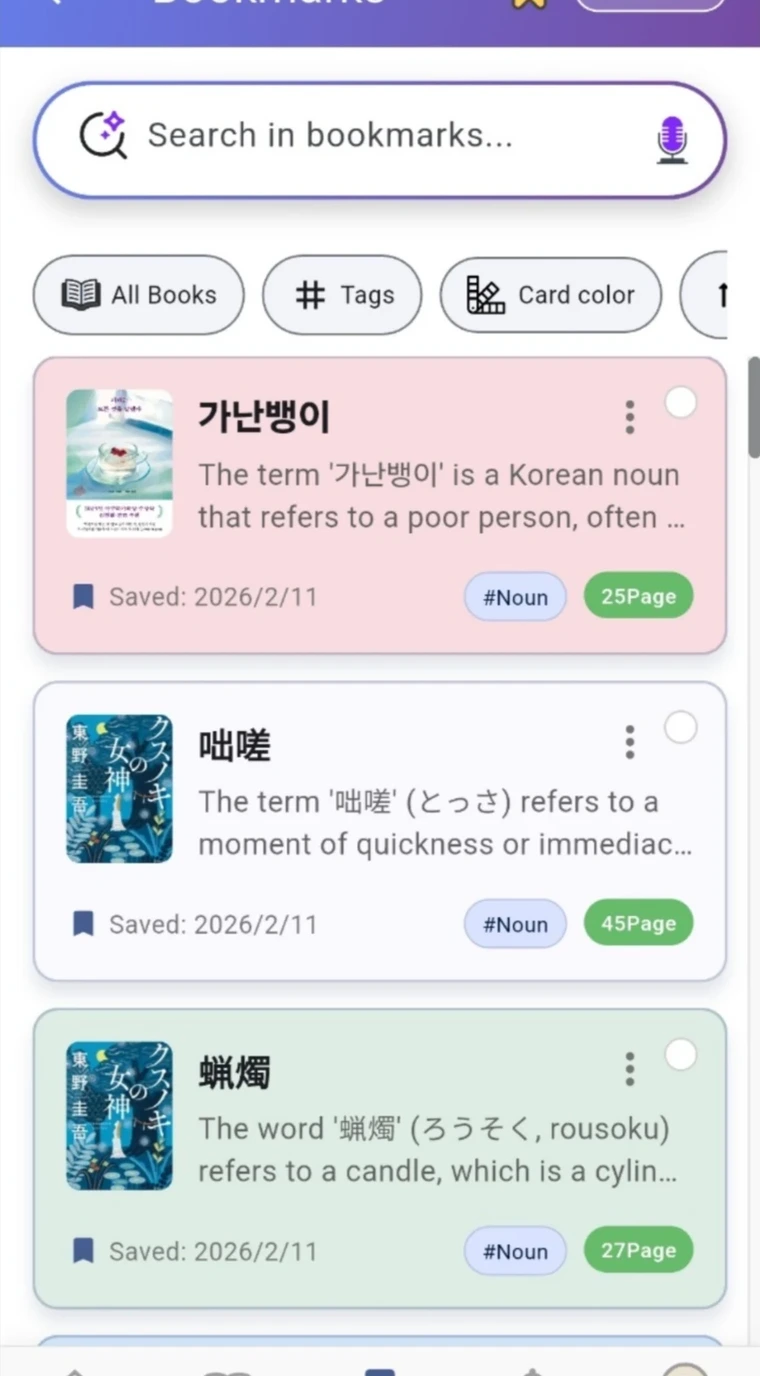
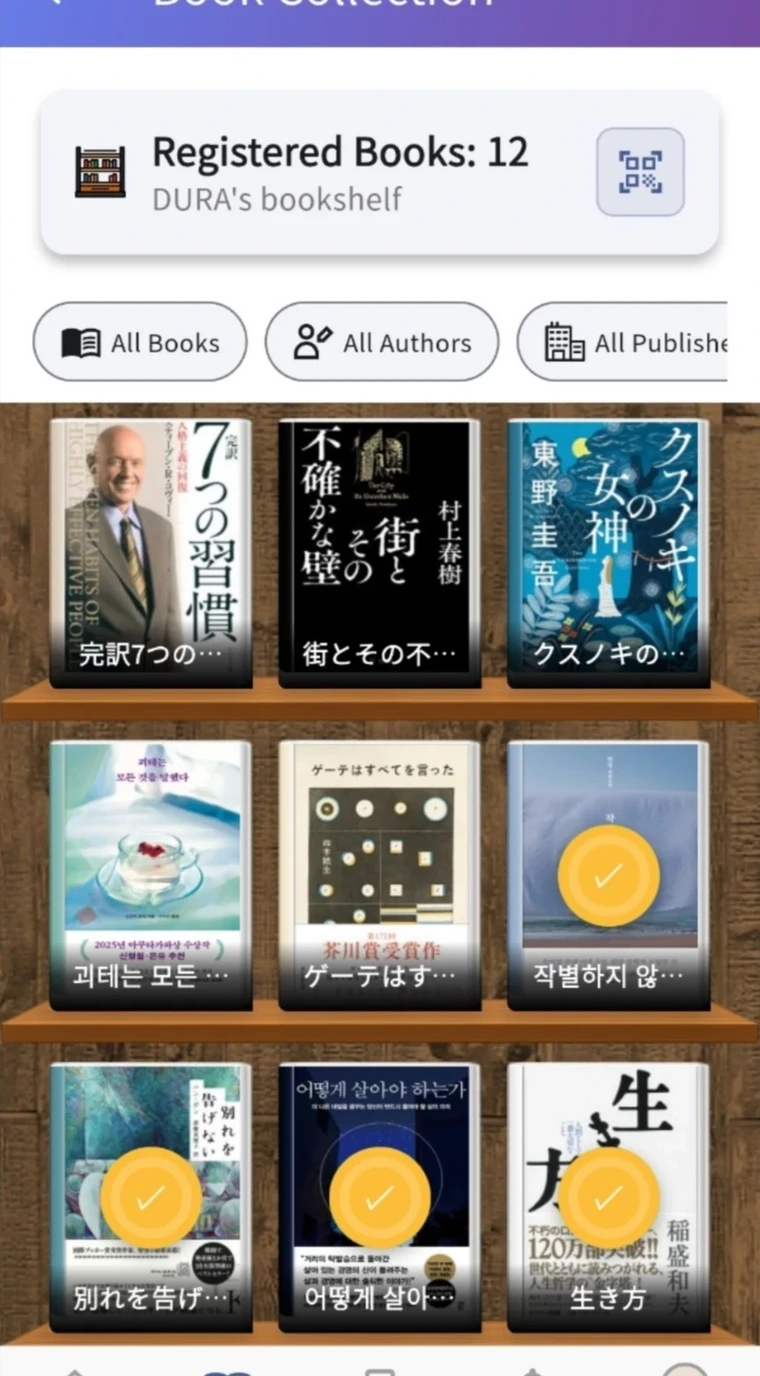
Save readings and meanings with the book and page.Revisit your reading through notes linked to your bookshelf.
① illustrates the capture feature. ② shows actual app screens.