
Kanji quizzes for the joy of reading
How do you read 宵 in Japanese?
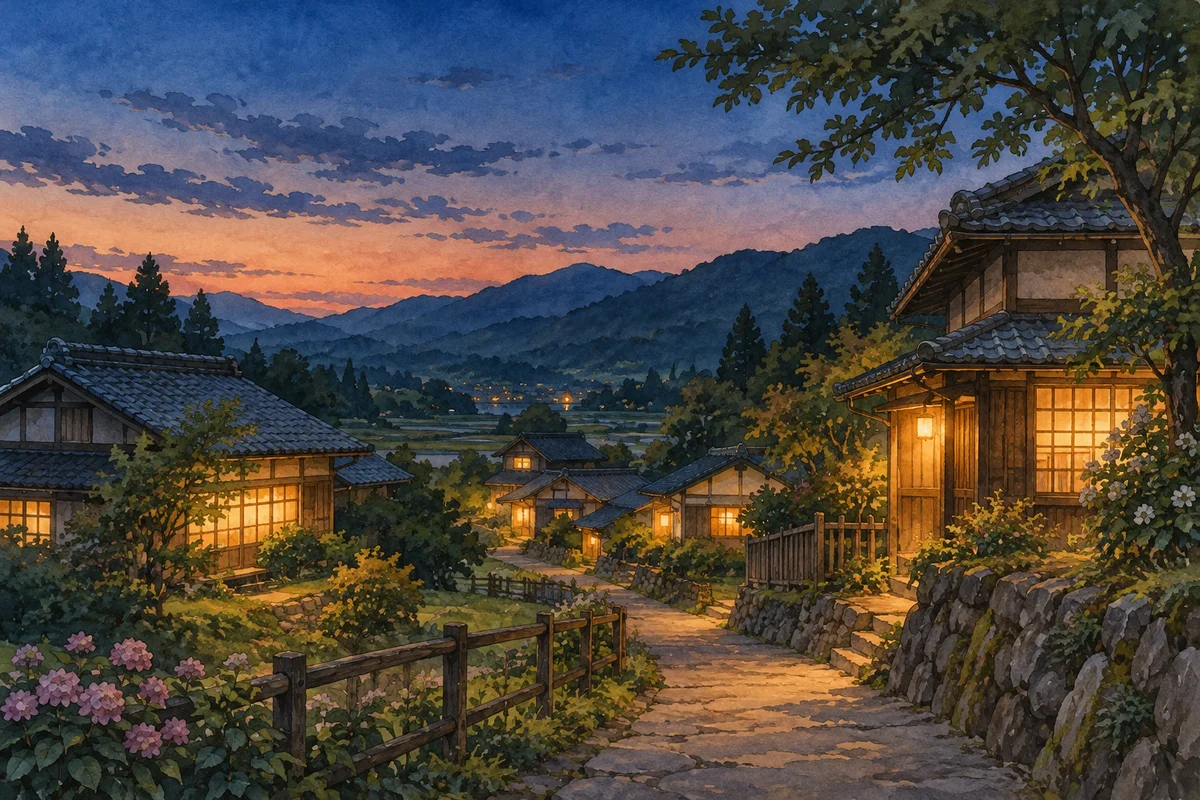
When daylight has faded and night begins.
Make the words you meet in books your own, one quiz at a time. Discover Japanese kanji readings, meanings and usage with DuraRing.
Unfamiliar kanji? Scan and look it up.Explore the OCR & AI dictionaryHow do you read this in Japanese?
Give the two-hiragana native reading for the time shortly after sunset.
HINTShow hint
It appears in まだ○○の口だ, meaning it is still early in the evening.
More on radicals and this quiz’s stroke counts
Describe the shapes you see
You do not need to know the radical’s name. Try these searches for this quiz’s characters.
kanji with roof radical 宀 above 肖
kanji looking like a roof over 小 and 月
roof radical 10 strokes early evening
These searches describe visual similarities, not formal radicals or character components.
宵: 10 strokes; radical 宀 (roof). Visual search descriptions are distinct from dictionary radical classifications.
宵10 strokes / radical: 宀 (roof)
Stroke counts and radicals follow the Japanese dictionary Kanjipedia; other dictionaries may differ.
ANSWERShow answerHide answer
The answer is
よい
yoi
宵
Understand the meaning
English translationEarly evening
The early part of the evening, shortly after sunset. In some writing it can refer more broadly to the night.
See it in a sentence
夏の宵、窓辺の椅子に座って短い手紙を書いた。On a summer evening, I sat by the window and wrote a short letter.
A way to remember
The native reading is yoi; the on-reading is shō. Look for 宀, shaped like a roof, above 肖.
Sources:Kanjipedia: 宵
The explanation draws on the sources below. Examples were written for this page.
Explore the word further
Describe the start of the night
Use it in 宵の口 or 春の宵. Details such as the color of the sky or lights appearing in houses help establish the change from day to night.
例:まだ宵の口なのに、旅館の窓にはもう明かりがともっていた。
Although it was still early evening, lights were already glowing in the inn’s windows.
It does not specify a clock time
The word alone does not define a fixed range of hours. Use the season and scene to decide whether it means early evening or night more generally.
References for this explanation:Kanjipedia: 宵
Explanation checked on 2026-10-26. Additional examples were written by DuraRing for this page.
The answer and explanation stay hidden until you open them.
Read and learn with  .
Photograph unfamiliar kanji, look them up and save them in the app, linked to your book.A reading app that helps you revisit words in the context of your books.
Capture and look up kanji
Photograph a printed page.Check kanji readings and meanings.
Save words. Connect them to books.
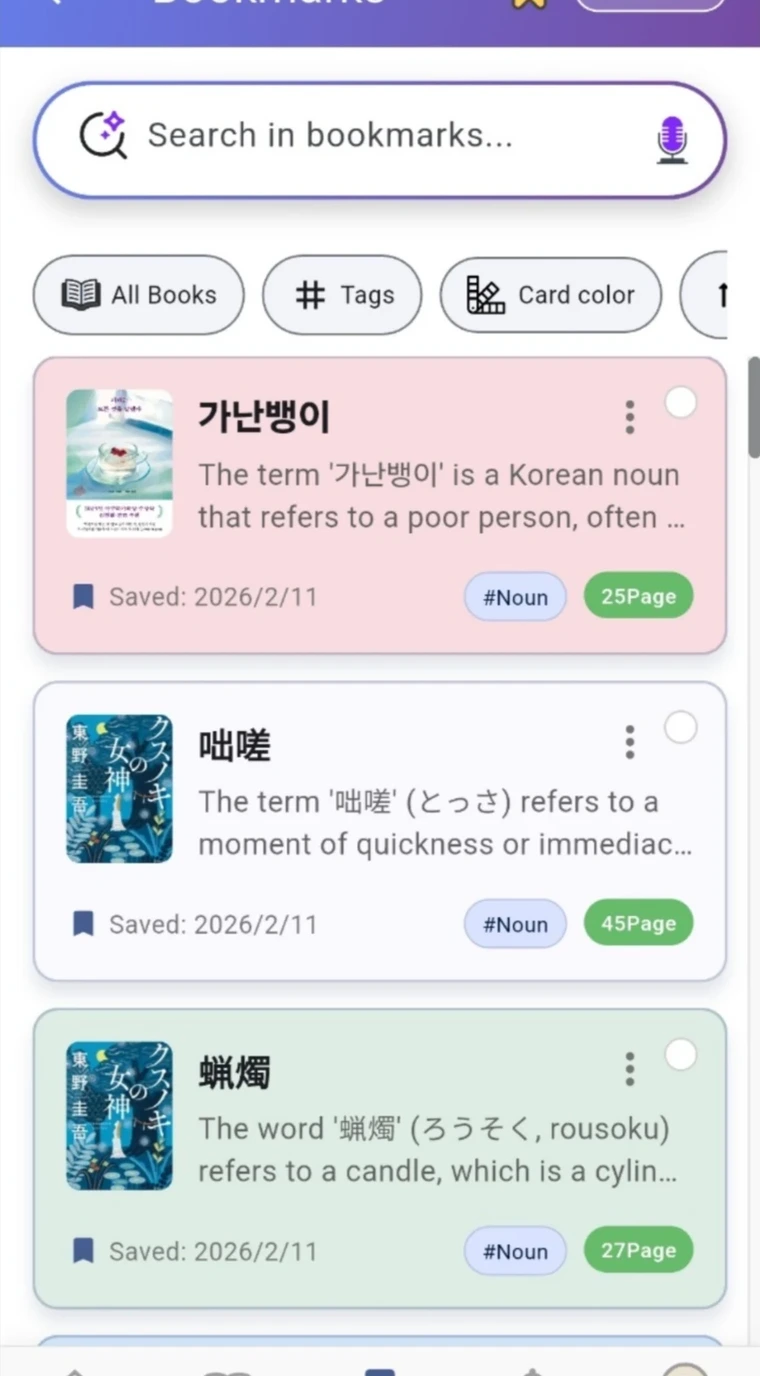
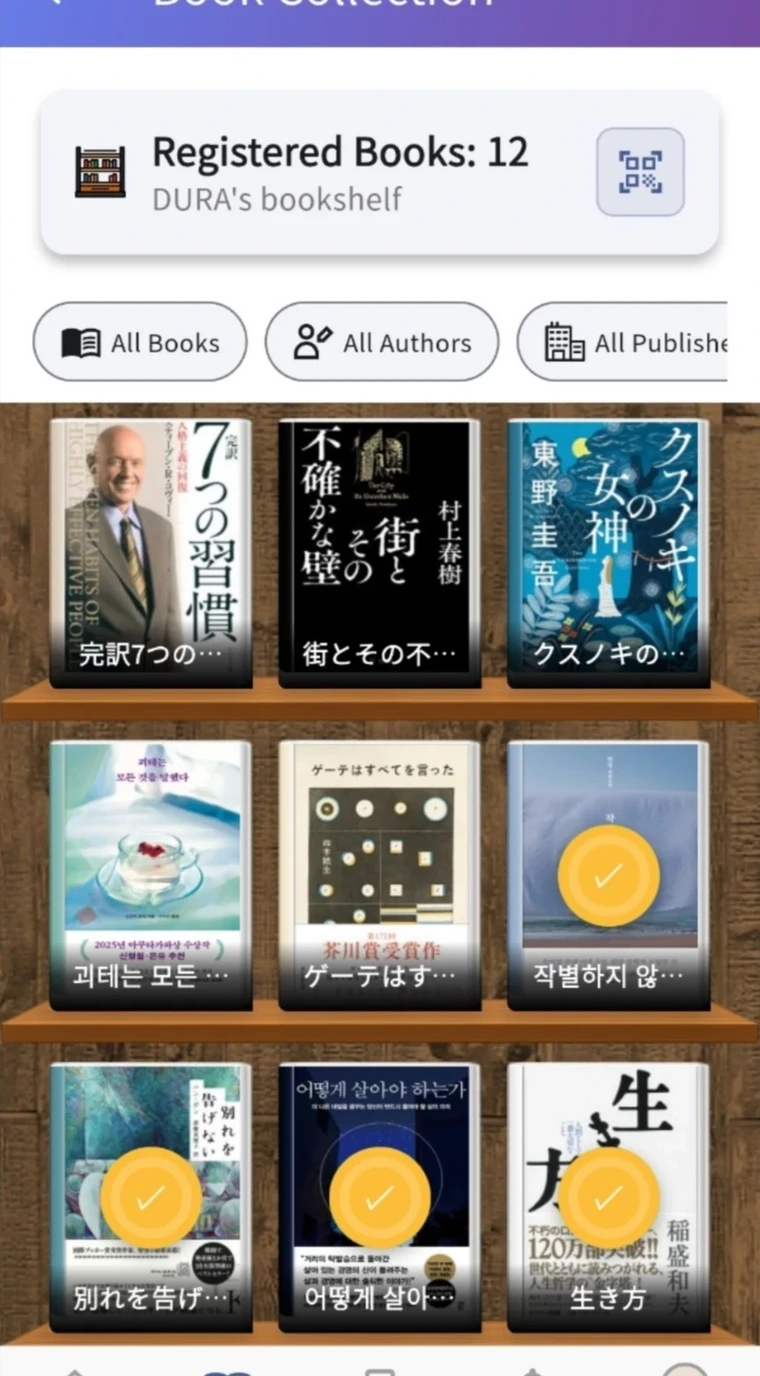
Save readings and meanings with the book and page.Revisit your reading through notes linked to your bookshelf.
① illustrates the capture feature. ② shows actual app screens.