
Kanji quizzes for the joy of reading
How do you read 縁 in Japanese?
A connection that grows from meeting.
Make the words you meet in books your own, one quiz at a time. Discover Japanese kanji readings, meanings and usage with DuraRing.
Unfamiliar kanji? Scan and look it up.Explore the OCR & AI dictionaryHow do you read this in Japanese?
Give the three-hiragana reading beginning with e for a bond between people.
HINTShow hint
A bond connecting people. This question asks for three hiragana, rather than the two in en.
More on radicals and this quiz’s stroke counts
Describe the shapes you see
You do not need to know the radical’s name. Try these searches for this quiz’s characters.
thread radical with a 豕-like lower right
kanji like 緑 meaning a human connection
thread radical 15 strokes reading beginning e
These searches describe visual similarities, not formal radicals or character components.
縁: 15 strokes; radical 糸 (thread). Distinguish informal descriptions of the shape from the dictionary radical.
縁15 strokes / radical: 糸 (thread)
Stroke counts and radicals follow the Japanese dictionary Kanjipedia; other dictionaries may differ.
ANSWERShow answerHide answer
The answer is
えにし
enishi
縁
Understand the meaning
English translationA bond / connection
A bond or connection between people. The same character often read en is read enishi here.

See it in a sentence
一冊の本が結んだ縁を、二人は大切にした。The two friends cherished the connection a book had brought them.
A way to remember
縁 also has readings such as fuchi and en. Use the meaning and length specified in the question.
Sources:Kanjipedia: 縁
The explanation draws on the sources below. Examples were written for this page.
Explore the word further
Read the connection in a story
Phrases such as 不思議な縁 and 縁を結ぶ express a connection formed through meeting. Ask who became connected, and through what experience, to follow relationships in a story.
例:旅先で生まれた縁は、帰国後も手紙のやり取りで続いた。
The connection formed on the trip continued through letters after returning home.
One character, different contexts
皿の縁 normally uses fuchi, the rim of a plate. Here the question specifies a reading for a relationship. En can also express a bond, so distinguish the quiz constraint from the range of valid readings.
References for this explanation:Kanjipedia: 縁
Explanation checked on 2026-10-25. Additional examples were written by DuraRing for this page.
The answer and explanation stay hidden until you open them.
Read and learn with  .
Photograph unfamiliar kanji, look them up and save them in the app, linked to your book.A reading app that helps you revisit words in the context of your books.
Capture and look up kanji
Photograph a printed page.Check kanji readings and meanings.
Save words. Connect them to books.
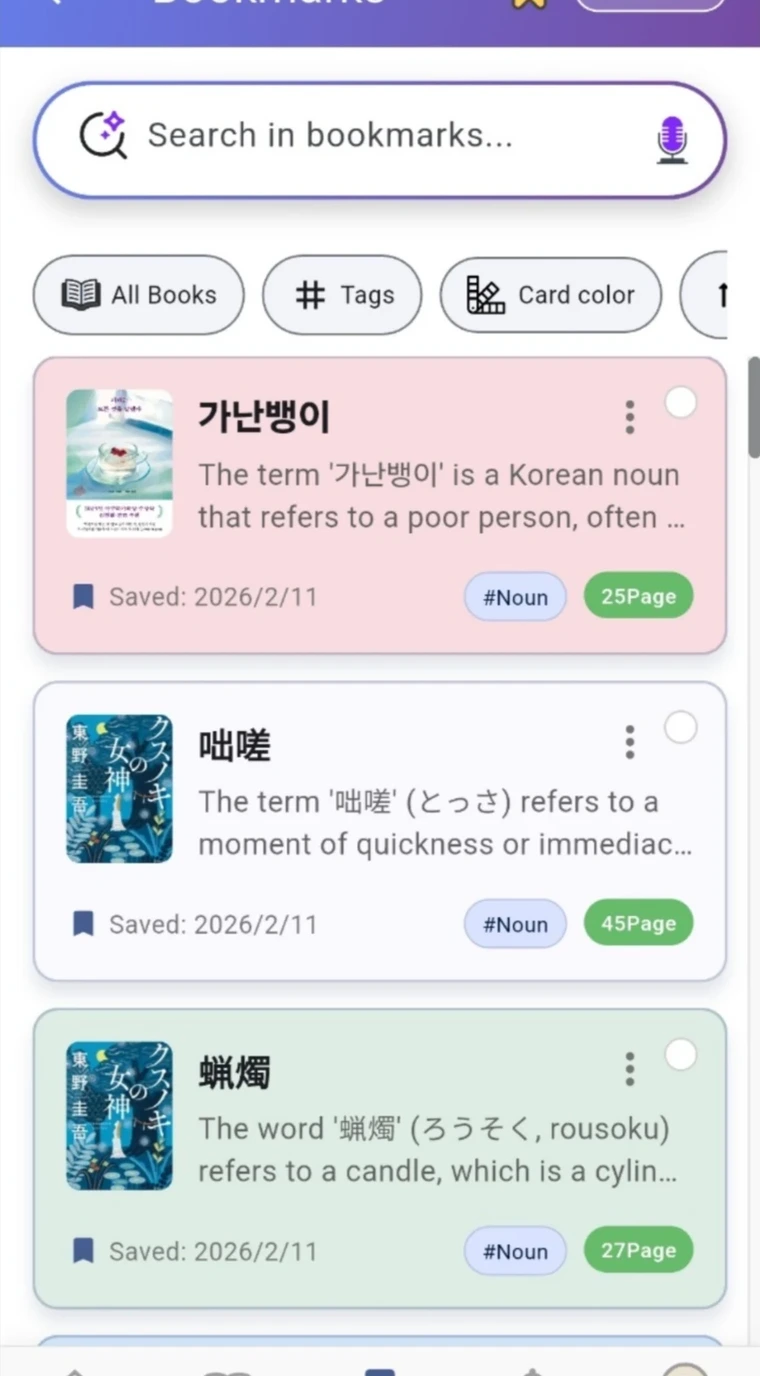
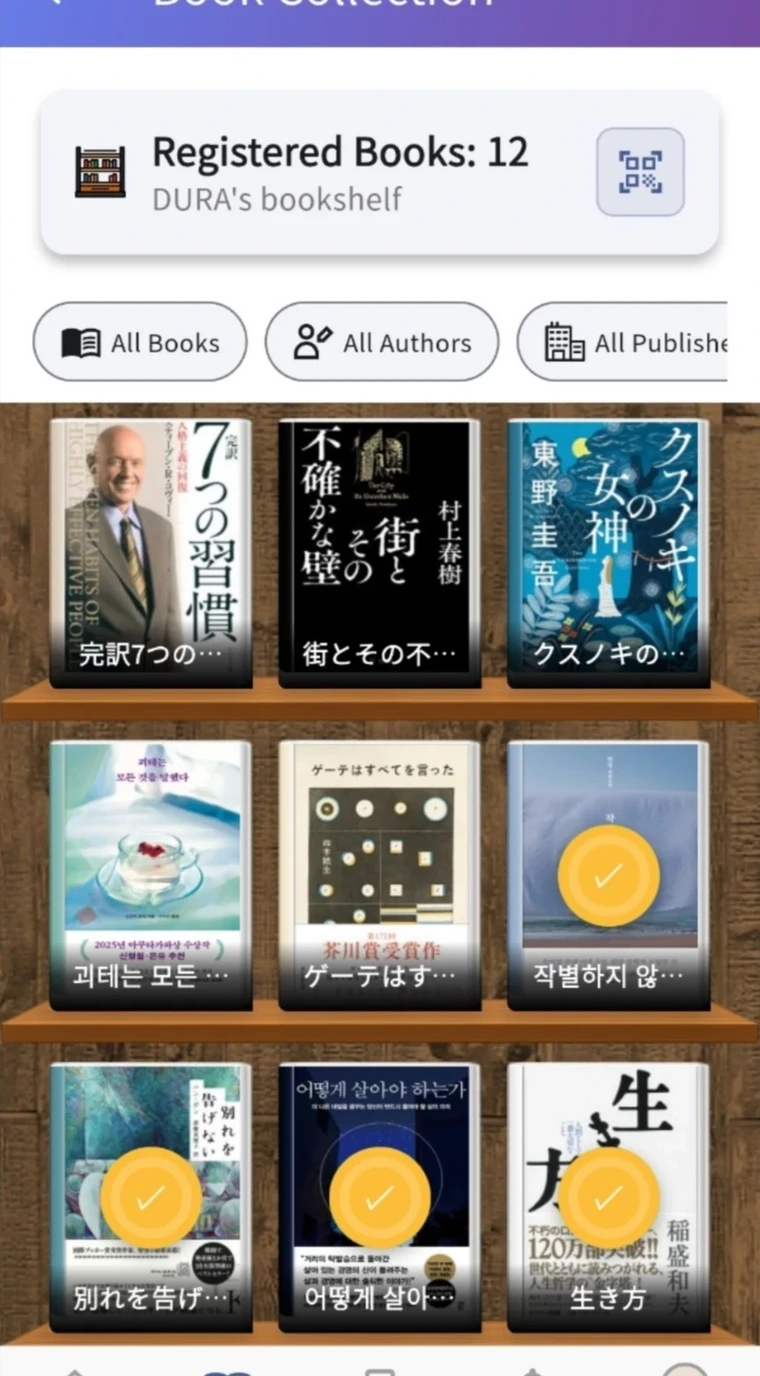
Save readings and meanings with the book and page.Revisit your reading through notes linked to your bookshelf.
① illustrates the capture feature. ② shows actual app screens.