
Kanji quizzes for the joy of reading
How do you read 深淵 in Japanese?
A depth whose bottom is hard to see.
Make the words you meet in books your own, one quiz at a time. Discover Japanese kanji readings, meanings and usage with DuraRing.
Unfamiliar kanji? Scan and look it up.Explore the OCR & AI dictionaryHow do you read this in Japanese?
Think of your answer before you look.
HINTShow hint
A very deep pool, also used figuratively for profound depths of the mind or a subject.
More on radicals and this quiz’s stroke counts
Describe the shapes you see
You do not need to know the radical’s name. Try these searches for this quiz’s characters.
kanji after 深 with water radical and many vertical strokes
water radical 12 strokes read fuchi
reading of 深 and 淵
These searches describe visual similarities, not formal radicals or character components.
深: 11 strokes; radical 氵 (water). 淵: 12 strokes; radical 氵 (water). Visual search descriptions are distinct from dictionary radical classifications.
深11 strokes / radical: 氵 (water)
淵12 strokes / radical: 氵 (water)
Stroke counts and radicals follow the Japanese dictionary Kanjipedia; other dictionaries may differ.
ANSWERShow answerHide answer
The answer is
しんえん
shin'en
深淵
Understand the meaning
English translationDeep pool / abyss
A very deep pool or abyss; figuratively, depths of a subject or mind that are not easily understood.

See it in a sentence
崖の下には、底の見えない深淵が静かに広がっていた。Below the cliff lay a still, deep pool whose bottom could not be seen.
A way to remember
深 is shin and 淵 is en. Read shin'en, keeping the n and following vowel distinct.
Sources:Kanjipedia: 深淵
The explanation draws on the sources below. Examples were written for this page.
Explore the word further
Use depth to describe an inner world
Use 心の深淵 or 深淵をのぞく. Context distinguishes an actual body of water from a character’s inner depths.
例:その小説は、短い対話を通して人の心の深淵を描いている。
The novel explores the depths of the human mind through brief conversations.
Look for what makes the depth difficult to grasp
Figurative 深淵 is not merely a large space. It suggests something difficult to comprehend or seemingly unfathomable.
References for this explanation:Kanjipedia: 深淵
Explanation checked on 2026-11-02. Additional examples were written by DuraRing for this page.
The answer and explanation stay hidden until you open them.
Read and learn with  .
Photograph unfamiliar kanji, look them up and save them in the app, linked to your book.A reading app that helps you revisit words in the context of your books.
Capture and look up kanji
Photograph a printed page.Check kanji readings and meanings.
Save words. Connect them to books.
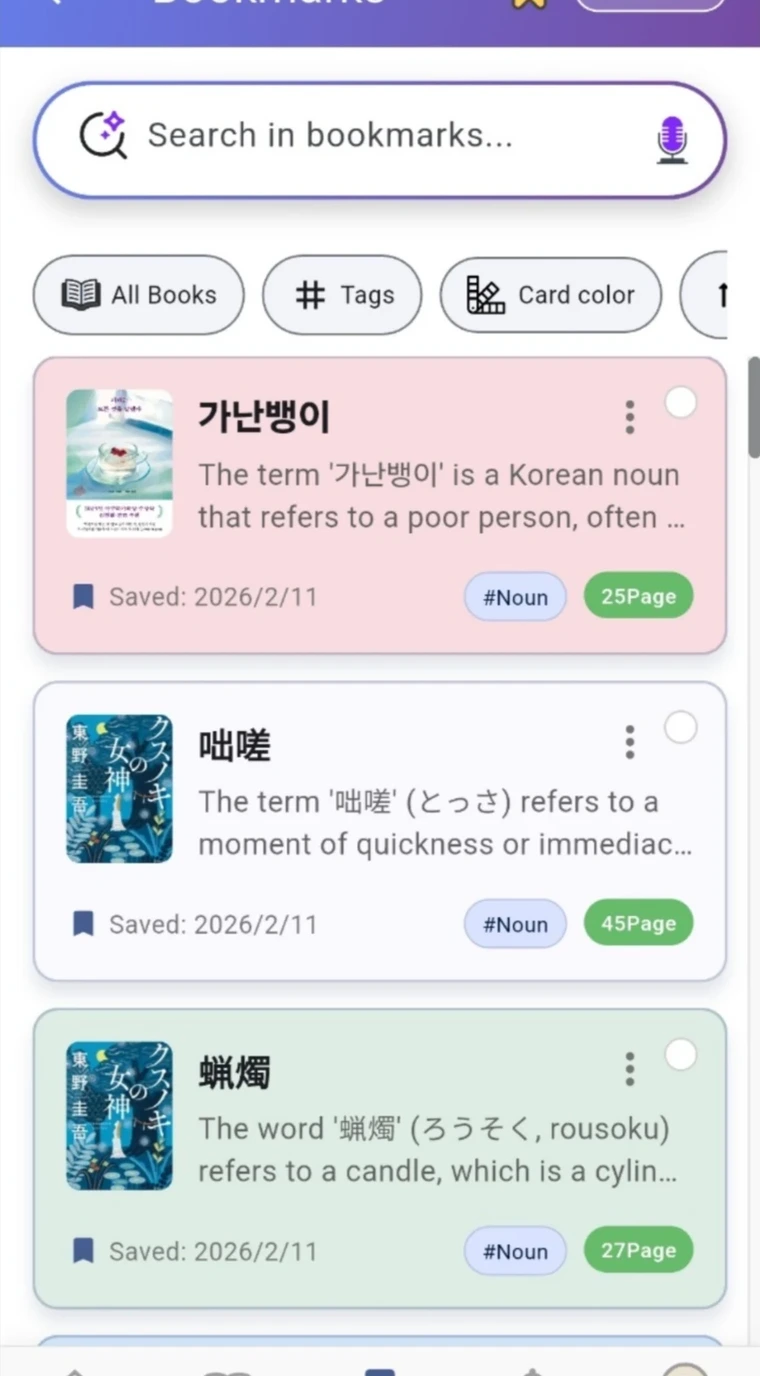
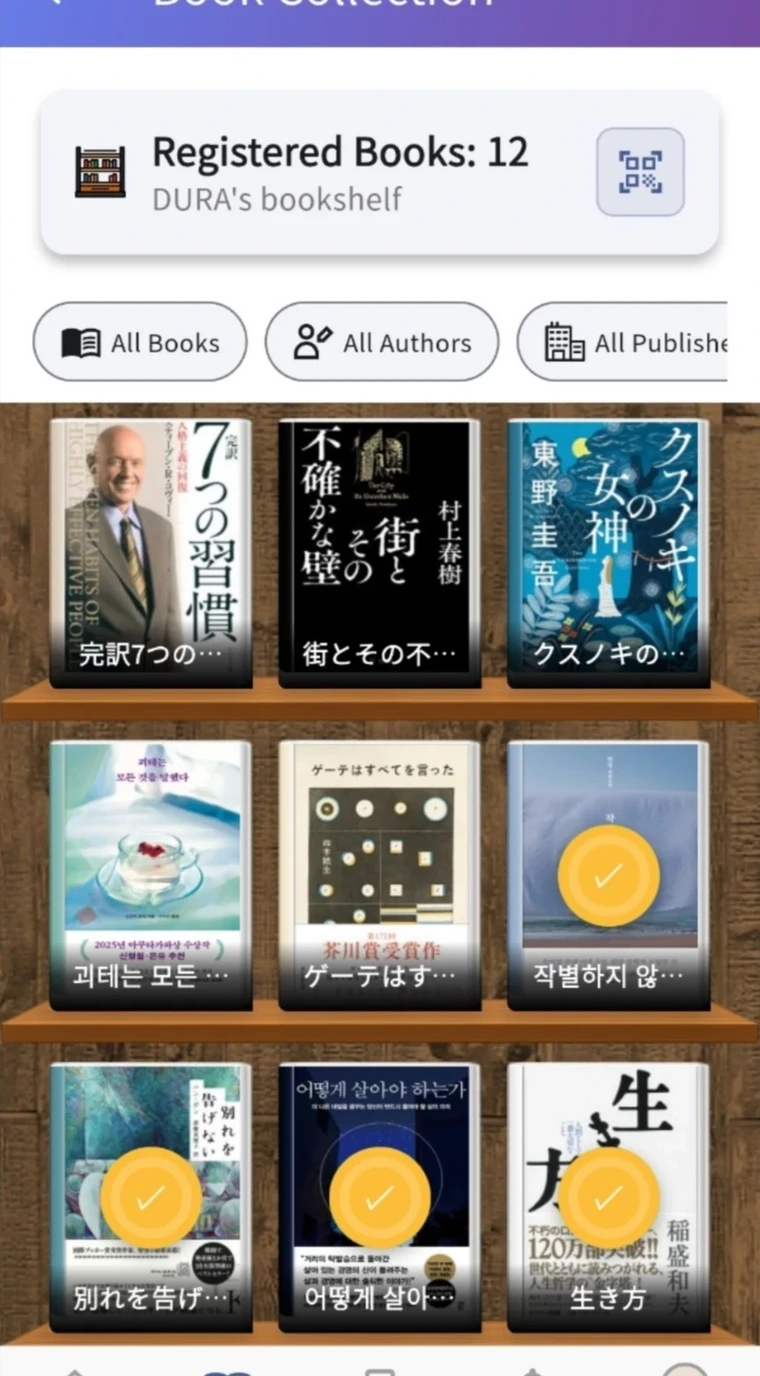
Save readings and meanings with the book and page.Revisit your reading through notes linked to your bookshelf.
① illustrates the capture feature. ② shows actual app screens.