
Kanji quizzes for the joy of reading
How do you read 温故知新 in Japanese?
Revisit the past to discover something new.
Make the words you meet in books your own, one quiz at a time. Discover Japanese kanji readings, meanings and usage with DuraRing.
Unfamiliar kanji? Scan and look it up.Explore the OCR & AI dictionaryHow do you read this in Japanese?
Think of your answer before you look.
HINTShow hint
Revisiting the past or something already learned to gain fresh knowledge or insight. It begins with onko.
More on radicals and this quiz’s stroke counts
Describe the shapes you see
You do not need to know the radical’s name. Try these searches for this quiz’s characters.
water radical beside 日 above 皿
古 with the strike radical on the right
Japanese four-character idiom for new insight from old knowledge
These searches describe visual similarities, not formal radicals or character components.
温: 12 strokes; radical 水 (water). 故: 9 strokes; radical 攴 (strike). 知: 8 strokes; radical 矢 (arrow). 新: 13 strokes; radical 斤 (axe). Distinguish informal descriptions of the shape from the dictionary radical.
温12 strokes / radical: 水 (water)
故9 strokes / radical: 攴 (strike)
知8 strokes / radical: 矢 (arrow)
新13 strokes / radical: 斤 (axe)
Stroke counts and radicals follow the Japanese dictionary Kanjipedia; other dictionaries may differ.
Kanjipedia「温」 / Kanjipedia「故」 / Kanjipedia「知」 / Kanjipedia「新」
ANSWERShow answerHide answer
The answer is
おんこちしん
onkochishin
温故知新
Understand the meaning
English translationLearning something new by revisiting the past
Gaining new knowledge or understanding by re-examining the past or what you have learned before. The emphasis is on reaching a fresh insight, not merely looking back.

See it in a sentence
昔のかごの編み方を調べ、温故知新の発想で新しいバッグを考えた。I studied traditional basket weaving and used insights from the past to design a new bag.
A way to remember
Here 故 relates to things from the past. Divide the expression into 温故 and 知新 and connect revisiting the old with learning something new.
Sources:Kanjipedia: 温故知新
The explanation draws on the sources below. Examples were written for this page.
Explore the word further
What did looking back reveal?
Use phrases such as 温故知新の姿勢 or 温故知新の発想. Show how an old record or experience yielded an idea useful for a present question.
例:以前の読書ノートを開き、温故知新のつもりで今の悩みを考え直した。
I opened my old reading notes and reconsidered my current concern, hoping to gain a new insight from what I had learned.
More than nostalgia
The expression is not simply about feeling nostalgic or repeating an old method unchanged. Explain what new understanding emerged to make the connection clear.
References for this explanation:Kanjipedia: 温故知新
Explanation checked on 2026-10-25. Additional examples were written by DuraRing for this page.
The answer and explanation stay hidden until you open them.
Read and learn with  .
Photograph unfamiliar kanji, look them up and save them in the app, linked to your book.A reading app that helps you revisit words in the context of your books.
Capture and look up kanji
Photograph a printed page.Check kanji readings and meanings.
Save words. Connect them to books.
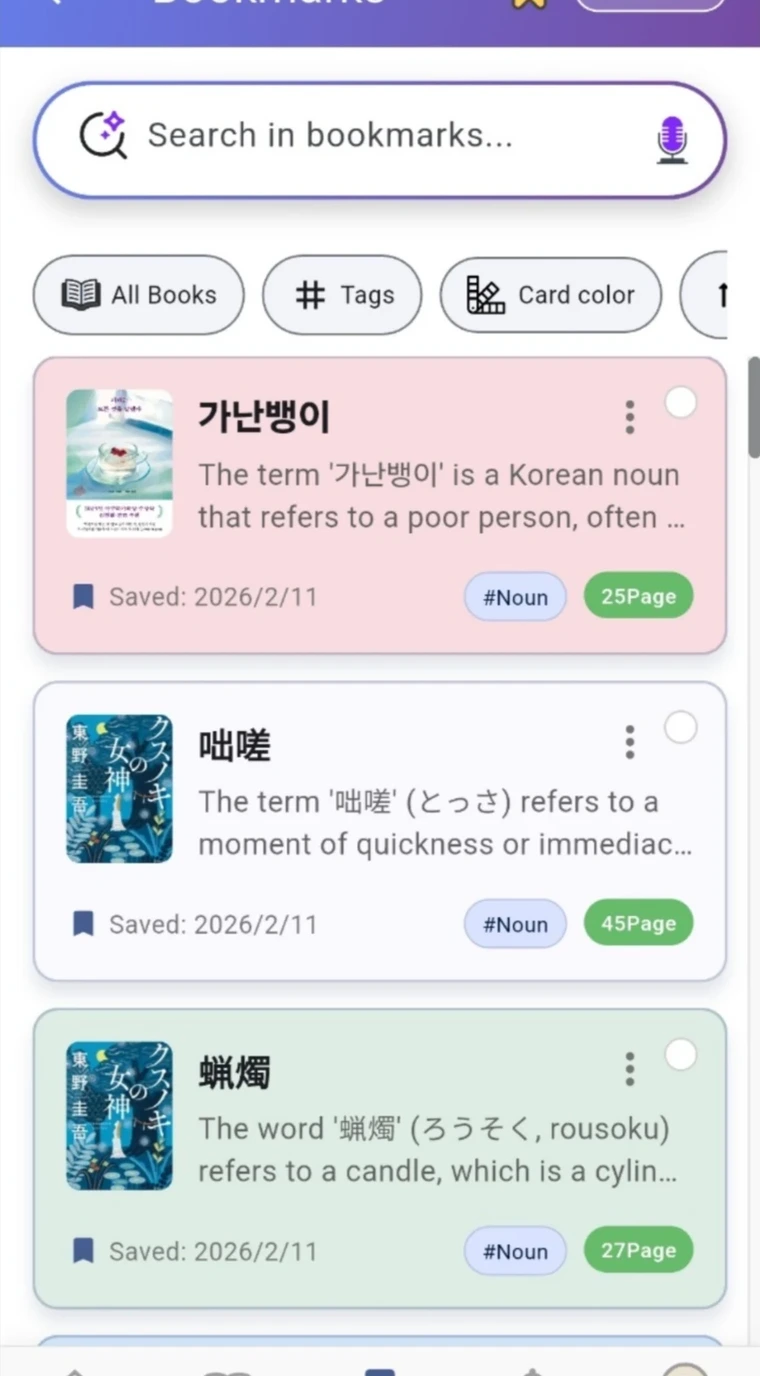
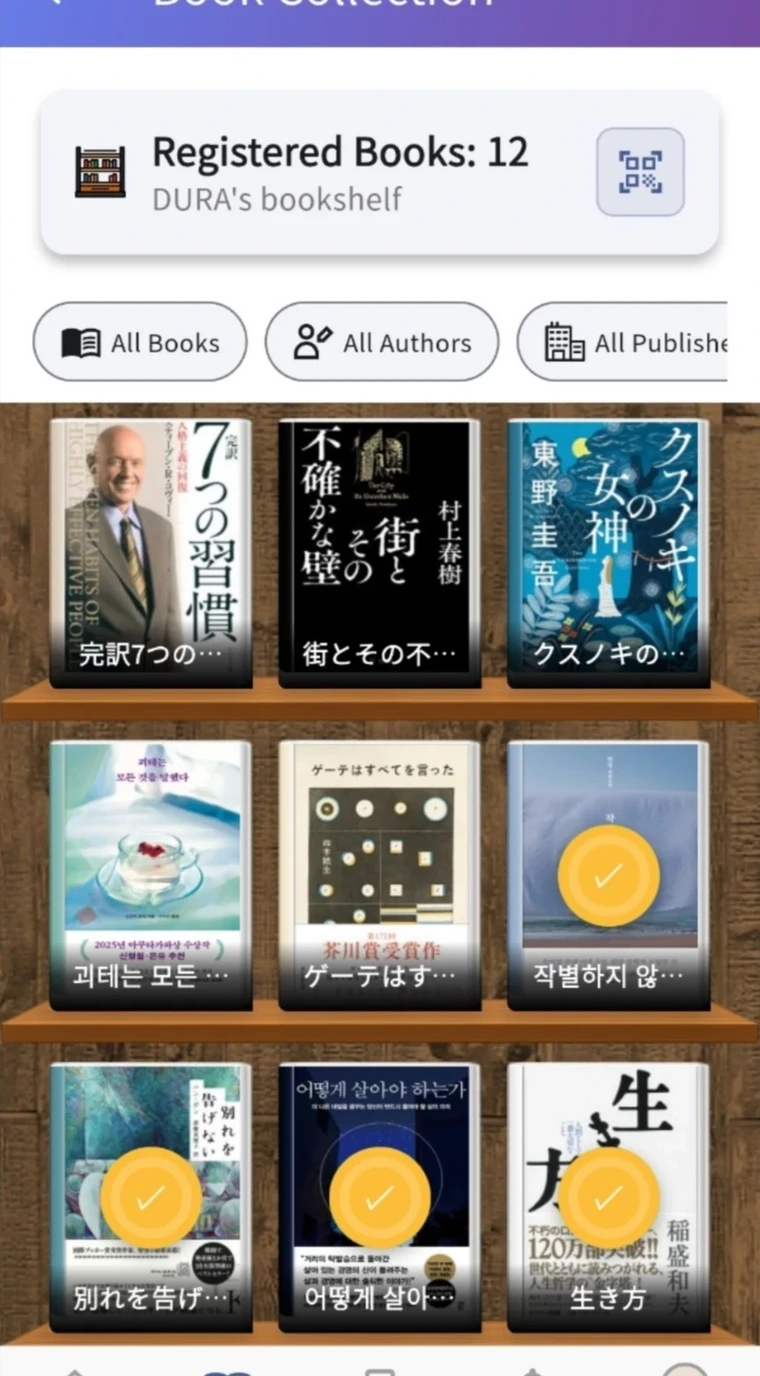
Save readings and meanings with the book and page.Revisit your reading through notes linked to your bookshelf.
① illustrates the capture feature. ② shows actual app screens.