
Kanji quizzes for the joy of reading
How do you read 轍 in Japanese?
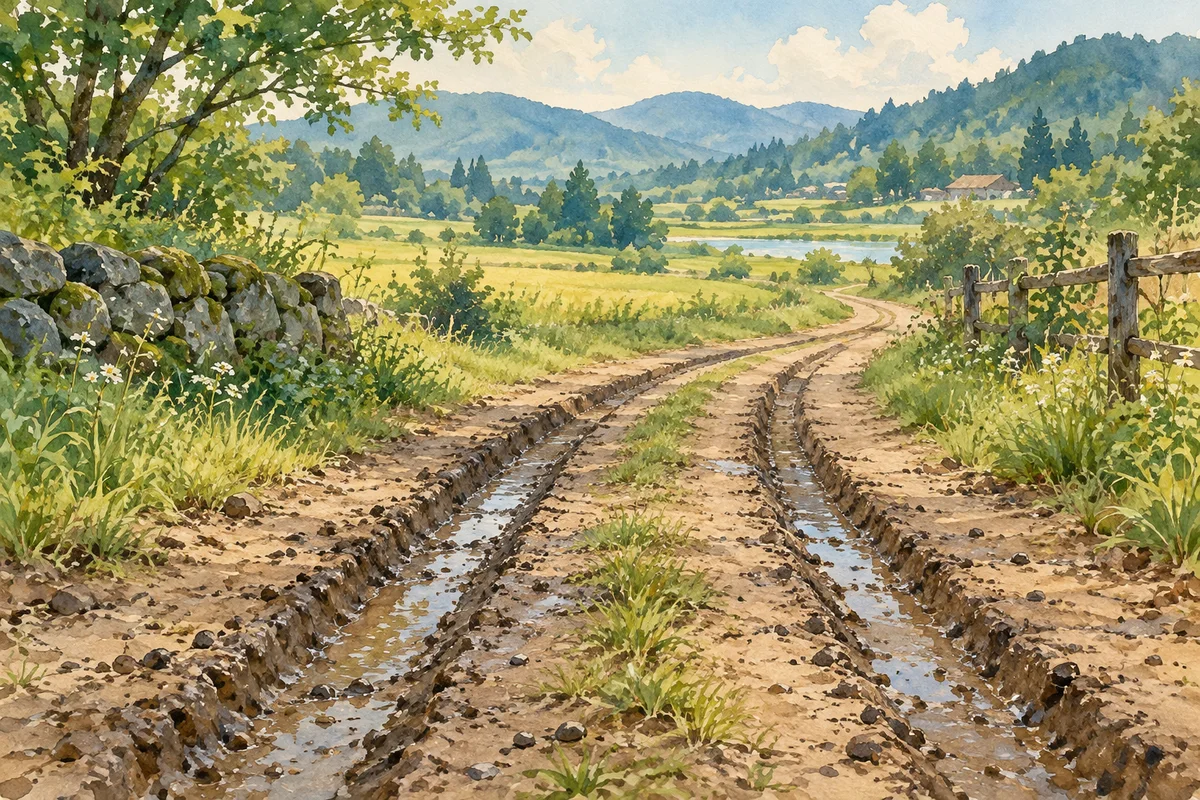
Wheel tracks left on a road.
Make the words you meet in books your own, one quiz at a time. Discover Japanese kanji readings, meanings and usage with DuraRing.
Unfamiliar kanji? Scan and look it up.Explore the OCR & AI dictionaryHow do you read this in Japanese?
Give the native Japanese reading for tracks left by wheels.
HINTShow hint
Grooves left by wheels on a dirt road. Three hiragana beginning with wa.
More on radicals and this quiz’s stroke counts
Describe the shapes you see
You do not need to know the radical’s name. Try these searches for this quiz’s characters.
vehicle radical with 育 and 攵
車 beside the right part of 撤
vehicle radical 19 strokes wheel tracks
These searches describe visual similarities, not formal radicals or character components.
轍: 19 strokes; radical 車 (vehicle). Distinguish informal descriptions of the shape from the dictionary radical.
轍19 strokes / radical: 車 (vehicle)
Stroke counts and radicals follow the Japanese dictionary Kanjipedia; other dictionaries may differ.
ANSWERShow answerHide answer
The answer is
わだち
wadachi
轍
Understand the meaning
English translationWheel tracks / ruts
Ruts or tracks made by wheels, visible in soft ground or snow after a vehicle has passed.
See it in a sentence
雨上がりの道には、深い轍が二本続いていた。Two deep wheel ruts ran along the road after the rain.
A way to remember
Look for the vehicle radical. Wadachi is the native reading; tetsu is the on-reading.
Sources:Kanjipedia: 轍
The explanation draws on the sources below. Examples were written for this page.
Explore the word further
Describe evidence of passing wheels
Use phrases such as 轍が残る, tracks remain, or 轍をたどる, follow the ruts. The vehicle can be absent while its tracks tell the reader that someone passed earlier.
例:新しい雪の上に残った轍をたどると、小屋の前に着いた。
Following the wheel tracks in fresh snow brought me to the cabin.
Distinguish wheel tracks from footprints
轍 specifically points to wheel marks, rather than footprints left by a walker. It directs attention to grooves on a road, not to the road as a whole.
References for this explanation:Kanjipedia: 轍
Explanation checked on 2026-10-25. Additional examples were written by DuraRing for this page.
The answer and explanation stay hidden until you open them.
Read and learn with  .
Photograph unfamiliar kanji, look them up and save them in the app, linked to your book.A reading app that helps you revisit words in the context of your books.
Capture and look up kanji
Photograph a printed page.Check kanji readings and meanings.
Save words. Connect them to books.


Save readings and meanings with the book and page.Revisit your reading through notes linked to your bookshelf.
① illustrates the capture feature. ② shows actual app screens.