
Kanji quizzes for the joy of reading
How do you read 汀 in Japanese?
Where water meets land.
Make the words you meet in books your own, one quiz at a time. Discover Japanese kanji readings, meanings and usage with DuraRing.
Unfamiliar kanji? Scan and look it up.Explore the OCR & AI dictionaryHow do you read this in Japanese?
Give the reading beginning with mi for the edge where water meets land.
HINTShow hint
The water’s edge at a lake or river. This question asks for three hiragana beginning with mi.
More on radicals and this quiz’s stroke counts
Describe the shapes you see
You do not need to know the radical’s name. Try these searches for this quiz’s characters.
water radical beside 丁
three water dots and 丁 reading
water radical 5 strokes waterside kanji
These searches describe visual similarities, not formal radicals or character components.
汀 has 5 strokes and the radical 水 (water). Radicals are dictionary classifications. The shape-based search phrases below provide other lookup clues.
汀5 strokes / radical: 水 (water)
Stroke counts and radicals follow the Japanese dictionary Kanjipedia; other dictionaries may differ.
ANSWERShow answerHide answer
The answer is
みぎわ
migiwa
汀
Understand the meaning
English translationWater’s edge / shore
The shore or water’s edge, where water meets land. Landscape writing may place waves or waterbirds along it.

See it in a sentence
湖の汀に腰を下ろし、小さな波を眺めた。I sat at the lake’s edge and watched the small waves.
A way to remember
Both migiwa and nagisa are dictionary readings. The question specifies the one beginning with mi.
Sources:Kanjipedia: 汀
The explanation draws on the sources below. Examples were written for this page.
Explore the word further
Using 汀
汀に立つ and 汀を歩く locate someone at the water’s edge. The focus is where land meets water, rather than farther offshore.
例:小石の並ぶ汀に立ち、湖の向こうの山を眺めた。
Standing at the pebbly water’s edge, I looked at the mountains across the lake.
Reading and meaning in context
The intended reading is みぎわ. The reference also lists 水際 and 渚 as spellings, illustrating that a word can have more than one written form.
References for this explanation:Kanjipedia: 汀
Explanation checked on 2026-10-23. Additional examples were written by DuraRing for this page.
The answer and explanation stay hidden until you open them.
Read and learn with  .
Photograph unfamiliar kanji, look them up and save them in the app, linked to your book.A reading app that helps you revisit words in the context of your books.
Capture and look up kanji
Photograph a printed page.Check kanji readings and meanings.
Save words. Connect them to books.

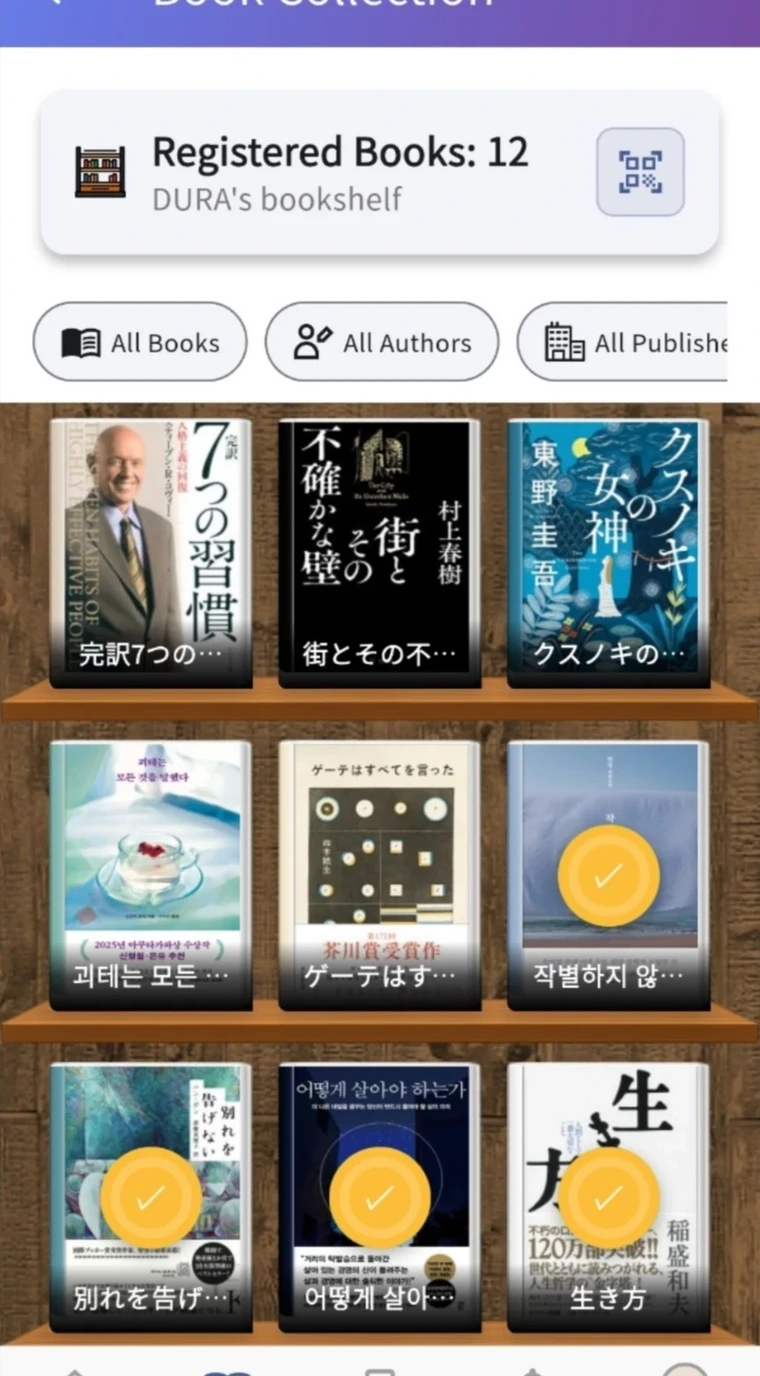
Save readings and meanings with the book and page.Revisit your reading through notes linked to your bookshelf.
① illustrates the capture feature. ② shows actual app screens.