
Kanji quizzes for the joy of reading
How do you read 錦 in Japanese?
Rich patterns woven in colored thread.
Make the words you meet in books your own, one quiz at a time. Discover Japanese kanji readings, meanings and usage with DuraRing.
Unfamiliar kanji? Scan and look it up.Explore the OCR & AI dictionaryHow do you read this in Japanese?
Give the native Japanese reading for a richly patterned woven cloth.
HINTShow hint
An ornate silk fabric. Three hiragana beginning with ni.
More on radicals and this quiz’s stroke counts
Describe the shapes you see
You do not need to know the radical’s name. Try these searches for this quiz’s characters.
metal radical with 白 above 巾
綿 with metal instead of thread
metal radical 16 strokes ornate fabric
These searches describe visual similarities, not formal radicals or character components.
錦: 16 strokes; radical 金 (metal). Distinguish informal descriptions of the shape from the dictionary radical.
錦16 strokes / radical: 金 (metal)
Stroke counts and radicals follow the Japanese dictionary Kanjipedia; other dictionaries may differ.
ANSWERShow answerHide answer
The answer is
にしき
nishiki
錦
Understand the meaning
English translationBrocade
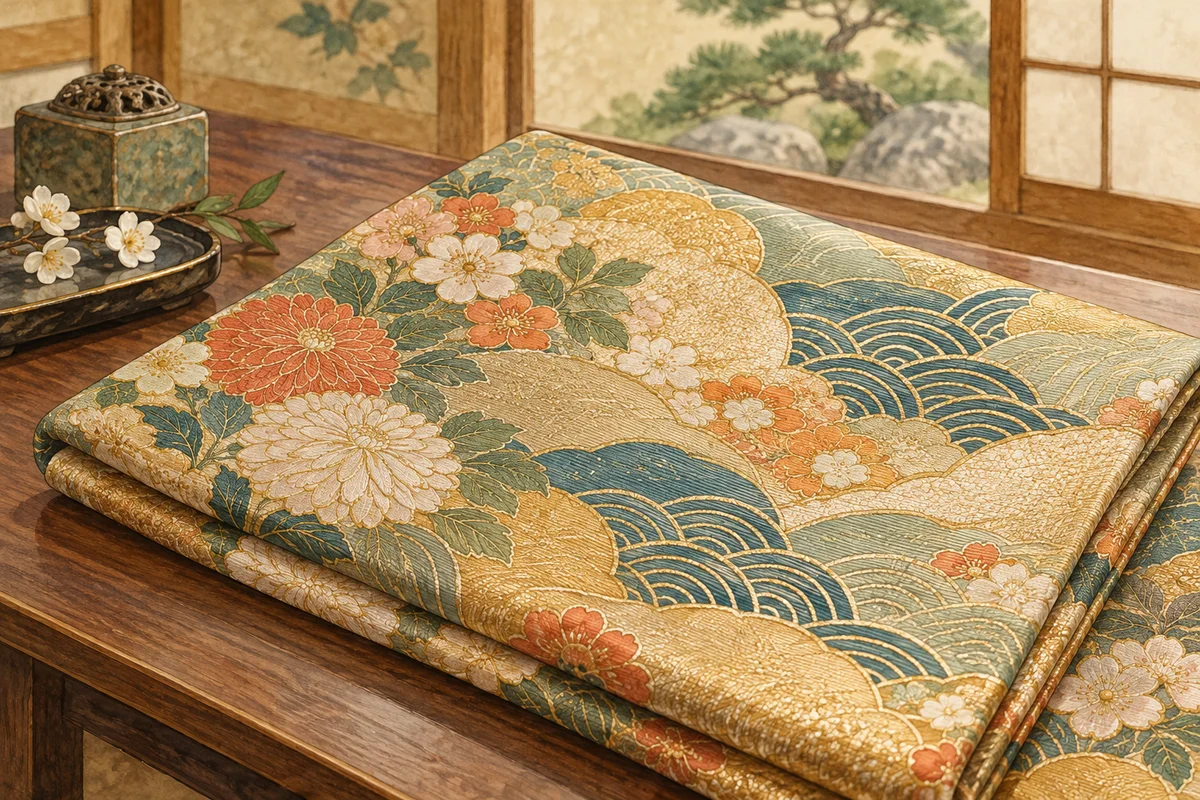
Brocade: silk woven with elaborate patterns in colored or gold thread. In writing it can also evoke richly colored beauty.
See it in a sentence
箱を開くと、花模様の錦が丁寧に畳まれていた。Inside the box lay neatly folded floral brocade.
A way to remember
The fabric is read nishiki. A metal radical does not necessarily make a word the name of a metal.
Sources:Kanjipedia: 錦
The explanation draws on the sources below. Examples were written for this page.
Explore the word further
Remember the woven texture
In 錦の帯 or 錦の袋, imagine patterns formed by the weave itself. Focusing on the threads and texture makes a description of an ornate sash or pouch easier to picture.
例:祖母は錦の小袋から、大切にしていた指輪を取り出した。
Grandmother took her treasured ring from a small brocade pouch.
A fabric that can evoke a landscape
A comparison with brocade need not refer to actual fabric. Check whether the surrounding passage describes a textile or a landscape with rich colors and patterns.
References for this explanation:Kanjipedia: 錦
Explanation checked on 2026-10-25. Additional examples were written by DuraRing for this page.
The answer and explanation stay hidden until you open them.
Read and learn with  .
Photograph unfamiliar kanji, look them up and save them in the app, linked to your book.A reading app that helps you revisit words in the context of your books.
Capture and look up kanji
Photograph a printed page.Check kanji readings and meanings.
Save words. Connect them to books.
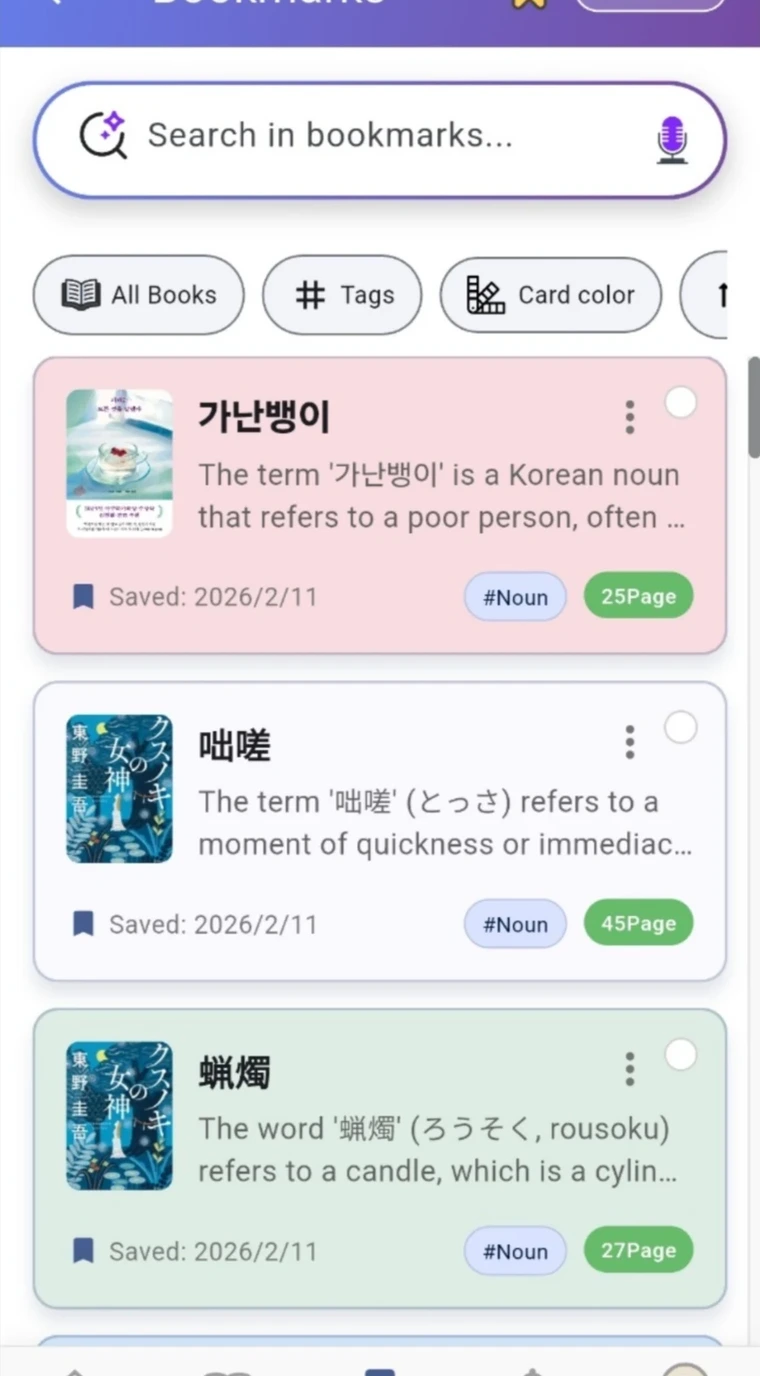
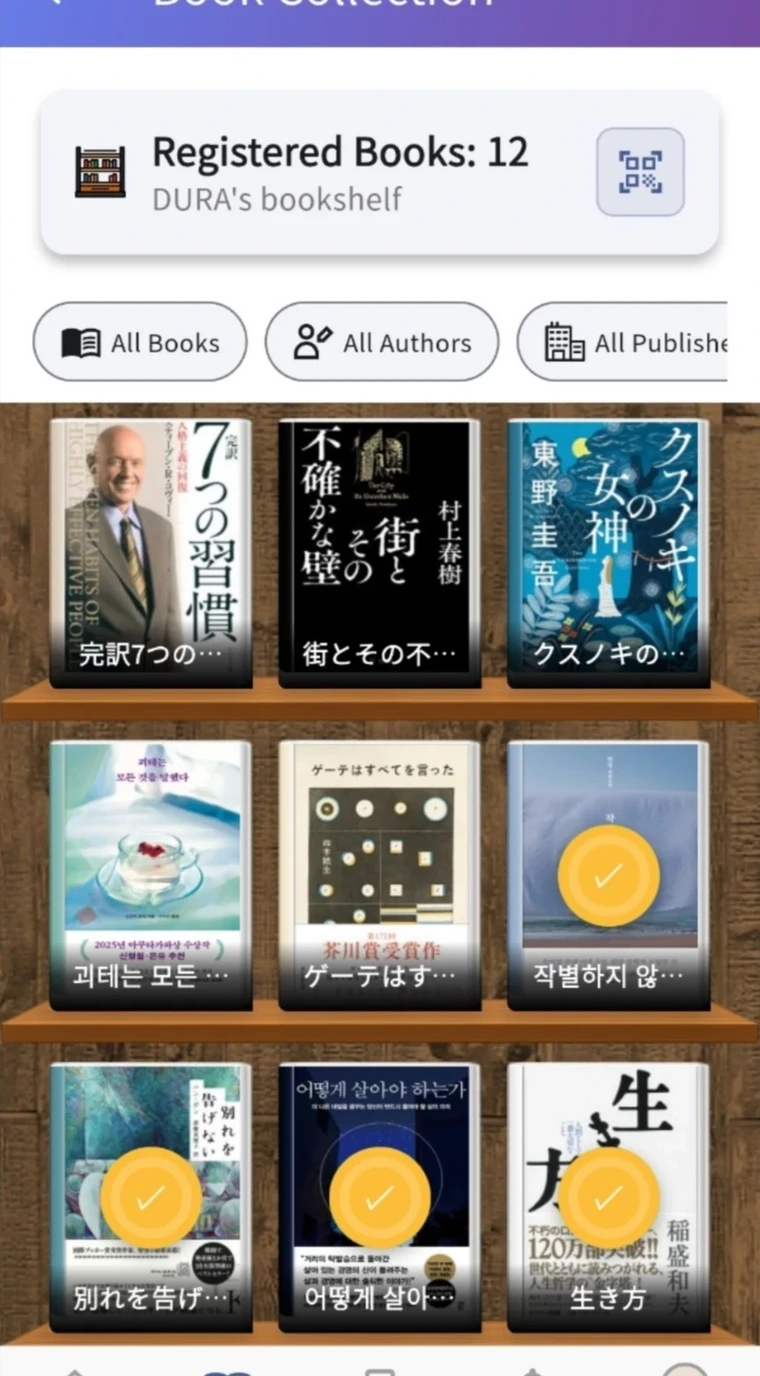
Save readings and meanings with the book and page.Revisit your reading through notes linked to your bookshelf.
① illustrates the capture feature. ② shows actual app screens.