
Kanji quizzes for the joy of reading
How do you read 自画自賛 in Japanese?
Praise your own handiwork.
Make the words you meet in books your own, one quiz at a time. Discover Japanese kanji readings, meanings and usage with DuraRing.
Unfamiliar kanji? Scan and look it up.Explore the OCR & AI dictionaryHow do you read this in Japanese?
Think of your answer before you look.
HINTShow hint
Praising something you have done or made yourself. 自 appears twice.
More on radicals and this quiz’s stroke counts
Describe the shapes you see
You do not need to know the radical’s name. Try these searches for this quiz’s characters.
kanji with two 夫 shapes above 貝
kanji with 一 above an enclosed 田 shape
four-character Japanese phrase 自 画 自 followed by a character with 貝 below
These searches describe visual similarities, not formal radicals or character components.
自: 6 strokes; radical 自 (self). 画: 8 strokes; radical 田 (field). 自: 6 strokes; radical 自 (self). 賛: 15 strokes; radical 貝 (shell). Visual search descriptions are distinct from dictionary radical classifications.
自6 strokes / radical: 自 (self)
画8 strokes / radical: 田 (field)
自6 strokes / radical: 自 (self)
賛15 strokes / radical: 貝 (shell)
Stroke counts and radicals follow the Japanese dictionary Kanjipedia; other dictionaries may differ.
Kanjipedia「自」 / Kanjipedia「画」 / Kanjipedia「自」 / Kanjipedia「賛」
ANSWERShow answerHide answer
The answer is
じがじさん
jigajisan
自画自賛
Understand the meaning
English translationSelf-praise
Praising yourself or something you have done. It can describe someone feeling pleased with the quality of their own creation.

See it in a sentence
初めて焼いたパンがきれいに膨らみ、「なかなかの出来だ」と自画自賛した。My first loaf rose beautifully, and I praised my own work: “That turned out rather well.”
A way to remember
画 is ga here and 賛 is san. Read the expression jigajisan, with ji for both instances of 自.
Sources:Kanjipedia: 自画自賛
The explanation draws on the sources below. Examples were written for this page.
Explore the word further
It can be lighthearted self-praise
A speaker may preface praise of their own work with 自画自賛になるけれど. In conversation, this can convey pleasure with a touch of embarrassment.
例:「自画自賛になるけれど、この本棚は使いやすい」と、父は手作りの棚を見せた。
“It may be self-praise, but this bookshelf is easy to use,” my father said, showing us the shelf he had made.
賛 also refers to an inscription on a painting
The expression originated in adding one’s own poetic inscription, called a 賛, to a painting one had created. In present-day conversation, its use extends to praising one’s cooking, work, and other achievements.
References for this explanation:Kanjipedia: 自画自賛
Explanation checked on 2026-10-26. Additional examples were written by DuraRing for this page.
The answer and explanation stay hidden until you open them.
Read and learn with  .
Photograph unfamiliar kanji, look them up and save them in the app, linked to your book.A reading app that helps you revisit words in the context of your books.
Capture and look up kanji
Photograph a printed page.Check kanji readings and meanings.
Save words. Connect them to books.
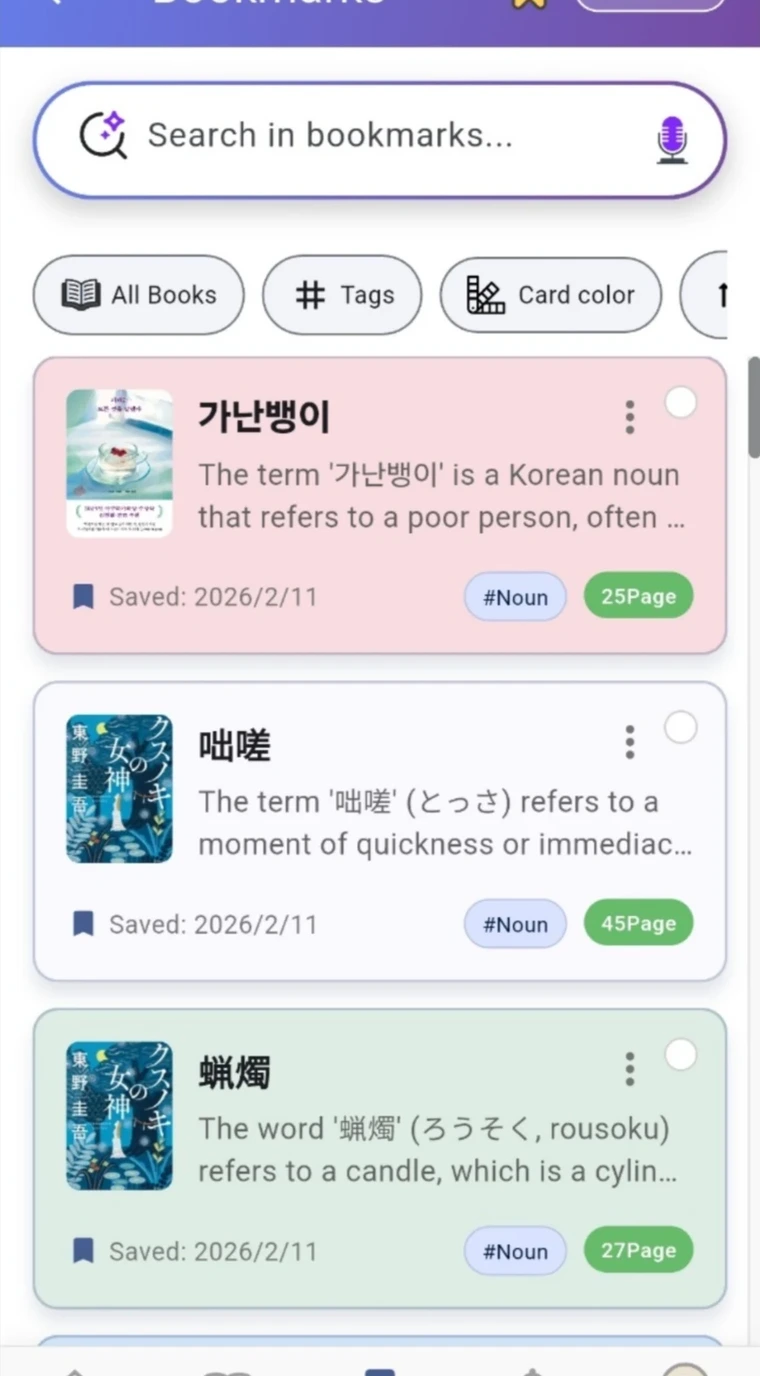
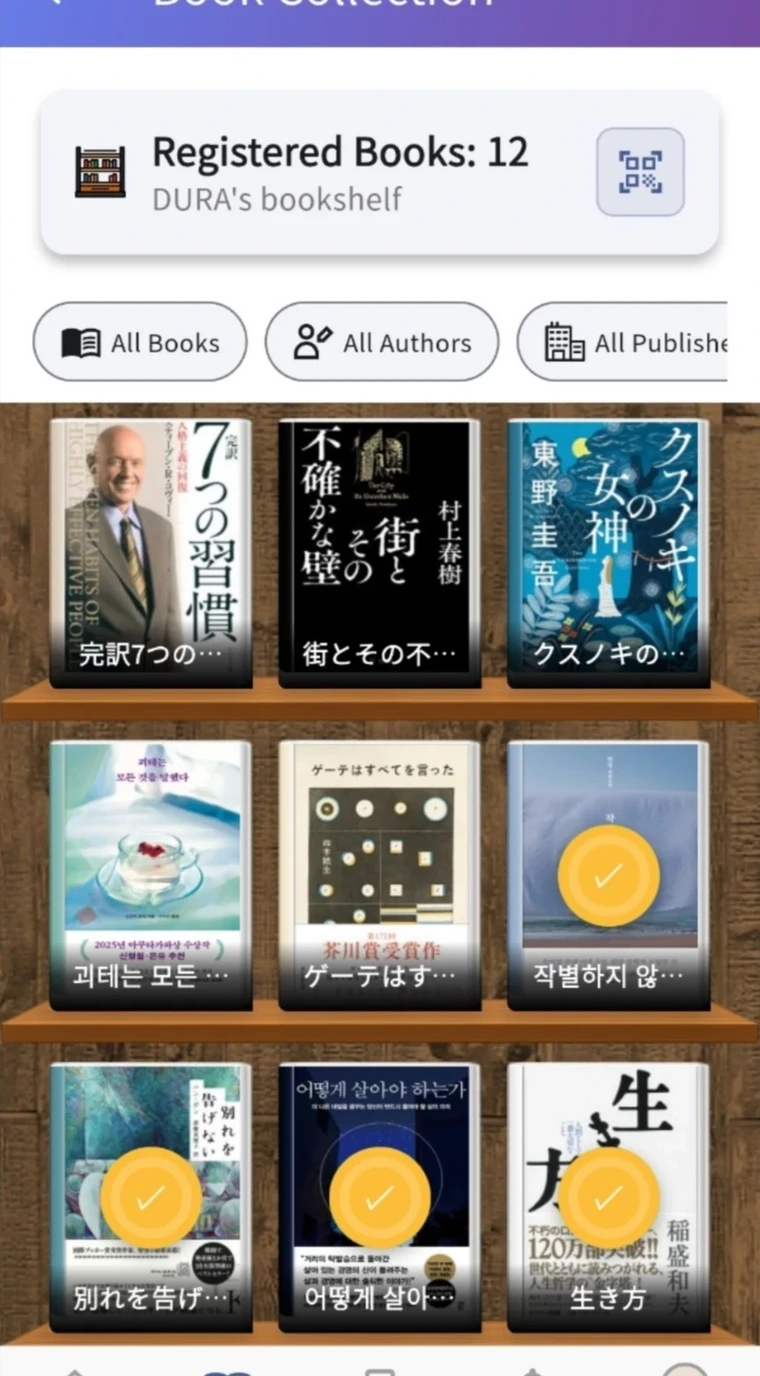
Save readings and meanings with the book and page.Revisit your reading through notes linked to your bookshelf.
① illustrates the capture feature. ② shows actual app screens.