
Kanji quizzes for the joy of reading
How do you read 蜻蛉 in Japanese?
Thin wings carry it over the water.
Make the words you meet in books your own, one quiz at a time. Discover Japanese kanji readings, meanings and usage with DuraRing.
Unfamiliar kanji? Scan and look it up.Explore the OCR & AI dictionaryHow do you read this in Japanese?
Give the usual three-hiragana name of the insect with large eyes and a long slender body.
HINTShow hint
An insect with two pairs of wings and large eyes. Its aquatic young are called yago in Japanese.
More on radicals and this quiz’s stroke counts
Describe the shapes you see
You do not need to know the radical’s name. Try these searches for this quiz’s characters.
insect beside 青 and insect beside 令
虫 and 青 14-stroke kanji
two insect-radical kanji water-side insect
These searches describe visual similarities, not formal radicals or character components.
蜻: 14 strokes; radical 虫 (insect). 蛉: 11 strokes; radical 虫 (insect). Visual search descriptions are distinct from dictionary radical classifications.
蜻14 strokes / radical: 虫 (insect)
蛉11 strokes / radical: 虫 (insect)
Stroke counts and radicals follow the Japanese dictionary Kanjipedia; other dictionaries may differ.
ANSWERShow answerHide answer
The answer is
とんぼ
tonbo
蜻蛉
Understand the meaning
English translationDragonfly
An insect with large eyes, a long slender body, and two pairs of thin wings. Its young live in water.

See it in a sentence
池のそばの細い枝に、蜻蛉が一匹とまっていた。A dragonfly rested on a slender branch beside the pond.
A way to remember
Here the pair is read tonbo. The elements beside 虫 are 青 and 令.
Sources:Kanjipedia: 蜻蛉 / Kanjipedia: 蜻蛉 (kagerō)
The explanation draws on the sources below. Examples were written for this page.
Explore the word further
Connect the adult with its aquatic young
Use 蜻蛉が飛ぶ or 蜻蛉がとまる. A waterside observation can distinguish the flying adult from its aquatic young.
例:観察ノートに、蜻蛉が同じ杭へ何度も戻る様子を記した。
I recorded how a dragonfly repeatedly returned to the same post.
Recognize the reading kagerō
蜻蛉 can also be read seirei or kagerō. Kagerō can refer to a different insect or serve as an old name for a dragonfly, so check the context and this question’s constraint.
References for this explanation:Kanjipedia: 蜻蛉 / Kanjipedia: 蜻蛉 (kagerō)
Explanation checked on 2026-11-02. Additional examples were written by DuraRing for this page.
The answer and explanation stay hidden until you open them.
Read and learn with  .
Photograph unfamiliar kanji, look them up and save them in the app, linked to your book.A reading app that helps you revisit words in the context of your books.
Capture and look up kanji
Photograph a printed page.Check kanji readings and meanings.
Save words. Connect them to books.
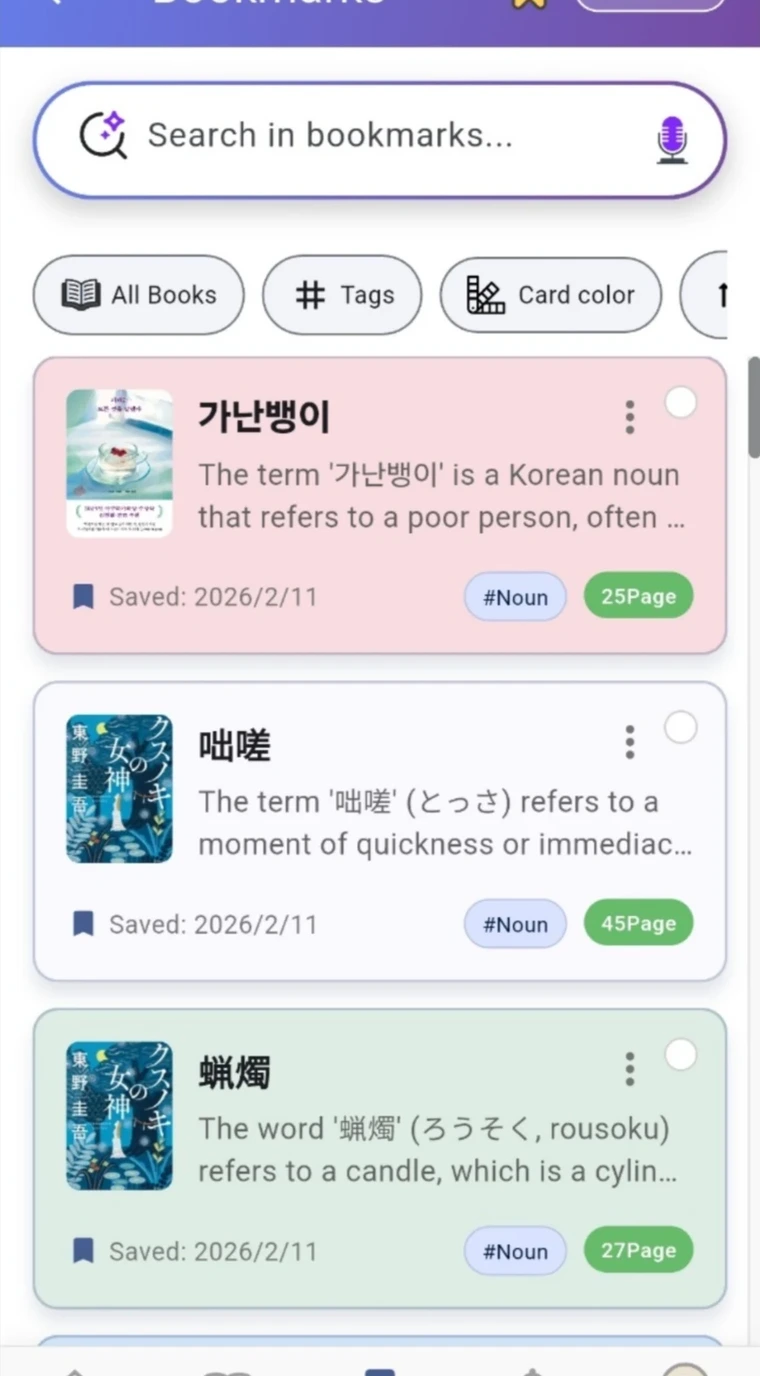
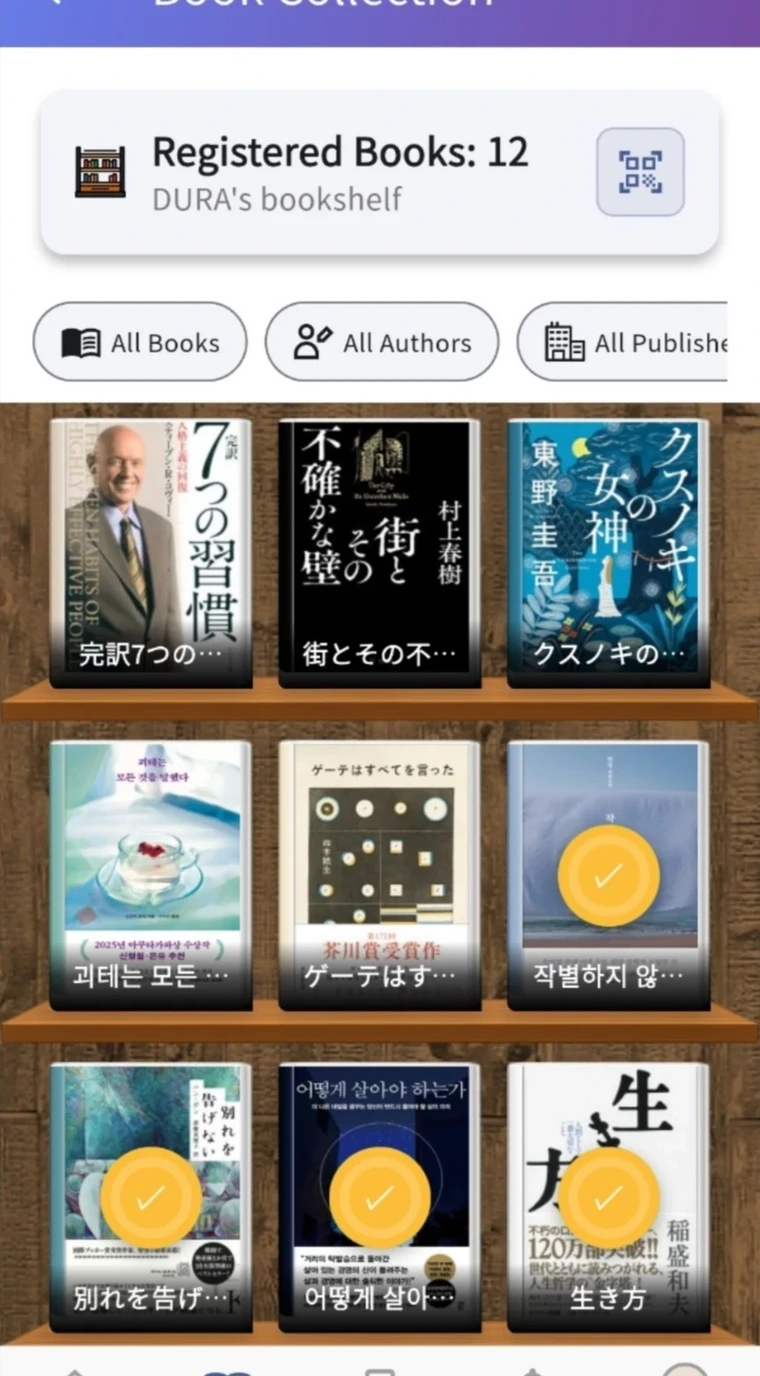
Save readings and meanings with the book and page.Revisit your reading through notes linked to your bookshelf.
① illustrates the capture feature. ② shows actual app screens.