
Kanji quizzes for the joy of reading
How do you read 石榴 in Japanese?
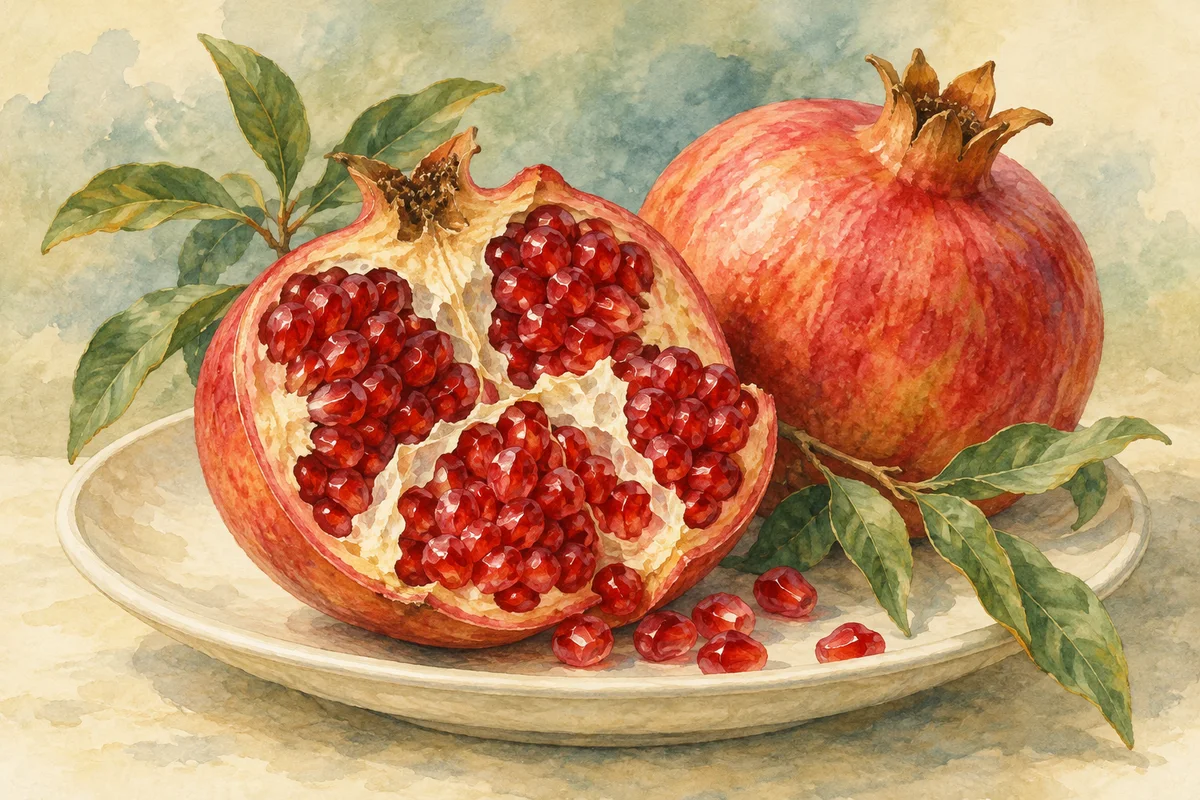
Red jewels inside a split fruit.
Make the words you meet in books your own, one quiz at a time. Discover Japanese kanji readings, meanings and usage with DuraRing.
Unfamiliar kanji? Scan and look it up.Explore the OCR & AI dictionaryHow do you read this in Japanese?
Think of your answer before you look.
HINTShow hint
A ripe fruit filled with red arils. Three hiragana beginning with za.
More on radicals and this quiz’s stroke counts
Describe the shapes you see
You do not need to know the radical’s name. Try these searches for this quiz’s characters.
石 beside a tree radical and 留
tree radical beside 留 fruit kanji
fruit with red arils starting with 石
These searches describe visual similarities, not formal radicals or character components.
石: 5 strokes; radical 石 (stone). 榴: 14 strokes; radical 木 (tree). Distinguish informal descriptions of the shape from the dictionary radical.
石5 strokes / radical: 石 (stone)
榴14 strokes / radical: 木 (tree)
Stroke counts and radicals follow the Japanese dictionary Kanjipedia; other dictionaries may differ.
ANSWERShow answerHide answer
The answer is
ざくろ
zakuro
石榴
Understand the meaning
English translationPomegranate
Pomegranate: both the tree and its fruit, which contains many red arils and may split open as it ripens.
See it in a sentence
庭で採れた石榴を開くと、赤い粒が光っていた。Opening a pomegranate from the garden revealed shining red arils.
A way to remember
Read the whole spelling zakuro. 柘榴 is another spelling.
Sources:Kanjipedia: 石榴
The explanation draws on the sources below. Examples were written for this page.
Explore the word further
Describe the outside and the inside
石榴が裂ける focuses on the fruit splitting; 石榴の粒 brings attention inside. Follow the verbs and nouns as the description moves from the whole fruit to its small arils.
例:皿の上に石榴の粒を並べると、窓からの光を受けて赤く透けた。
The pomegranate arils on the plate glowed translucent red in the window light.
Do not infer the meaning from 石 alone
石榴 is a plant and fruit name, not a kind of stone. Reading the spelling as a whole avoids a misleading character-by-character interpretation.
References for this explanation:Kanjipedia: 石榴
Explanation checked on 2026-10-25. Additional examples were written by DuraRing for this page.
The answer and explanation stay hidden until you open them.
Read and learn with  .
Photograph unfamiliar kanji, look them up and save them in the app, linked to your book.A reading app that helps you revisit words in the context of your books.
Capture and look up kanji
Photograph a printed page.Check kanji readings and meanings.
Save words. Connect them to books.
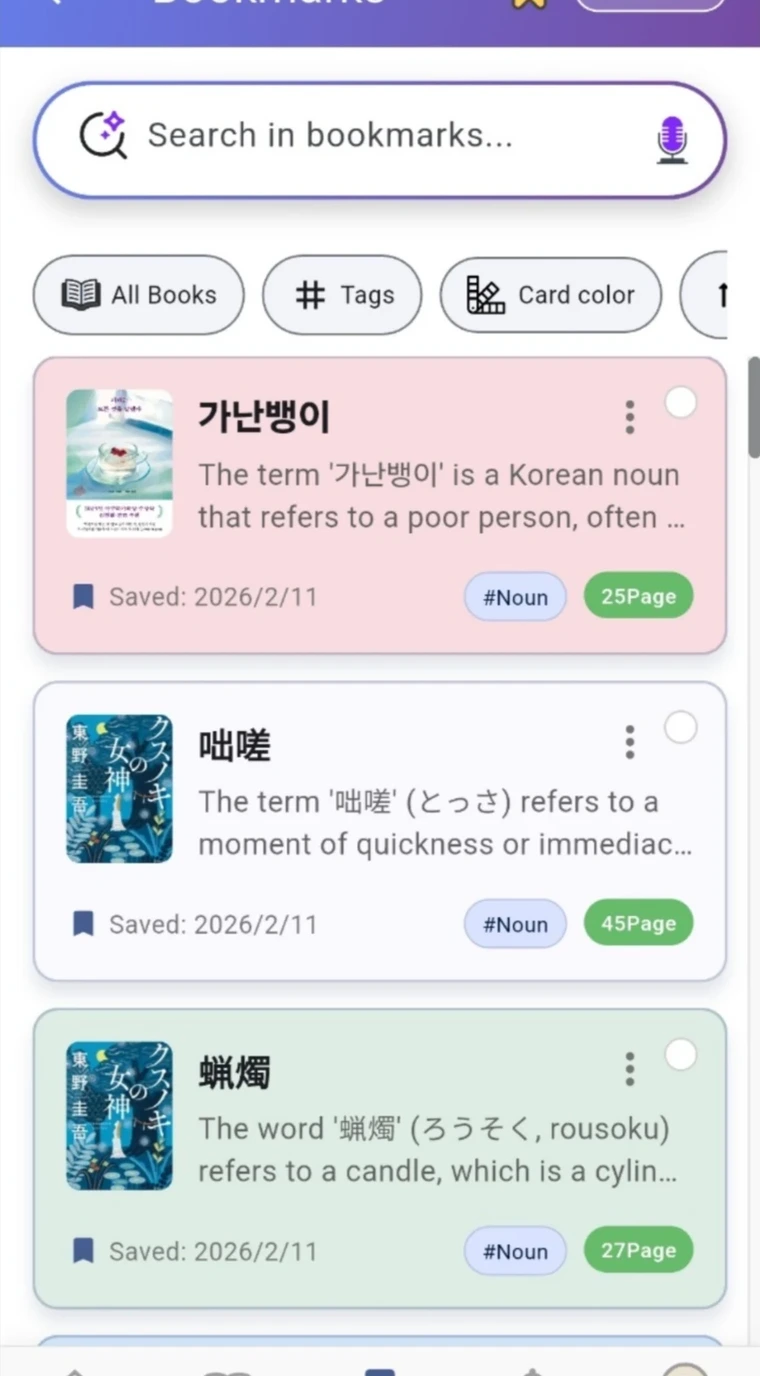
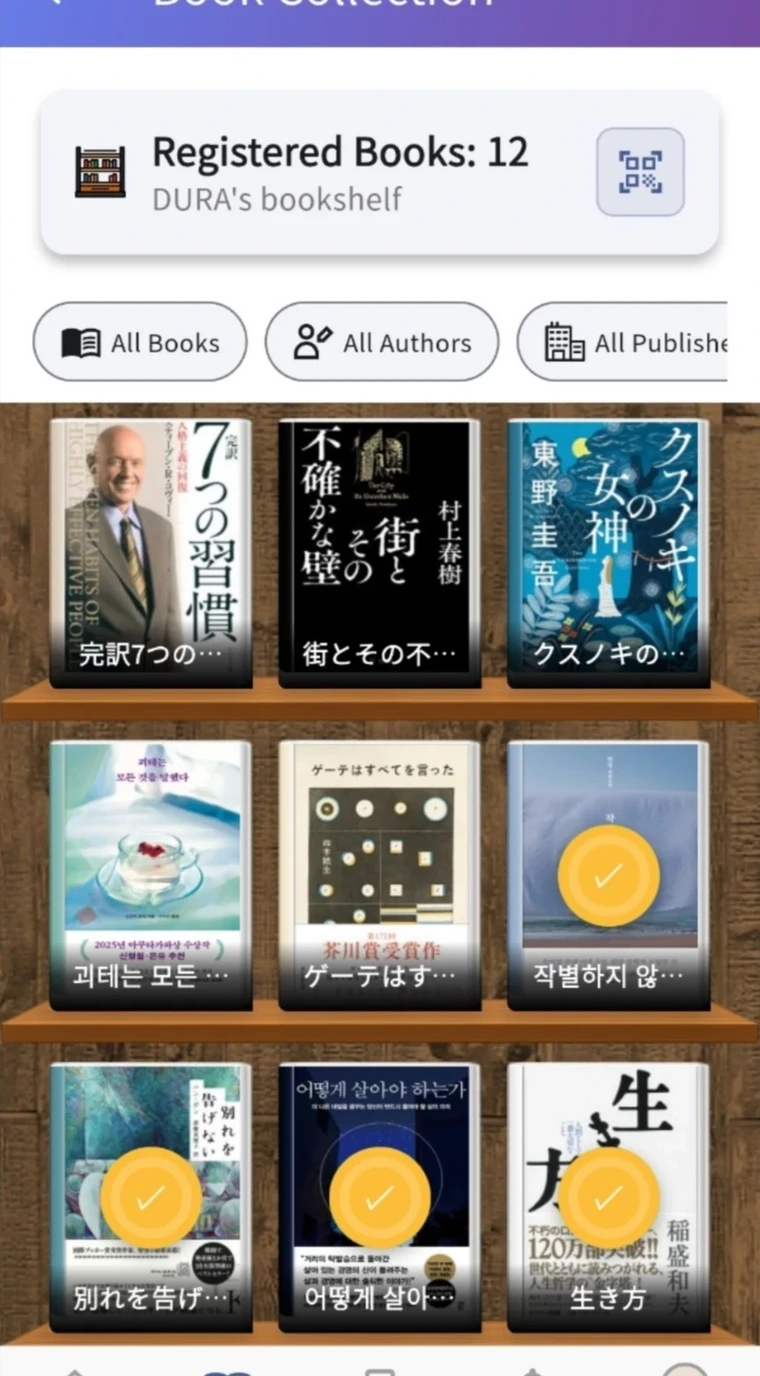
Save readings and meanings with the book and page.Revisit your reading through notes linked to your bookshelf.
① illustrates the capture feature. ② shows actual app screens.