
Kanji quizzes for the joy of reading
How do you read 葡萄 in Japanese?
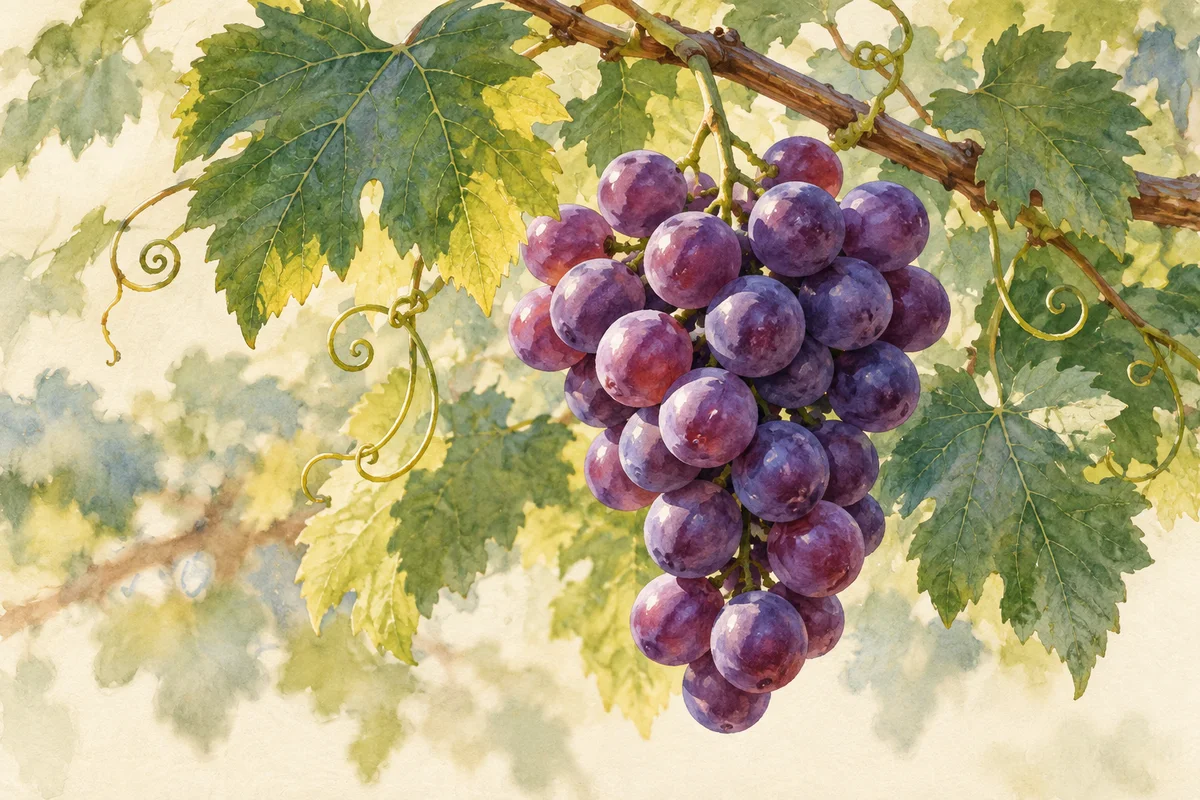
Small fruits gathered in a cluster.
Make the words you meet in books your own, one quiz at a time. Discover Japanese kanji readings, meanings and usage with DuraRing.
Unfamiliar kanji? Scan and look it up.Explore the OCR & AI dictionaryHow do you read this in Japanese?
Give the three-hiragana reading beginning with bu for fruit growing in clusters.
HINTShow hint
The fruit grows in clusters on a vine and may be purple or pale green.
More on radicals and this quiz’s stroke counts
Describe the shapes you see
You do not need to know the radical’s name. Try these searches for this quiz’s characters.
grass radical above 匍 kanji
grass above 勹 and 缶 kanji
two grass-radical characters for clustered fruit
These searches describe visual similarities, not formal radicals or character components.
葡: 12 strokes; radical 艹 (grass). 萄: 11 strokes; radical 艹 (grass). Visual search descriptions are distinct from dictionary radical classifications.
葡12 strokes / radical: 艹 (grass)
萄11 strokes / radical: 艹 (grass)
Stroke counts and radicals follow the Japanese dictionary Kanjipedia; other dictionaries may differ.
ANSWERShow answerHide answer
The answer is
ぶどう
budō
葡萄
Understand the meaning
English translationGrape / grapes
A vine and its clustered fruit, eaten fresh or used for juice and dried fruit.
See it in a sentence
窓辺の皿に、紫色と緑色の葡萄を盛った。I arranged purple and green grapes on a plate by the window.
A way to remember
Here the reading is budō. 葡 has 12 strokes and 萄 has 11; both have the grass radical.
Sources:Kanjipedia: 葡萄 / Kanjipedia: 葡萄 (ebi)
The explanation draws on the sources below. Examples were written for this page.
Explore the word further
Distinguish a grape from a bunch
Use 葡萄を一粒食べる for an individual grape and 葡萄を一房買う for a bunch. The counting word shows the unit.
例:大きな葡萄を一房買い、みんなで少しずつ分けた。
We bought a large bunch of grapes and shared it among everyone.
An older reading is also recorded
The dictionary also records ebi as another name. This question specifies the reading beginning with bu, while recognizing that the other reading exists.
References for this explanation:Kanjipedia: 葡萄 / Kanjipedia: 葡萄 (ebi)
Explanation checked on 2026-11-02. Additional examples were written by DuraRing for this page.
The answer and explanation stay hidden until you open them.
Read and learn with  .
Photograph unfamiliar kanji, look them up and save them in the app, linked to your book.A reading app that helps you revisit words in the context of your books.
Capture and look up kanji
Photograph a printed page.Check kanji readings and meanings.
Save words. Connect them to books.
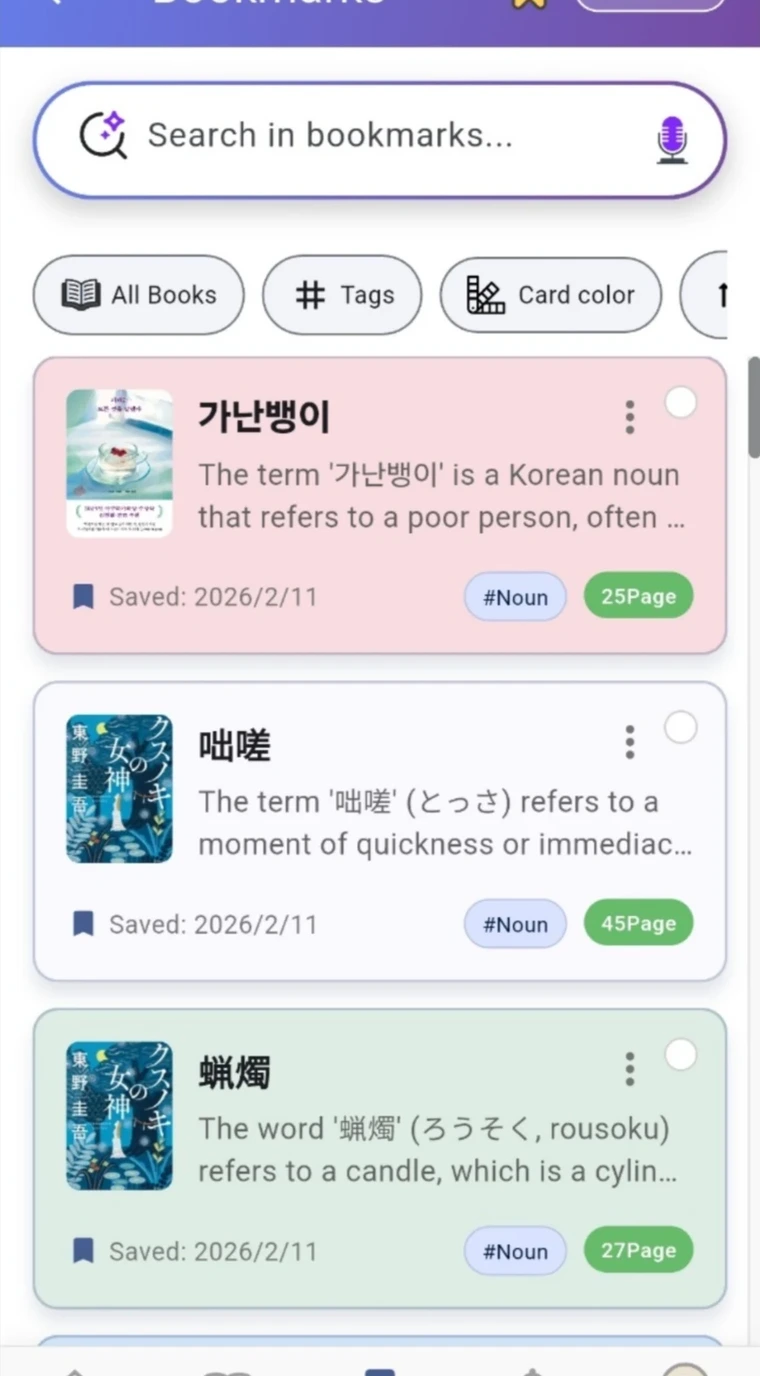
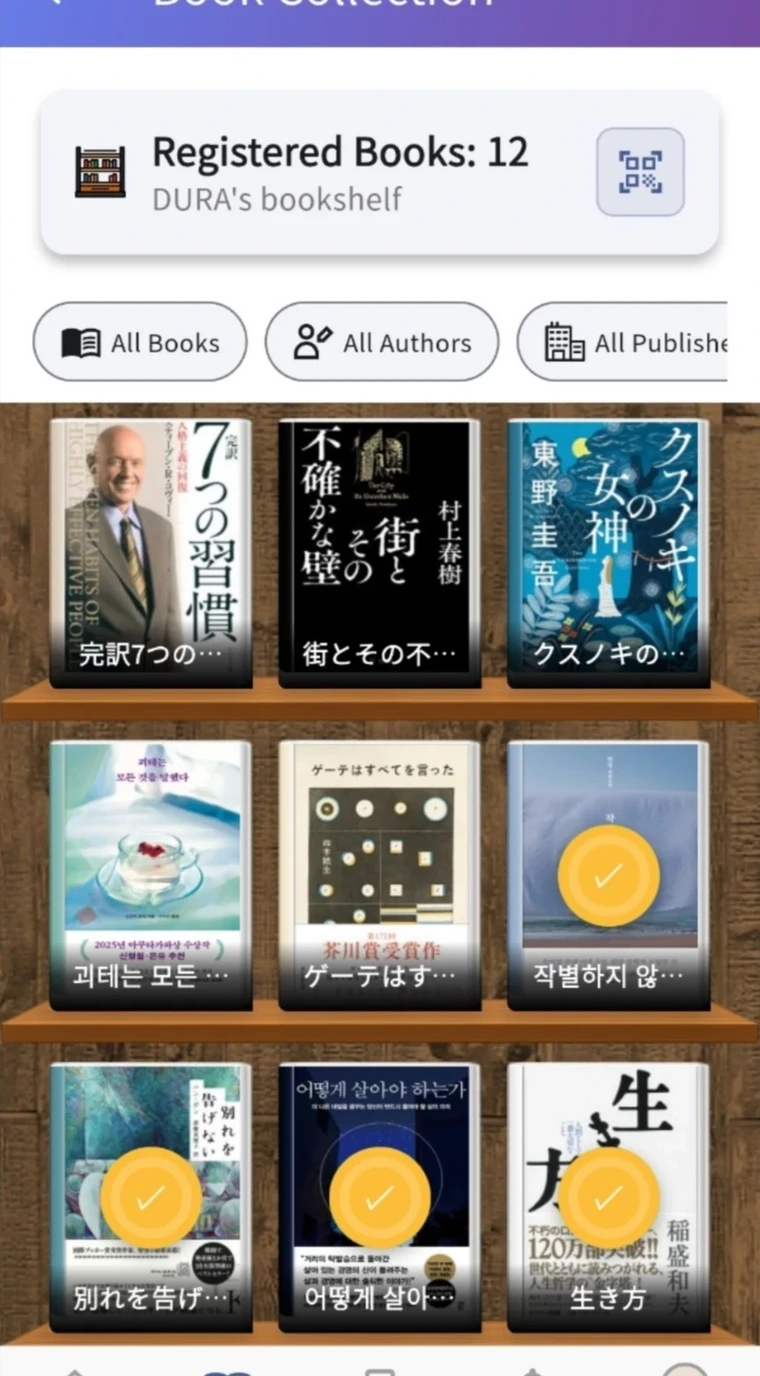
Save readings and meanings with the book and page.Revisit your reading through notes linked to your bookshelf.
① illustrates the capture feature. ② shows actual app screens.