
Kanji quizzes for the joy of reading
How do you read 桔梗 in Japanese?
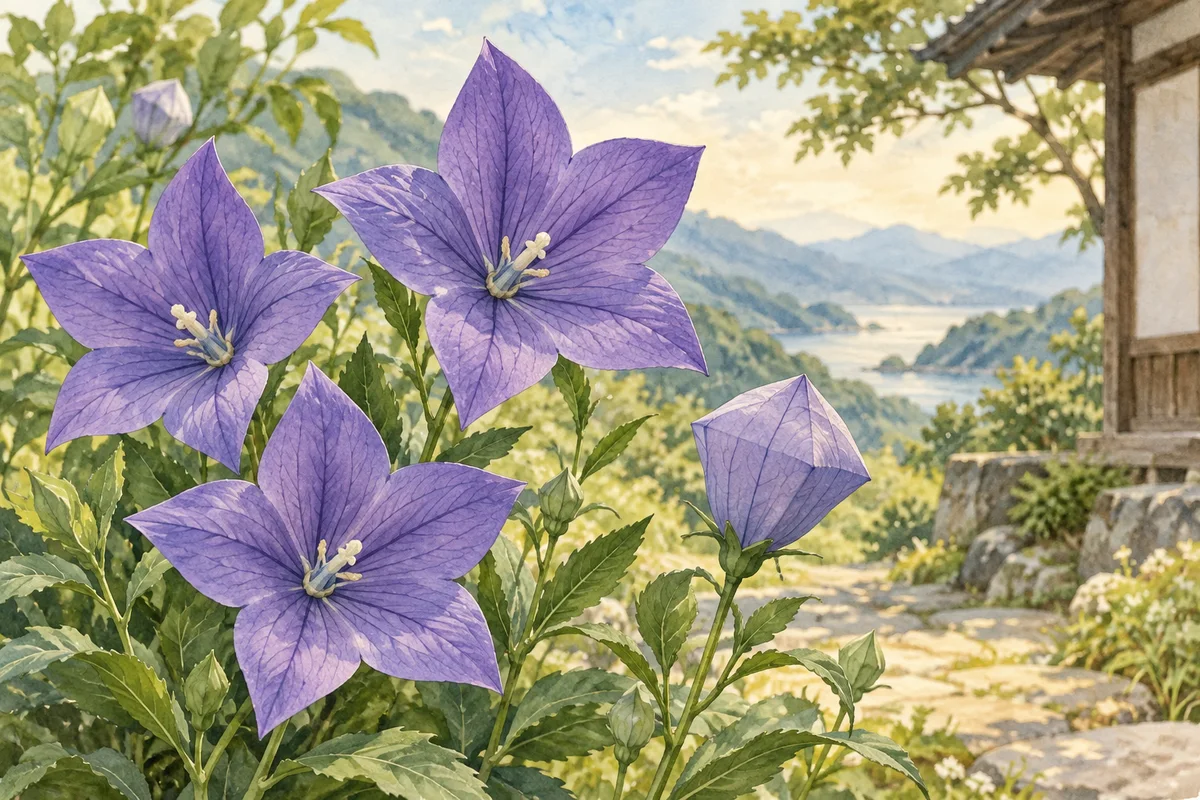
Violet-blue flowers evoke autumn.
Make the words you meet in books your own, one quiz at a time. Discover Japanese kanji readings, meanings and usage with DuraRing.
Unfamiliar kanji? Scan and look it up.Explore the OCR & AI dictionaryHow do you read this in Japanese?
Give the usual name of the plant with violet-blue or white flowers, one of Japan’s seven autumn herbs.
HINTShow hint
Both characters have 木. One of Japan’s seven autumn herbs, it has violet-blue or white blooms.
More on radicals and this quiz’s stroke counts
Describe the shapes you see
You do not need to know the radical’s name. Try these searches for this quiz’s characters.
木 beside 吉 and 木 beside 更 flower
reading of 木 beside 吉
two-kanji flower name with 木 and 更
These searches describe visual similarities, not formal radicals or character components.
桔: 10 strokes; radical 木 (tree). 梗: 11 strokes; radical 木 (tree). Visual search descriptions are distinct from dictionary radical classifications.
桔10 strokes / radical: 木 (tree)
梗11 strokes / radical: 木 (tree)
Stroke counts and radicals follow the Japanese dictionary Kanjipedia; other dictionaries may differ.
ANSWERShow answerHide answer
The answer is
ききょう
kikyō
桔梗
Understand the meaning
English translationBalloon flower
A flowering plant with violet-blue or white blooms, traditionally counted among Japan’s seven autumn herbs.
See it in a sentence
花壇の桔梗が開き、青紫色の花が風に揺れていた。The balloon flowers in the bed opened, their violet-blue blooms swaying in the breeze.
A way to remember
The usual name is kikyō. 桔 has 吉 on the right and 梗 has 更.
Sources:Kanjipedia: 桔梗
The explanation draws on the sources below. Examples were written for this page.
Explore the word further
Read it as a seasonal flower
Use 桔梗が咲く or 桔梗を植える. Add color or movement in the breeze to make a garden or field scene specific.
例:白い桔梗を一輪だけ花瓶に挿すと、机の上が明るくなった。
A single white balloon flower in a vase brightened the desk.
The tree radical does not require a tree
Balloon flower is herbaceous despite the 木 in both characters. Check the whole word rather than classifying the plant solely by its radicals.
References for this explanation:Kanjipedia: 桔梗
Explanation checked on 2026-11-02. Additional examples were written by DuraRing for this page.
The answer and explanation stay hidden until you open them.
Read and learn with  .
Photograph unfamiliar kanji, look them up and save them in the app, linked to your book.A reading app that helps you revisit words in the context of your books.
Capture and look up kanji
Photograph a printed page.Check kanji readings and meanings.
Save words. Connect them to books.

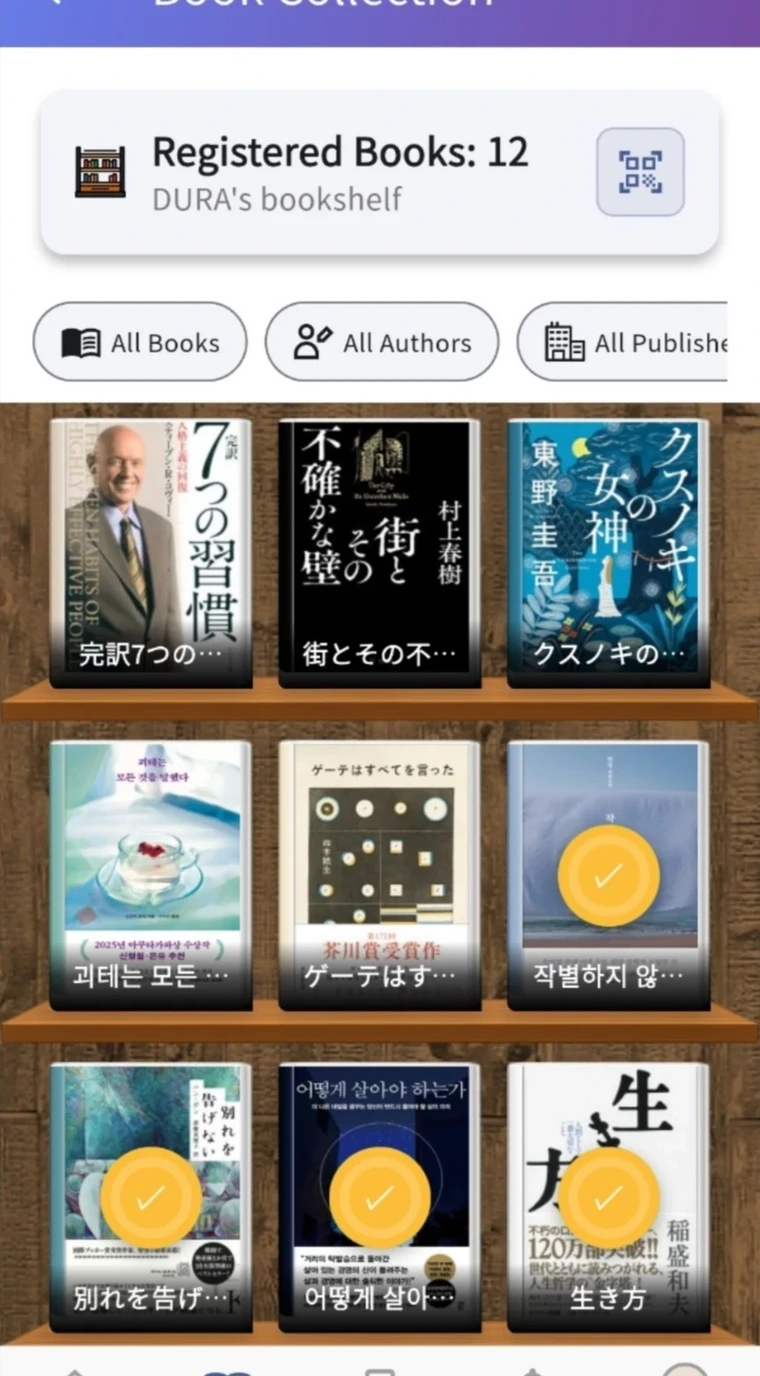
Save readings and meanings with the book and page.Revisit your reading through notes linked to your bookshelf.
① illustrates the capture feature. ② shows actual app screens.