
Kanji quizzes for the joy of reading
How do you read 幻影 in Japanese?
An image that seems present without substance.
Make the words you meet in books your own, one quiz at a time. Discover Japanese kanji readings, meanings and usage with DuraRing.
Unfamiliar kanji? Scan and look it up.Explore the OCR & AI dictionaryHow do you read this in Japanese?
Think of your answer before you look.
HINTShow hint
An image or figure that seems visible even though it is not actually there.
More on radicals and this quiz’s stroke counts
Describe the shapes you see
You do not need to know the radical’s name. Try these searches for this quiz’s characters.
kanji like 幼 but without 力 on the right
景 beside three diagonal strokes kanji
reading of 幻 and 影 together
These searches describe visual similarities, not formal radicals or character components.
幻: 4 strokes; radical 幺 (small thread). 影: 15 strokes; radical 彡 (bristles). Visual search descriptions are distinct from dictionary radical classifications.
幻4 strokes / radical: 幺 (small thread)
影15 strokes / radical: 彡 (bristles)
Stroke counts and radicals follow the Japanese dictionary Kanjipedia; other dictionaries may differ.
ANSWERShow answerHide answer
The answer is
げんえい
genei
幻影
Understand the meaning
English translationPhantom image / illusion
An image or figure that seems visible without being physically present. In a story it may be an image shaped by memory or longing.

See it in a sentence
霧の向こうの人影は、近づくと幻影のように消えた。The figure beyond the mist vanished like a phantom as I approached.
A way to remember
幻 is gen and 影 is ei here, rather than the native reading kage used for 影 alone.
Sources:Kanjipedia: 幻影
The explanation draws on the sources below. Examples were written for this page.
Explore the word further
Use an image from memory
Use 幻影を追う or 幻影のように消える. The surrounding passage shows whether a figure is present or imagined by the narrator.
例:主人公は昔の家の幻影を追うように、変わってしまった町を歩いた。
The protagonist walked through the changed town as if pursuing an image of the old house.
Distinguish a shadow from an imagined image
An ordinary shadow cast by blocked light is not necessarily a 幻影. 幻 adds the idea of an insubstantial or elusive image.
References for this explanation:Kanjipedia: 幻影
Explanation checked on 2026-11-02. Additional examples were written by DuraRing for this page.
The answer and explanation stay hidden until you open them.
Read and learn with  .
Photograph unfamiliar kanji, look them up and save them in the app, linked to your book.A reading app that helps you revisit words in the context of your books.
Capture and look up kanji
Photograph a printed page.Check kanji readings and meanings.
Save words. Connect them to books.
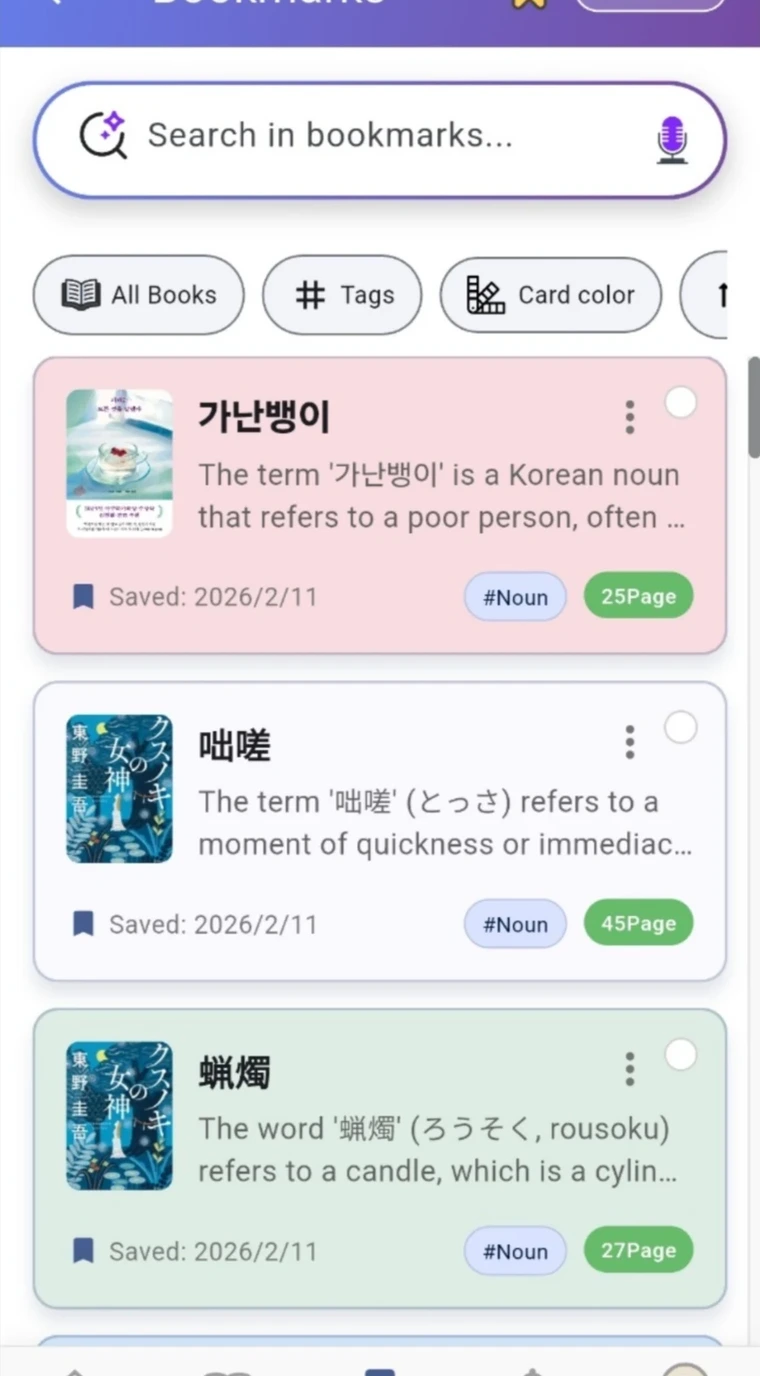
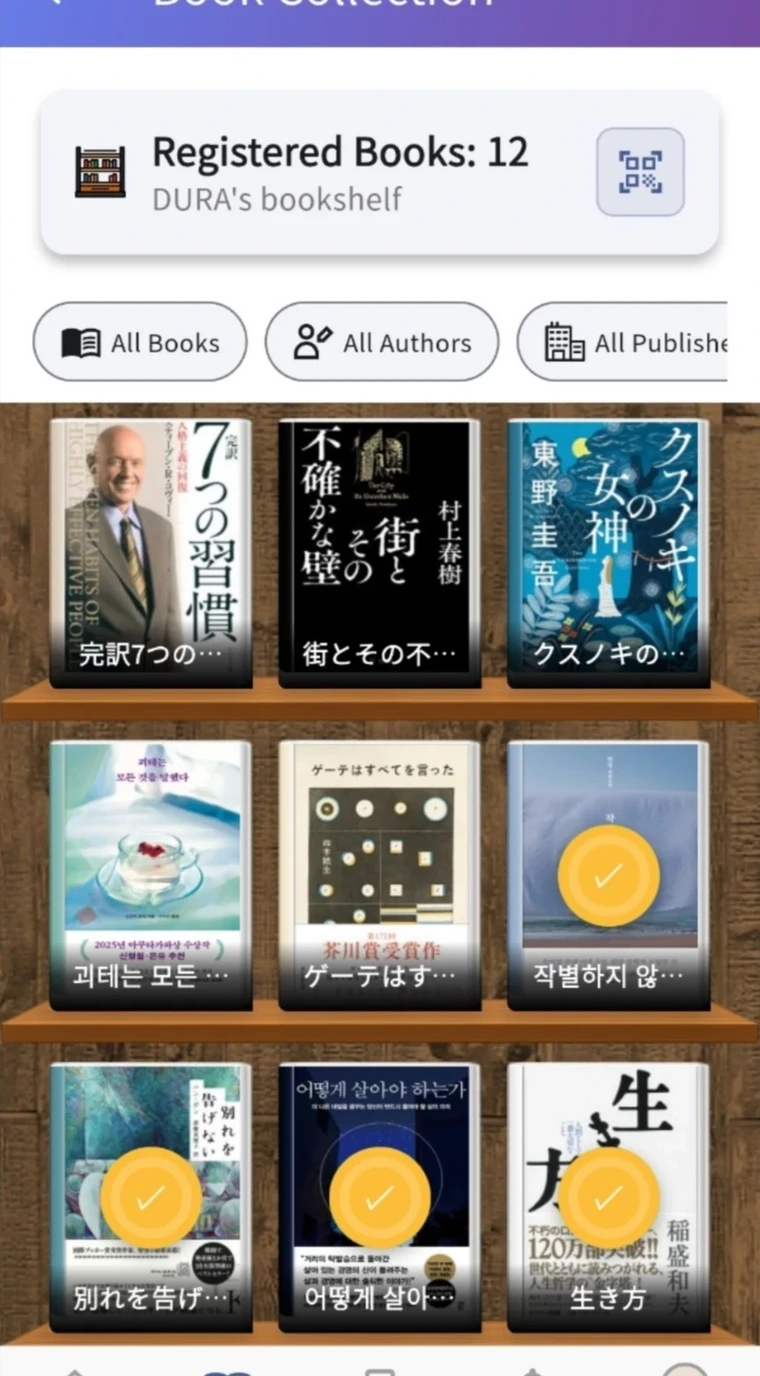
Save readings and meanings with the book and page.Revisit your reading through notes linked to your bookshelf.
① illustrates the capture feature. ② shows actual app screens.