
Kanji quizzes for the joy of reading
How do you read 漣 in Japanese?
Small waves drawn by the breeze.
Make the words you meet in books your own, one quiz at a time. Discover Japanese kanji readings, meanings and usage with DuraRing.
Unfamiliar kanji? Scan and look it up.Explore the OCR & AI dictionaryHow do you read this in Japanese?
Give the native Japanese reading of 漣 in 湖面に漣が立つ.
HINTShow hint
Fine ripples on water. Four hiragana beginning with sa.
More on radicals and this quiz’s stroke counts
Describe the shapes you see
You do not need to know the radical’s name. Try these searches for this quiz’s characters.
water radical beside 連
water radical 車 and movement radical kanji
water radical 14 strokes small waves
These searches describe visual similarities, not formal radicals or character components.
漣 has 14 strokes and the radical 水 (water). Radicals are dictionary classifications. The shape-based search phrases below provide other lookup clues.
漣14 strokes / radical: 水 (water)
Stroke counts and radicals follow the Japanese dictionary Kanjipedia; other dictionaries may differ.
ANSWERShow answerHide answer
The answer is
さざなみ
sazanami
漣
Understand the meaning
English translationRipples
Small ripples on water. Figuratively, it can describe a slight emotional disturbance or a minor disagreement.

See it in a sentence
風が吹くたびに、湖面へ漣が広がった。Ripples spread across the lake whenever the wind blew.
A way to remember
Its shape resembles 連 with the water radical. 細波 and 小波 can also be read sazanami.
Sources:Kanjipedia: 漣
The explanation draws on the sources below. Examples were written for this page.
Explore the word further
Using 漣
漣が立つ and 漣が広がる describe small waves, useful when observing slight changes on a surface touched by wind.
例:池に落ちた一枚の葉から、小さな漣が広がった。
Small ripples spread from a leaf that had fallen into the pond.
Reading and meaning in context
漣 also has a figurative sense involving minor trouble. In a passage about feelings or relationships, check whether the waves are metaphorical.
References for this explanation:Kanjipedia: 漣
Explanation checked on 2026-10-23. Additional examples were written by DuraRing for this page.
The answer and explanation stay hidden until you open them.
Read and learn with  .
Photograph unfamiliar kanji, look them up and save them in the app, linked to your book.A reading app that helps you revisit words in the context of your books.
Capture and look up kanji
Photograph a printed page.Check kanji readings and meanings.
Save words. Connect them to books.
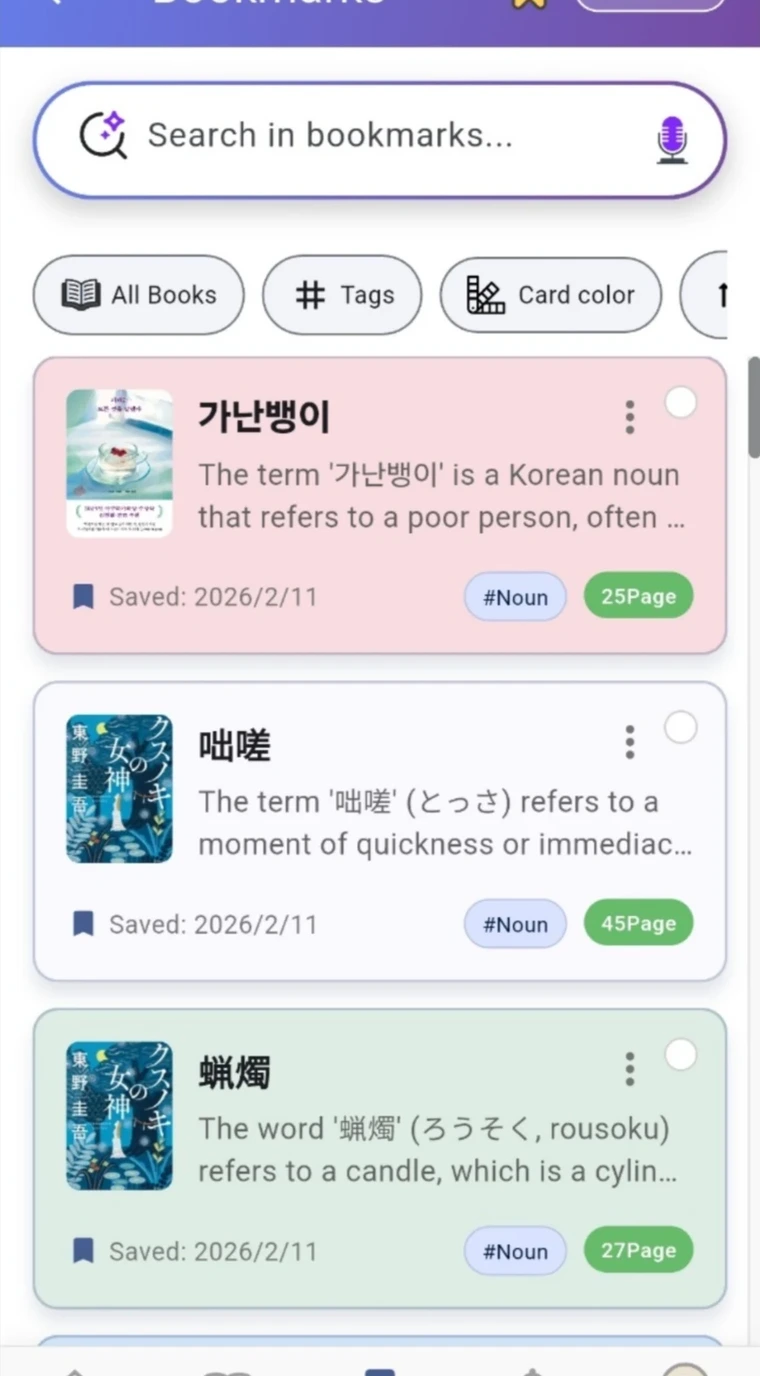
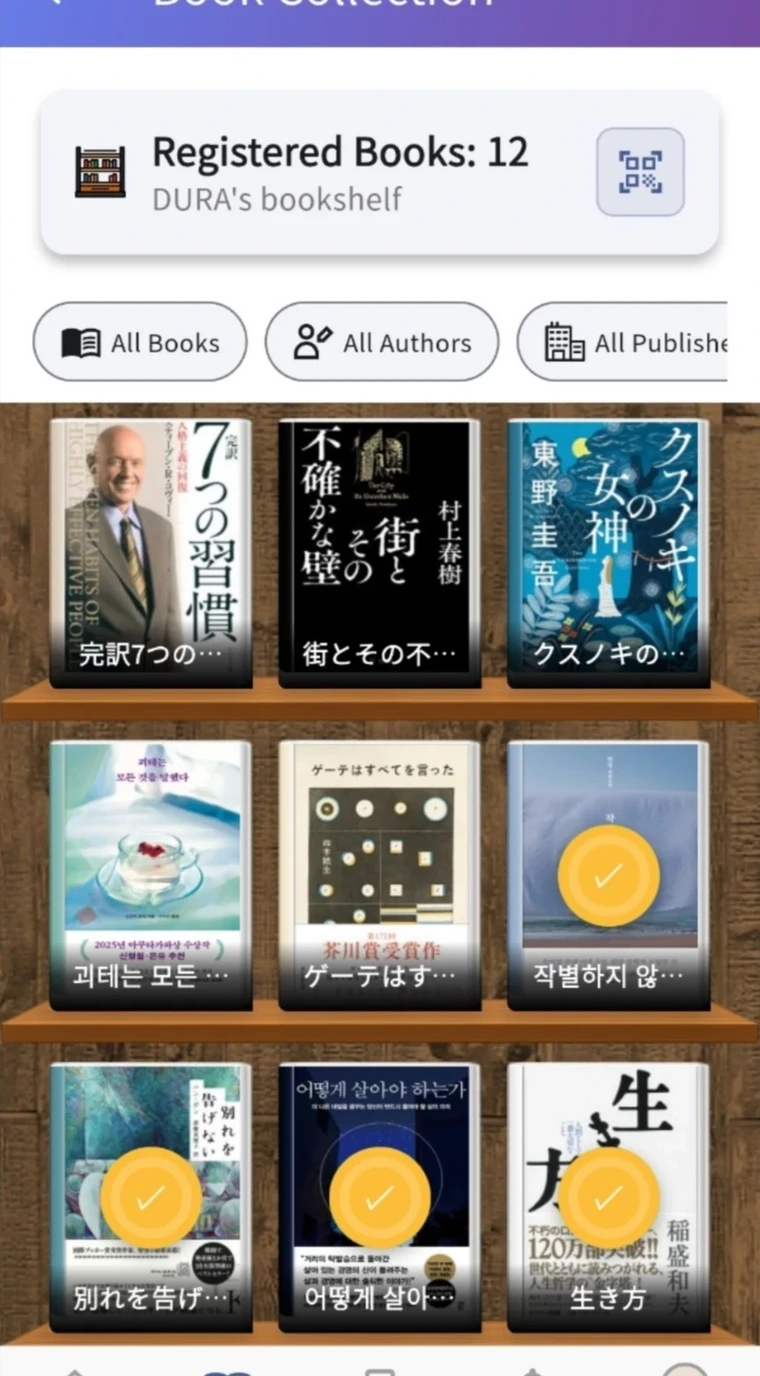
Save readings and meanings with the book and page.Revisit your reading through notes linked to your bookshelf.
① illustrates the capture feature. ② shows actual app screens.