
Kanji quizzes for the joy of reading
How do you read 蕨 in Japanese?
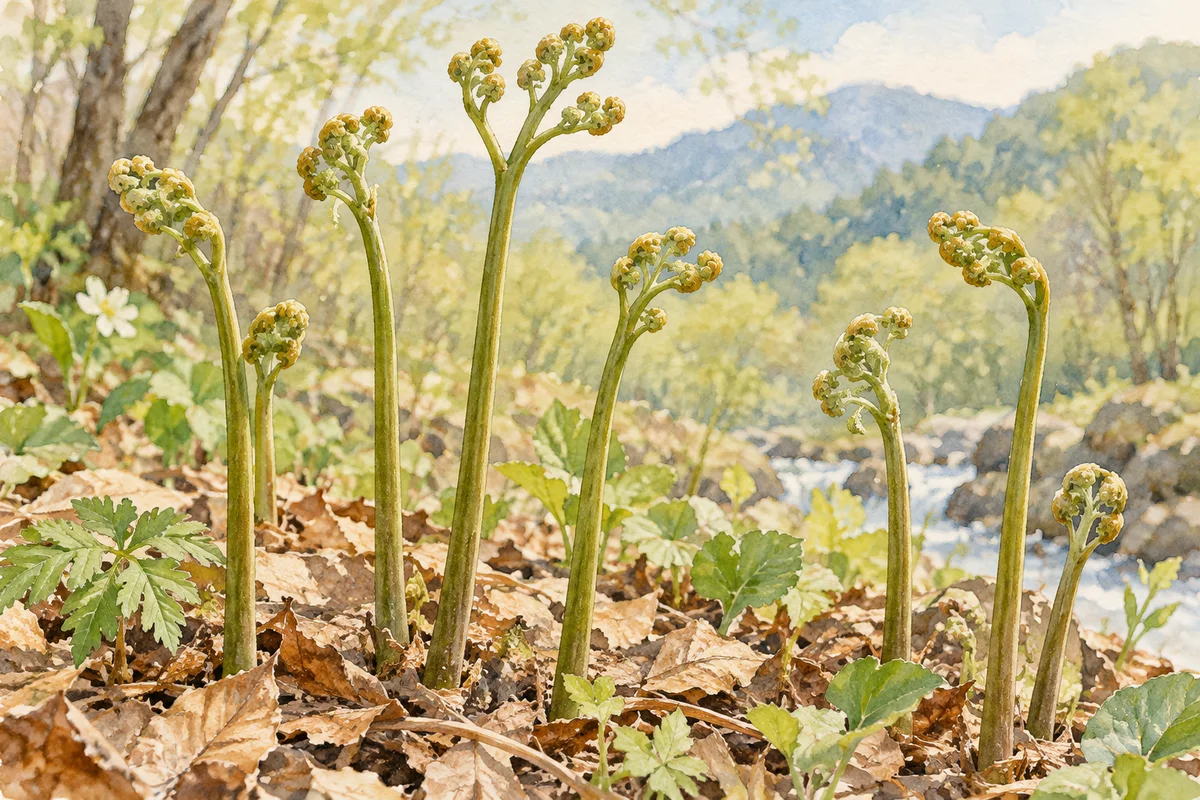
Curled young shoots in the spring countryside.
Make the words you meet in books your own, one quiz at a time. Discover Japanese kanji readings, meanings and usage with DuraRing.
Unfamiliar kanji? Scan and look it up.Explore the OCR & AI dictionaryHow do you read this in Japanese?
Give the reading for the plant known as a spring wild vegetable with curled young shoots.
HINTShow hint
It has 艹 above 厥. The name also appears in the Japanese sweet ○○○もち.
More on radicals and this quiz’s stroke counts
Describe the shapes you see
You do not need to know the radical’s name. Try these searches for this quiz’s characters.
grass radical above 厥 kanji
kanji with grass above 厂 and a 欠-like shape
grass radical 15 strokes spring vegetable
These searches describe visual similarities, not formal radicals or character components.
蕨: 15 strokes; radical 艸 / 艹 (grass). Visual search descriptions are distinct from dictionary radical classifications.
蕨15 strokes / radical: 艸 / 艹 (grass)
Stroke counts and radicals follow the Japanese dictionary Kanjipedia; other dictionaries may differ.
ANSWERShow answerHide answer
The answer is
わらび
warabi
蕨
Understand the meaning
English translationBracken
A fern with curled young spring growth, familiar as a wild vegetable. Starch obtained from its rhizomes is called warabiko.
See it in a sentence
春の市場には、束にした蕨が並んでいた。Bundles of bracken shoots were displayed at the spring market.
A way to remember
The grass radical is a clue to the plant, but the reading is not split among the parts. The whole character is warabi.
Sources:Kanjipedia: 蕨 / Shogakukan Digital Daijisen: 蕨餅 (Kotobank)
The explanation draws on the sources below. Examples were written for this page.
Explore the word further
Connect the plant with the starch name
蕨の若芽 and 蕨を使った料理 refer to the plant. 蕨粉 names starch from its rhizomes, so the surrounding word tells you which part or product is meant.
例:郷土料理の本で、蕨の若芽を使った料理の写真を見つけた。
In a book of regional cooking, I found a photograph of a dish made with young bracken shoots.
Read the surrounding words
蕨 names the plant, while 蕨粉 and 蕨餅 concern starch or a sweet. Read the following characters rather than deciding the context from the single character alone.
References for this explanation:Kanjipedia: 蕨 / Shogakukan Digital Daijisen: 蕨餅 (Kotobank)
Explanation checked on 2026-10-26. Additional examples were written by DuraRing for this page.
The answer and explanation stay hidden until you open them.
Read and learn with  .
Photograph unfamiliar kanji, look them up and save them in the app, linked to your book.A reading app that helps you revisit words in the context of your books.
Capture and look up kanji
Photograph a printed page.Check kanji readings and meanings.
Save words. Connect them to books.
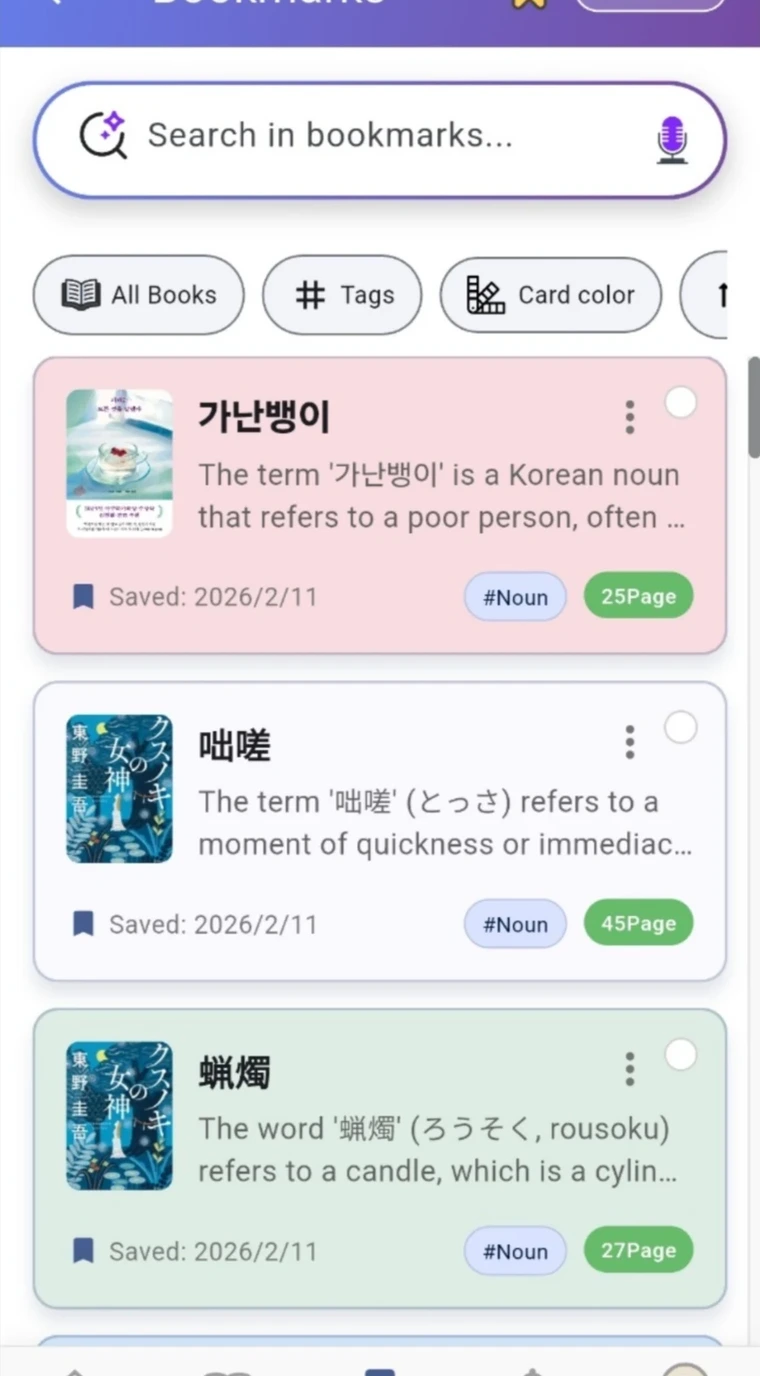
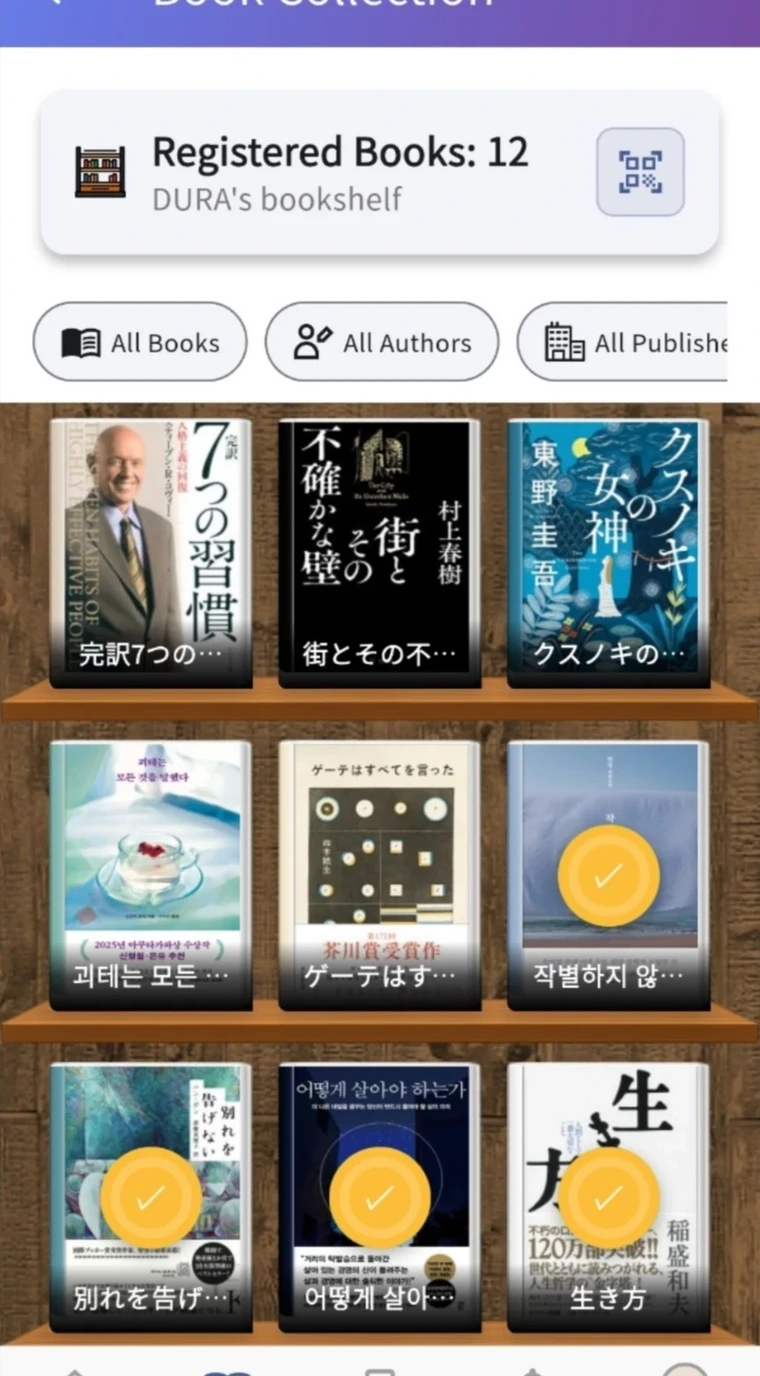
Save readings and meanings with the book and page.Revisit your reading through notes linked to your bookshelf.
① illustrates the capture feature. ② shows actual app screens.