
Kanji quizzes for the joy of reading
How do you read 出納 in Japanese?
Recording money in and money out.
Make the words you meet in books your own, one quiz at a time. Discover Japanese kanji readings, meanings and usage with DuraRing.
Unfamiliar kanji? Scan and look it up.Explore the OCR & AI dictionaryHow do you read this in Japanese?
Think of your answer before you look.
HINTShow hint
Receiving and paying out money or goods. It also appears in the name of a ledger ending in 帳.
More on radicals and this quiz’s stroke counts
Describe the shapes you see
You do not need to know the radical’s name. Try these searches for this quiz’s characters.
出 followed by 糸 and 内 reading
thread radical beside 内
money in and out kanji beginning with 出
These searches describe visual similarities, not formal radicals or character components.
出 has 5 strokes and the radical 凵 (open box). 納 has 10 strokes and the radical 糸 (thread). Radicals are dictionary classifications. The shape-based search phrases below provide other lookup clues.
出5 strokes / radical: 凵 (open box)
納10 strokes / radical: 糸 (thread)
Stroke counts and radicals follow the Japanese dictionary Kanjipedia; other dictionaries may differ.
ANSWERShow answerHide answer
The answer is
すいとう
suitō
出納
Understand the meaning
English translationReceipts and payments / handling money or goods
Receiving and disbursing money or goods, including the handling of income and expenditure.

See it in a sentence
係の人は、集めた会費と支払いを出納帳に記録した。The person in charge recorded the collected dues and payments in a cashbook.
A way to remember
出 is sui and 納 is tō here. Remember the complete word suitō rather than shutsunō.
Sources:Kanjipedia: 出納
The explanation draws on the sources below. Examples were written for this page.
Explore the word further
Using 出納
出納を記録する and 出納簿をつける concern what goes out and comes in. The word can apply to goods as well as money.
例:係の人は備品の出納を記録し、残りの数を確かめた。
The person in charge recorded supplies issued and received, then checked the remaining quantity.
Reading and meaning in context
The reading is すいとう. Learn it with examples such as 出納簿 rather than joining the most familiar readings of 出 and 納.
References for this explanation:Kanjipedia: 出納
Explanation checked on 2026-10-23. Additional examples were written by DuraRing for this page.
The answer and explanation stay hidden until you open them.
Read and learn with  .
Photograph unfamiliar kanji, look them up and save them in the app, linked to your book.A reading app that helps you revisit words in the context of your books.
Capture and look up kanji
Photograph a printed page.Check kanji readings and meanings.
Save words. Connect them to books.
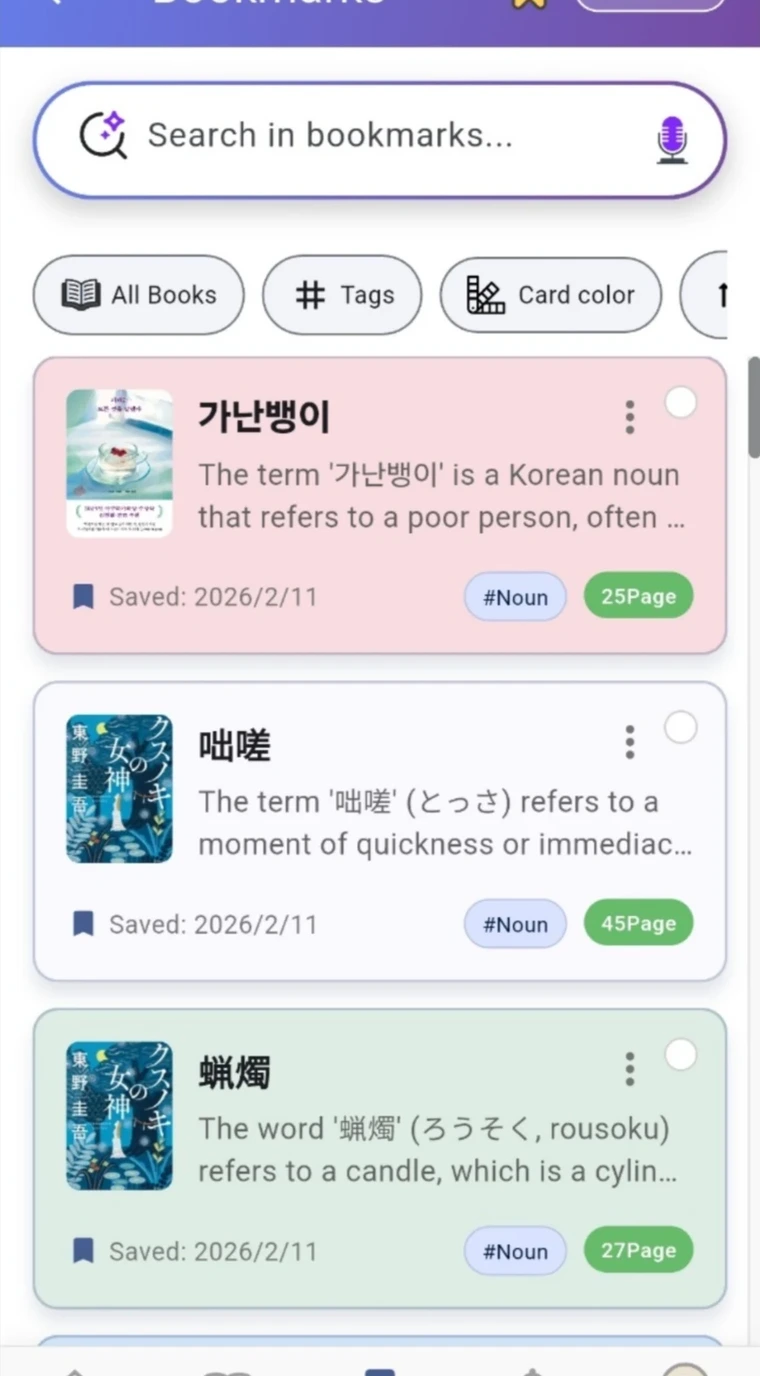
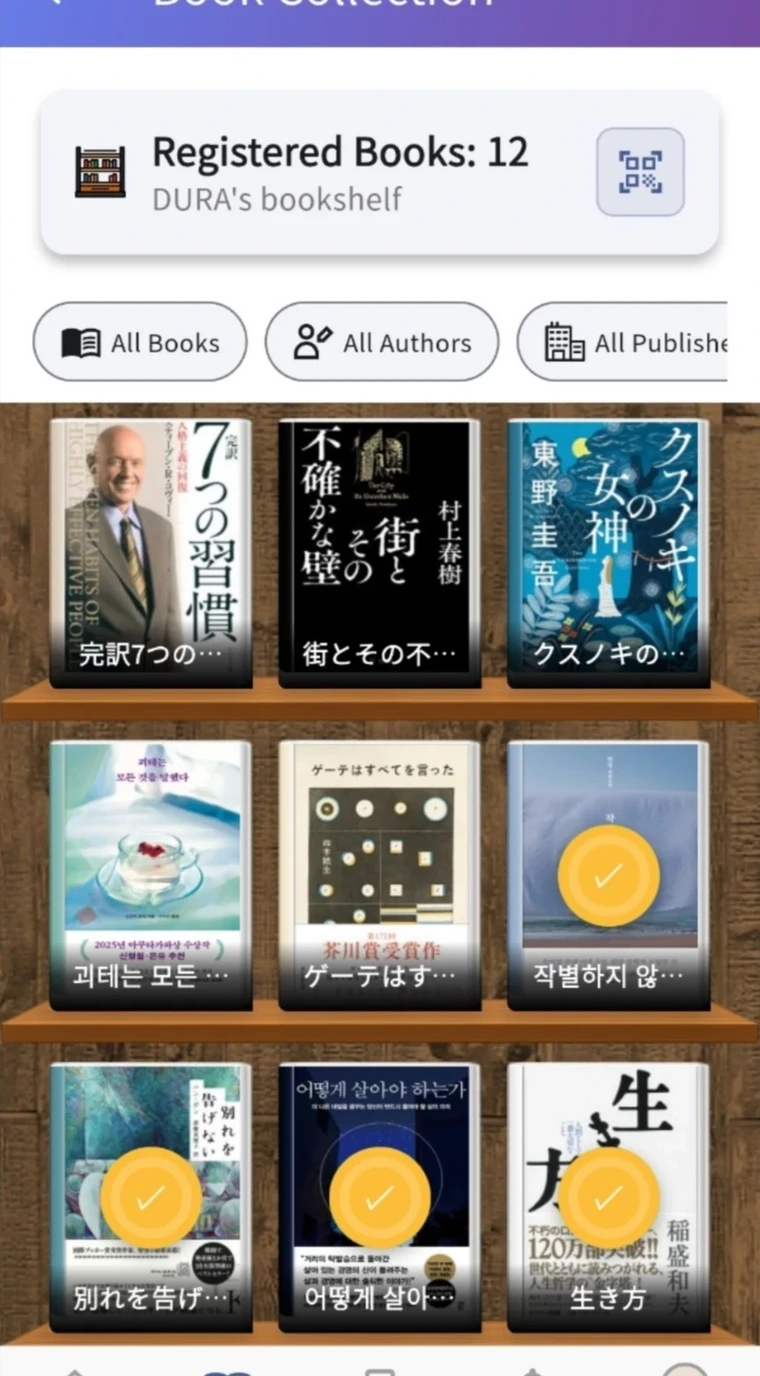
Save readings and meanings with the book and page.Revisit your reading through notes linked to your bookshelf.
① illustrates the capture feature. ② shows actual app screens.