
Kanji quizzes for the joy of reading
How do you read 雀 in Japanese?
A familiar little bird in kanji.
Make the words you meet in books your own, one quiz at a time. Discover Japanese kanji readings, meanings and usage with DuraRing.
Unfamiliar kanji? Scan and look it up.Explore the OCR & AI dictionaryHow do you read this in Japanese?
Read it as the name of a small bird often seen near homes.
HINTShow hint
A small brown bird whose chirping is written チュンチュン in Japanese.
More on radicals and this quiz’s stroke counts
Describe the shapes you see
You do not need to know the radical’s name. Try these searches for this quiz’s characters.
kanji with 少 over 隹
small bird 11 stroke kanji
隹 with a shape like 少 above it
These searches describe visual similarities, not formal radicals or character components.
雀 has 11 strokes and the radical 隹 (short-tailed bird). Radicals are dictionary classifications. The shape-based search phrases below provide other lookup clues.
雀11 strokes / radical: 隹 (short-tailed bird)
Stroke counts and radicals follow the Japanese dictionary Kanjipedia; other dictionaries may differ.
ANSWERShow answerHide answer
The answer is
すずめ
suzume
雀
Understand the meaning
English translationSparrow
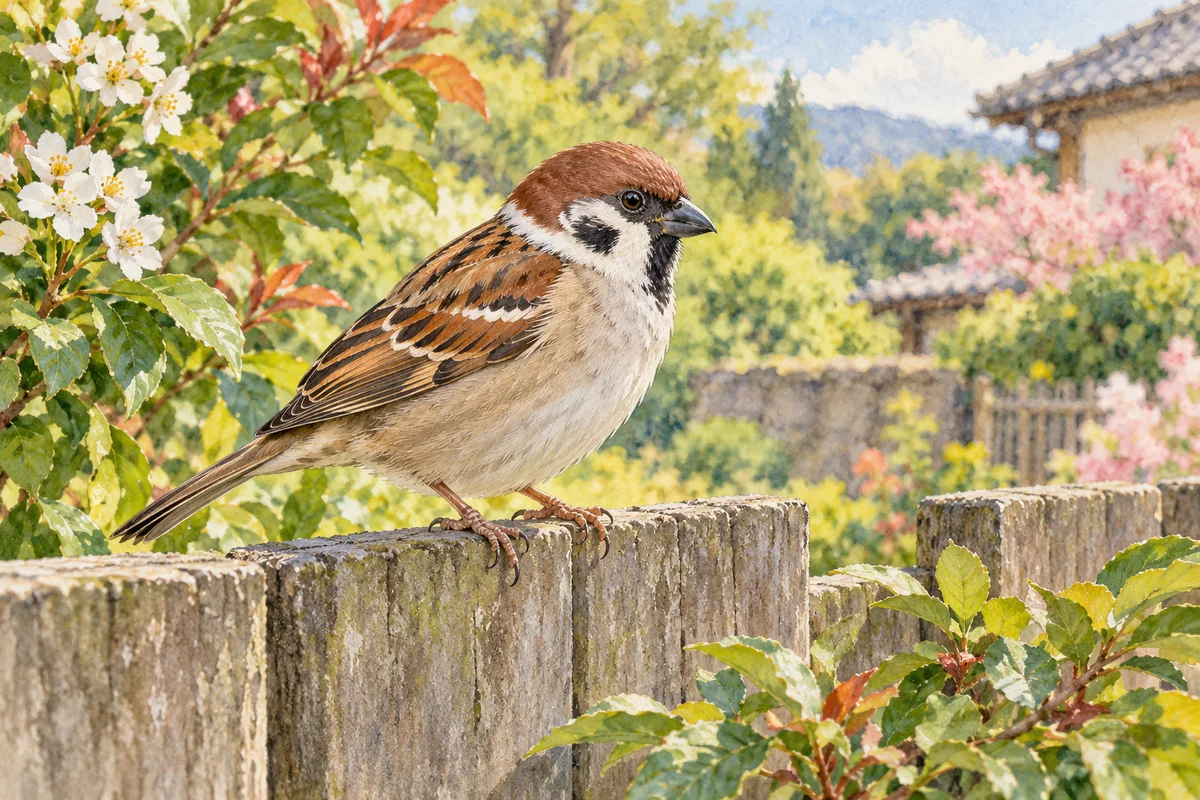
The Eurasian tree sparrow, commonly seen near homes, with a chestnut head and a black patch on each white cheek.
See it in a sentence
庭の柵に雀が止まり、こちらを見て首をかしげた。A sparrow perched on the garden fence and tilted its head toward me.
A way to remember
The lower part is the bird radical 隹. A bird-related kanji need not contain 鳥.
Sources:Kanjipedia: 雀
The explanation draws on the sources below. Examples were written for this page.
Explore the word further
Using 雀
雀がさえずる and 雀が集まる describe a familiar bird. Add where you saw it, such as by a window or beside a path.
例:駅前の植え込みから、数羽の雀が一斉に飛び立った。
Several sparrows took off together from the shrubs outside the station.
Reading and meaning in context
Here すずめ names the bird. The dictionary also lists figurative uses for people, so check the sense in a description of a person.
References for this explanation:Kanjipedia: 雀
Explanation checked on 2026-10-23. Additional examples were written by DuraRing for this page.
The answer and explanation stay hidden until you open them.
Read and learn with  .
Photograph unfamiliar kanji, look them up and save them in the app, linked to your book.A reading app that helps you revisit words in the context of your books.
Capture and look up kanji
Photograph a printed page.Check kanji readings and meanings.
Save words. Connect them to books.
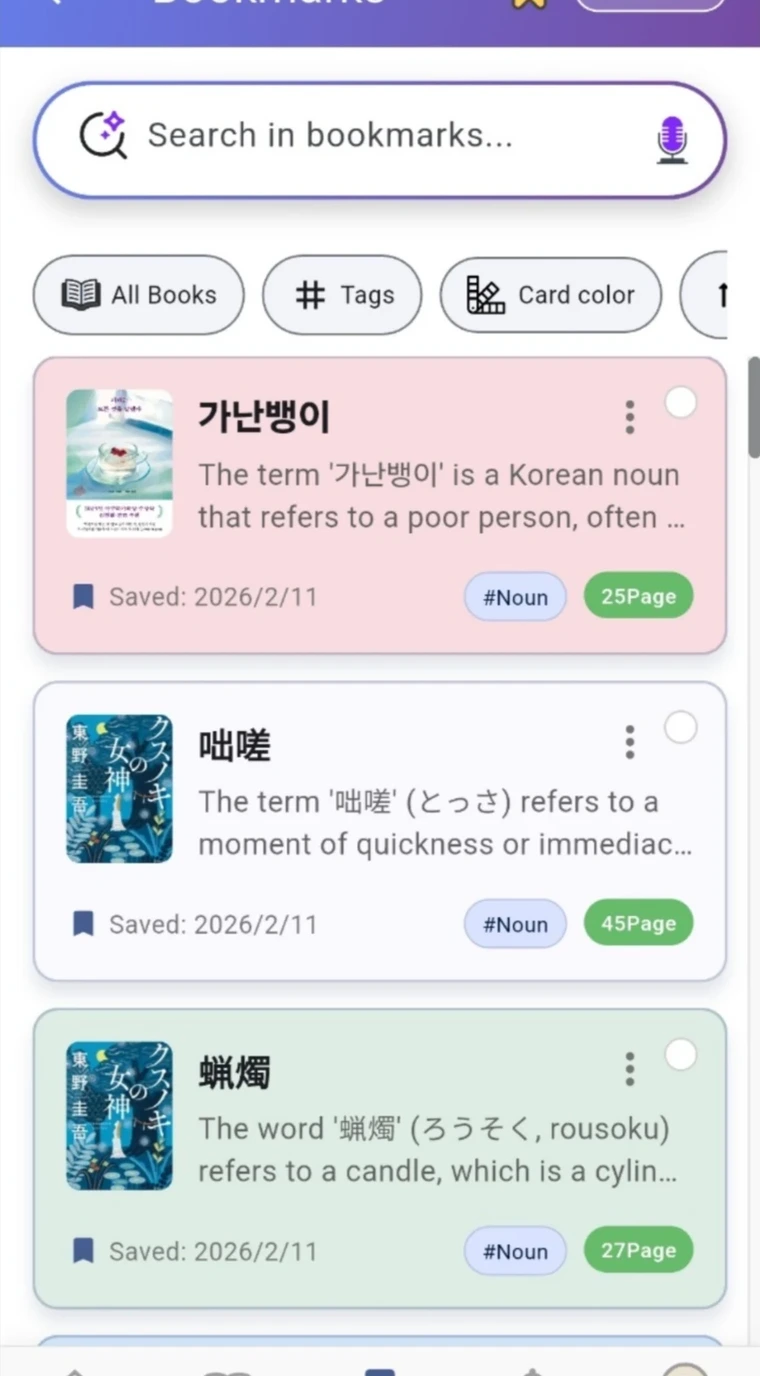
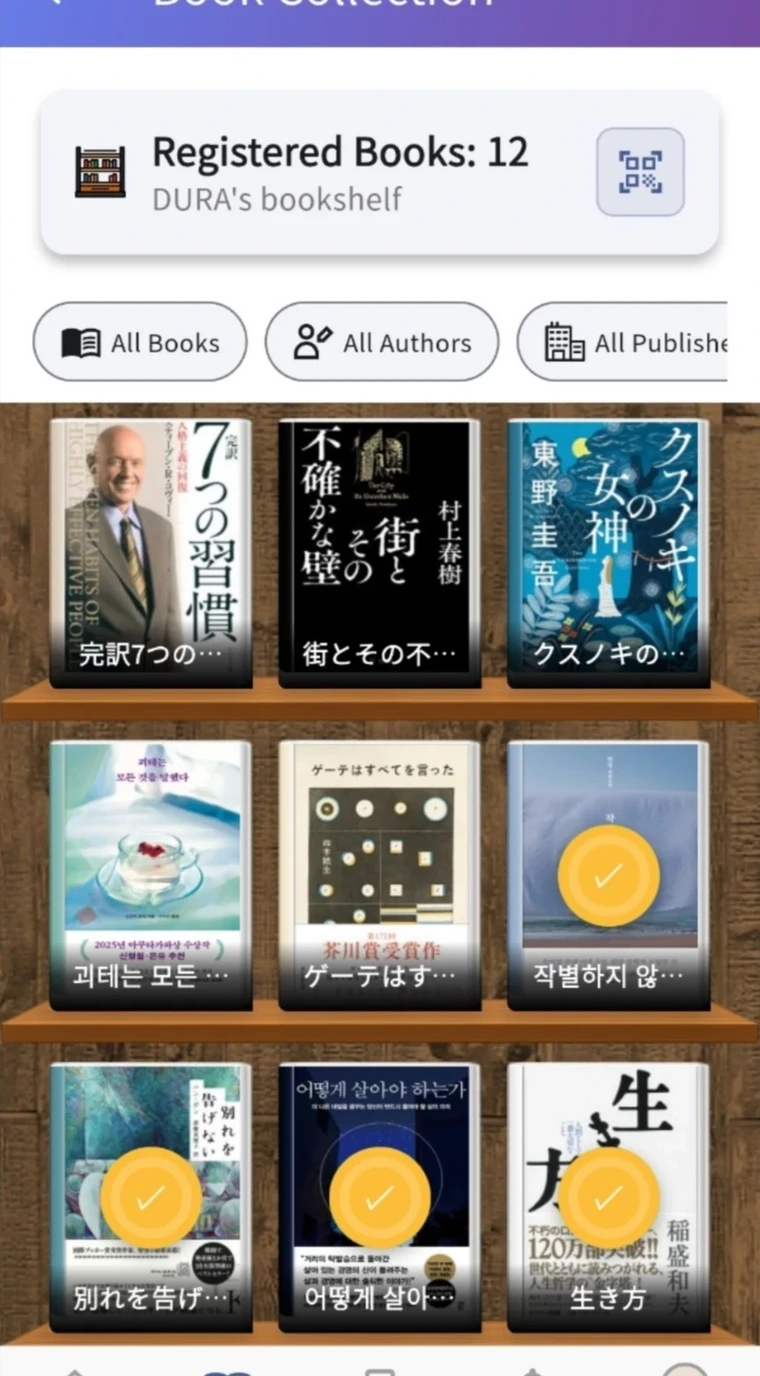
Save readings and meanings with the book and page.Revisit your reading through notes linked to your bookshelf.
① illustrates the capture feature. ② shows actual app screens.